The Niculescu Cabinet’s programme: administrative modernisation, but old energy and no guarantees for nature
Bucharest, 19 October 2026 – Agent Green has analysed all 120 pages of the programme proposed by the Luca Niculescu Cabinet. The document promises “execution”. The essential question, however, is: execution of which vision? The organisation welcomes energy storage, railways, nature restoration and pollution control. But it rejects nuclear power, gas, diesel subsidies and nature protection without percentages and deadlines.
The programme contains useful administrative measures, but keeps Romania dependent on expensive, climate-vulnerable and polluting technologies. It tries to build renewables and storage with one hand, while the other expands gas, nuclear power, subsidised diesel consumption and accelerated permitting.
In a 120-page document, the expression “climate change” appears explicitly only once, in a passage about forests. Climate also appears indirectly, through drought, floods and the Social Climate Fund, but not as a principle organising energy, transport, agriculture, health and national security.
For Agent Green, the test of any government programme is whether it keeps Romania habitable: with water, food, energy, breathable air and functioning ecosystems. From this perspective, the Niculescu programme has some good tools, but still lacks the necessary direction.
What we welcome
We welcome investment in renewable energy, batteries, grids, energy efficiency, energy communities, heat pumps, geothermal energy and demand flexibility.
We welcome the inclusion of pumped-storage hydropower plants (PSH) in the storage strategy. They are the backbone of large-scale energy storage and can integrate huge volumes of solar and wind energy. When properly sited, preferably in closed-loop systems, away from natural rivers and protected areas, PSH plants can operate and be refurbished for generations.
We welcome the declared priority for railways, electrification of main lines, new trains and clean public transport. However, this priority will have to be demonstrated in the budget, not merely stated in the programme.
In the environmental field, we welcome the modernisation of air monitoring, publication of data, waste traceability, an inventory of contaminated sites, financial guarantees for hazardous activities and application of the “polluter pays” principle.
We welcome SUMAL 3.0, the use of satellite imagery, strengthening the Forest Guard, restoration of wetlands, grasslands, forests and ecological corridors, and management of Natura 2000 sites left without functioning structures.
These things are worth doing. But they cannot compensate for the wrong strategic choices in energy, transport, agriculture and nature protection.
Nuclear power is a major, unnecessary and excessively expensive risk
Agent Green opposes new nuclear investment, including Units 3 and 4 at Cernavodă and any modular reactors. We call for a planned transition away from the existing reactors towards a system based on renewables, PSH, batteries, smart grids, efficiency and flexibility.
The Niculescu programme moves in the opposite direction. It proposes refurbishing Unit 1, preparing Units 3 and 4 and finding a “permanent solution” for cooling the plant during droughts.
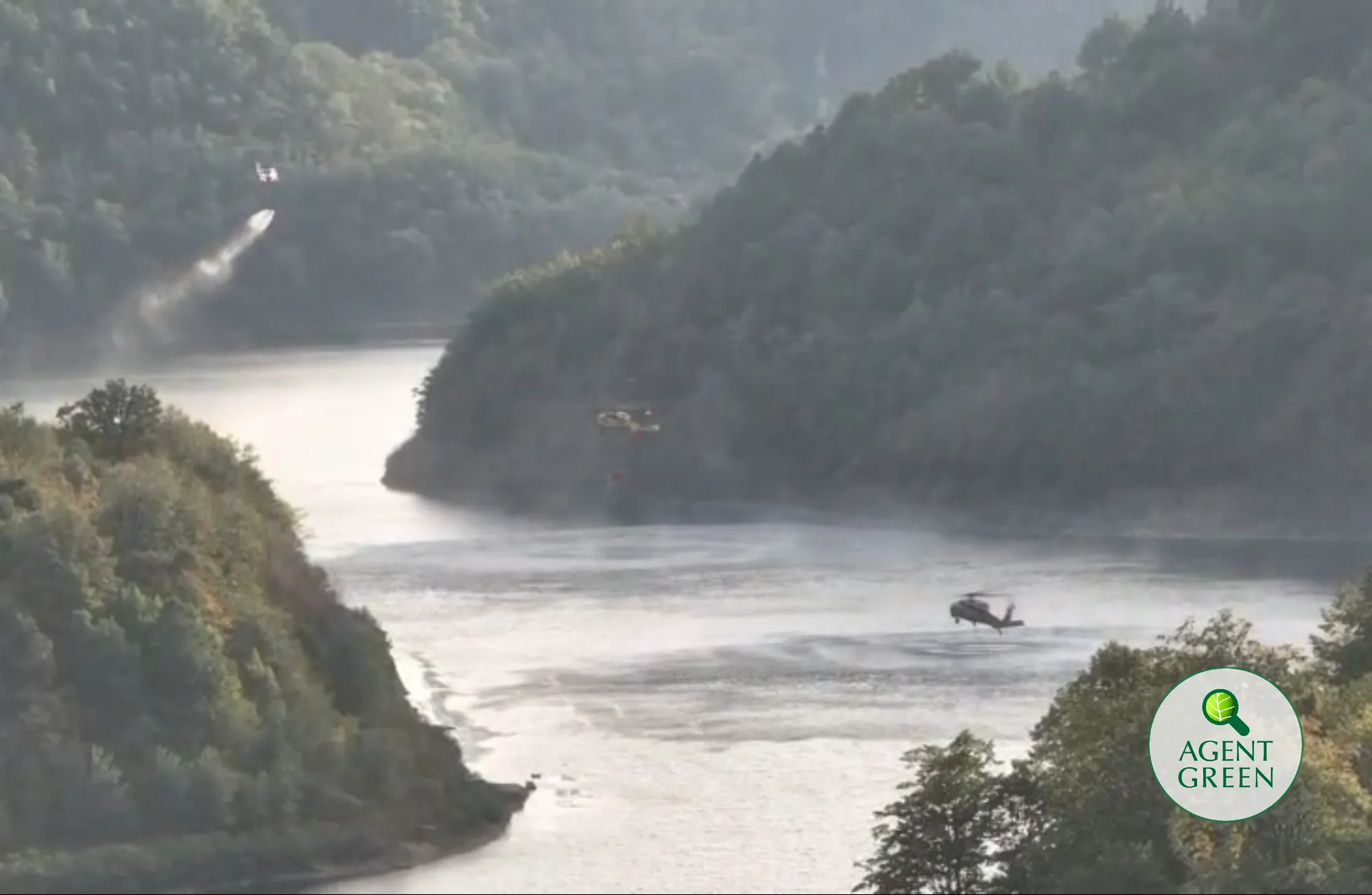
The summer of 2026 showed us what this vulnerability means in practice. The Danube’s flow fell so far that both reactors at Cernavodă were shut down. In an attempt to maintain cooling, rocks were blasted in the Bala branch, dredging was carried out and barges loaded with stone were sunk to redirect the water. Even these extreme interventions failed to prevent the complete shutdown of the plant.
This is not energy resilience. It is infrastructure dependent on a resource — sufficient cold water — that climate change is making increasingly unpredictable.
Nuclear power is centralised, slow to build, extremely expensive and difficult to adapt to a system dominated by variable solar and wind generation. It locks up public capital for decades and produces radioactive waste that remains dangerous for periods incomparably longer than the lifetimes of the institutions promising to guard it.
Romania has no final solution for high-level radioactive waste. Geological disposal does not eliminate the danger; it isolates it and passes it on to future generations, together with the duty to monitor it and the costs.
The right comparison is not between a reactor and a pumped-storage plant viewed in isolation. PSH does not produce primary energy; it stores it. The comparison must be between two systems: nuclear power with its infrastructure, cooling, fuel, waste and reserves, and renewables combined with PSH, batteries, interconnections and flexible demand.
The second architecture can be built modularly and more quickly, is more adaptable, produces no radioactive waste and uses hydraulic infrastructure that, when properly designed and maintained, can have a longer service life than new reactors.
We call for nuclear expansion to be removed from the programme and funding directed towards renewables, storage and efficiency.
Gas is not a bridge. It is another dependency
Agent Green opposes the development of new gas-fired capacity, the expansion of networks and turning Neptun Deep into a pillar of the Romanian economy.
The programme includes approximately 2,200 MW of new gas-fired capacity, extraction of around eight billion cubic metres a year from the Black Sea and continued network expansion wherever gas is considered the “optimal solution”.
It is not. A new power plant, pipeline or distribution network is built for decades. Once billions have been invested, economic and political pressure arises to operate the infrastructure until the money has been recovered. This is how a supposed “bridge” becomes a fossil fuel destination.
Gas produces carbon dioxide, while extraction and transport release methane, a very powerful greenhouse gas. Moreover, it does not resolve geopolitical vulnerability or price volatility; it shifts dependency from one place to another.
Romania needs a much steeper but organised transition: massive development of solar and wind, PSH and batteries, grid modernisation, interconnections, efficiency, heat pumps, electrification of industry and transport, and smart demand management.
Energy security does not mean constantly finding another fuel to burn. It means needing less and less fuel.
Diesel subsidies must be eliminated
The programme makes compensation for excise duty on diesel used in commercial road transport permanent and continues the subsidy for agricultural diesel. Agent Green categorically opposes these measures.
Subsidising diesel does not make private users, hauliers or industry more responsible. It artificially reduces the cost of consumption, delays investment in efficiency and electrification, and increases dependence on a finite fuel.
The subsidy does not produce new oil, restore refining capacity or replenish the depleted reserves of Romania or the planet. It produces only higher consumption and a slower transition.
Consumption must be discouraged through price, and the social effects must be addressed through targeted support, rather than a general reduction in fuel prices. Money currently spent on diesel must be redirected towards electrification of commercial transport, rail freight, charging infrastructure, electric agricultural machinery and technologies that reduce consumption.
You cannot declare clean transport a national priority and, in the same programme, turn the diesel subsidy into a permanent mechanism.
10% strict protection: Romania’s Skeleton
The programme promises nature restoration and a “gradual” increase in non-intervention areas, but avoids the essential figure: at least 10% of national territory under strict protection.
This target stems from the European Biodiversity Strategy and Romania must explicitly commit to it. The designation of strictly protected areas is also linked to milestone 34 of the National Recovery and Resilience Plan (PNRR), currently under assessment by the European Commission. If the milestone is not satisfactorily fulfilled, Romania risks a proportionate reduction in funding.
Agent Green’s “Romania’s Skeleton” campaign aims precisely to protect this indispensable natural infrastructure: natural forests, wetlands, peatlands, valuable grasslands, rivers, coastal habitats and ecological corridors without which the rest of the territory cannot remain functional.
We will not accept a map stripped of substance by removing valuable areas because there are interests in logging, quarries, hydropower plants, roads, resorts or property developments there.
Strictly protected must mean no logging, mining, construction, energy infrastructure or extractive interventions. Exceptions must be limited to research, safety and scientifically grounded conservation measures.
We call for the programme to commit to placing at least 10% of Romania’s territory under strict protection by 2030, based on scientific criteria, with public maps, independent verification and no mutilation of the selection through political bargaining.
At least 75% protection in every national park
Separately from the national 10% target, we call for a return to the commitment made in the 2021 government programme: at least 75% of the area of every national park must be a zone of strict and full protection.
The current programme has replaced the percentage with vague wording about a “gradual increase” in non-intervention. Without a percentage, deadline and clear legal regime, the promise can mean almost nothing.
National parks account for approximately 1% of Romania’s area. In a country where 99% of the territory remains available for settlements, agriculture, infrastructure, industry and resource extraction, it is not radical to demand that this 1% be managed primarily for nature.
That is what Agent Green’s national parks campaign is about. Domogled, Semenic, Retezat and the other parks are not timber reserves, road sites, ski areas or energy plots surrounded by beautiful scenery.
We call for at least 75% strict and full protection in every national park, a ban on commercial logging in these areas and explicit protection of virgin and near-virgin forests, old trees, deadwood and natural processes.
“Tacit approval” for the environment is a red line
In its chapters on the economy, energy and transport, the programme introduces accelerated permitting. In transport, it explicitly provides for tacit approval of infrastructure authorisations, including environmental and forestry authorisations.
This provision must be removed.
An environmental assessment cannot be replaced by the expiry of a deadline. Nature cannot be deemed to have consented because the administration failed to respond in time.
Acceleration must mean more experts, functioning institutions, better data and simultaneous examination of documents. It cannot mean approval through silence, exemptions or shortened public participation.
Equally problematic is the promise to “complete halted hydropower plants, in compliance with environmental legislation”. Compliance with the law is not a concession to nature. It is the minimum obligation.
These hydropower plants must not be confused with PSH. Conventional hydropower plants that fragment rivers and destroy habitats do not become sustainable simply because they produce energy without burning fuel. Every halted project must be reassessed under current legislation and using current data, including in relation to the energy alternatives available today.
Agriculture must adapt to the climate, not merely be supplied with diesel and water
The expansion of irrigation to 2.8 million hectares is presented almost exclusively as an infrastructure project. But in a country that is drying out, we cannot promise water before establishing how much is left and how much can be extracted without destroying rivers and ecosystems.
Every project must be linked to the basin’s water budget, ecological flows, reduced losses, soil restoration and a shift to crops adapted to the new climatic conditions.
The programme sets no targets for reducing pesticides and fertilisers, restoring soil carbon, protecting pollinators, reducing methane emissions or animal welfare.
Funding industrial pig and poultry farms cannot be justified solely by the aim of producing more meat. Pollution, water consumption, feed imports, antimicrobial resistance, emissions and the immense suffering of animals must be assessed.
What we ask of the Niculescu Cabinet
We call for the programme to be amended and for a commitment, within the first 100 days, to the following measures:
-
Abandon Units 3 and 4 at Cernavodă and all new nuclear projects, including modular reactors, followed by a planned transition from the existing reactors towards renewables, PSH, batteries and efficiency.
-
Abandon new gas-fired power plants, network expansion and the transformation of Neptun Deep into a long-term energy pillar.
-
Eliminate general diesel subsidies and redirect the funds towards electrification, rail transport, efficiency and affordable alternatives for farmers and hauliers.
-
Adopt a climate law, with carbon budgets, sectoral targets and much steeper decarbonisation by 2030.
-
Commit to placing at least 10% of Romania’s territory under strict protection by 2030, through genuine implementation of milestone 34 and the Biodiversity Strategy.
-
Commit to at least 75% strict and full protection in every national park, with a deadline, funding and fair compensation where appropriate.
-
Eliminate tacit approval for all acts concerning the environment, forests, waters, species and protected areas.
-
Explicitly protect natural forests, deadwood, wetlands, peatlands, rivers and ecological corridors.
-
Assess the climate and biodiversity impacts of every major public investment.
-
Make ecological and ethical conditions mandatory for agricultural funding, including protection of water and soil, pesticide reduction and better standards for animals.
-
Abandon animal factories, encourage a plant-based diet, support organic and regenerative agriculture, and cut all subsidies for conventional agriculture.
NGOs must be involved before decisions are made
The programme speaks of dialogue with social partners, local authorities and specialists. Civil society is explicitly mentioned almost only in connection with the future protected areas law.
This is not enough. We call for a permanent mechanism for cooperation between the Government, the scientific community and environmental organisations. Projects, data and analyses must be published from the outset, NGOs must be included in working groups, and comments received must receive reasoned, public responses.
Real participation does not mean a right of veto. It means access to information, sufficient time for analysis, discussion of alternatives and the ability to verify results. It means being present from the definition of the problem through to implementation, rather than being invited when the decision has already been made and only the photo is missing.
Our verdict
The programme contains more serious administrative tools than many similar documents from the past. But administrative efficiency does not automatically mean progress. An efficient state can build both good solutions and irreversible mistakes more quickly.
We will support renewables, responsibly sited PSH, railways, efficiency, nature restoration, transparency and application of the “polluter pays” principle.
We will oppose nuclear power, gas, fossil fuel subsidies, the destruction of rivers and forests, and any attempt to turn “acceleration” into exemption and “simplification” into the removal of protection.
We will not measure success in announced megawatts, contracted kilometres or authorisations issued more quickly. We will measure it in emissions reduced, fossil fuels replaced, clean air and water, trains that work, living soils, rivers that remain rivers and national parks protected in practice.
We will monitor what this government does, but we also want a seat at the table where decisions are made, with data, expertise, independence and the right to say both “yes” and “no”.
Related articles
Constitutional Court opens Pandora’s box: national parks may be sacrificed for controversial hydropower projects
Agent Green reports to the European Commission the sacrifice of Semenic for a ski resort with an unverified climate future