Domogled is burning, the state is late and the environment ministry wants to “sanitise” Romania’s forests
Agent Green calls for outside expertise: politics and extractive forestry must stay out of the scientific inquiry
Bucharest, 7 October 2026 – Agent Green calls for an independent international assessment of the fires in Domogled–Valea Cernei National Park, the response timeline and the new forestry rules being prepared by the Ministry of Environment. The day’s two developments are directly connected: IGSU confirms that the response was brought under national command and decisively reinforced only at the end of September, while the Ministry now proposes rules that could turn institutional failure into a general assault on deadwood and forests’ natural structure.
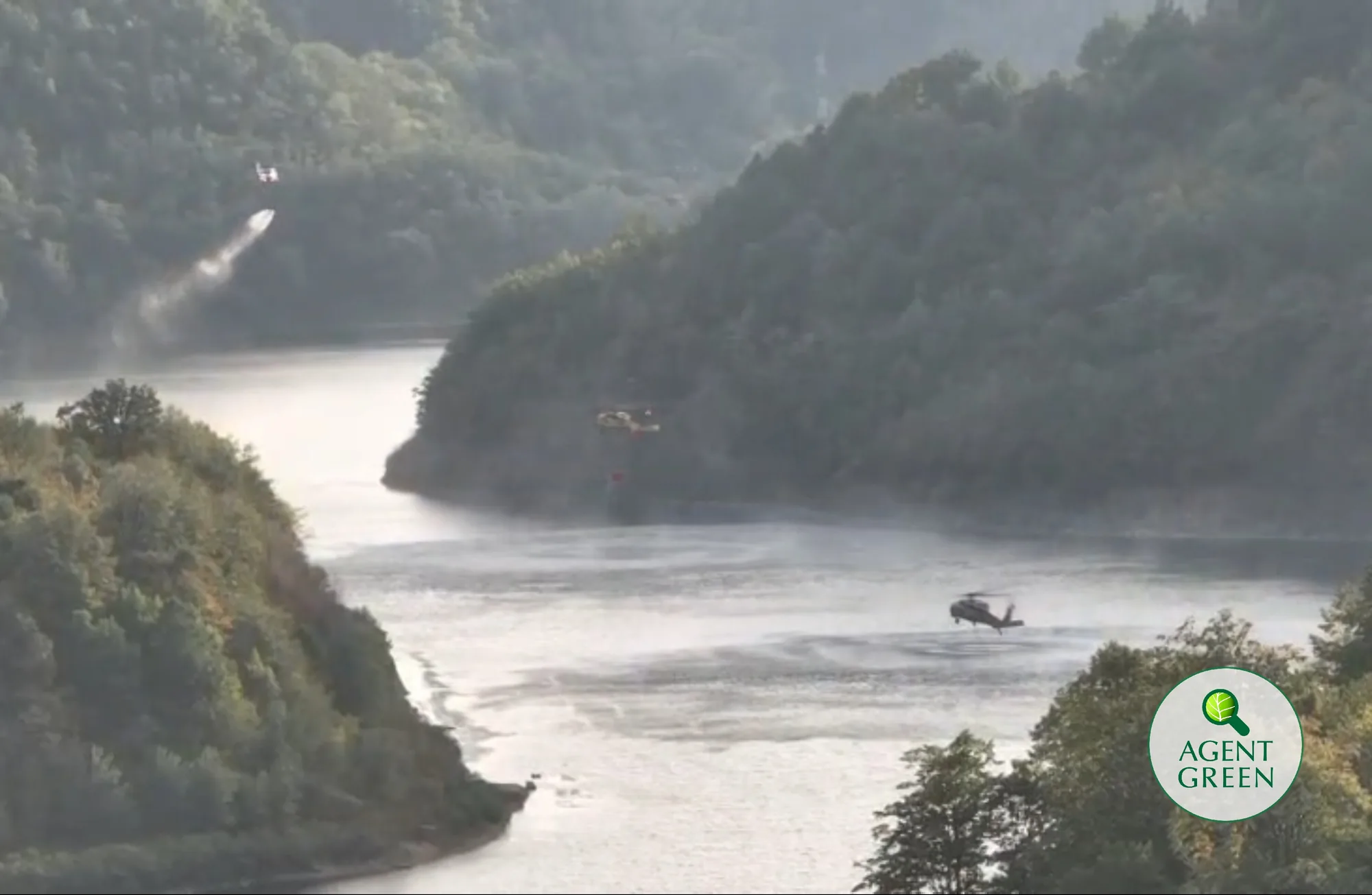
IGSU response No.C/1255 of 7 October confirms that the operation remained under county-level command until 28 September. The Forward Operations Point and integrated national command became operational on 29 September. On 28 September, DSU requested the European Commission’s agreement to use the rescEU helicopter hosted in Romania; the aircraft joined the operation on 29 September. A third helicopter was introduced on 1 October. On 4 October, the perimeters containing active fire hotspots totalled approximately 613 hectares; this figure does not represent the area actually burned. IGSU also confirms that Romania did not formally activate the EU Civil Protection Mechanism or request Copernicus EMS Rapid Mapping [1].
Agent Green raised the alarm nationally and internationally on 28 September, after almost seven weeks of fire. Without the operational logs, we do not claim that our notification caused the escalation of the response. The chronological coincidence is nevertheless clear and demands a question that IGSU’s response does not resolve: what would Domogled look like today if the resources, national command, thermal monitoring and rescEU capacity mobilised from 29 September had been used from the first days?
IGSU justifies not requesting additional European support by citing sufficient national resources, difficult access, safety limits for crews and the risk of congested airspace [1]. These explanations may be plausible for certain sectors and periods, but cannot be validated by the institutions that made the decisions. The fire in Slovenia’s Goriška Kras karst region showed that difficult limestone terrain does not preclude coordinated European intervention: in 2022, the EU coordinated three planes, five helicopters and an international ground team, while Slovenia activated Copernicus EMS to track the fire [2] [3]. This precedent does not dictate tactics for Domogled, but refutes the notion that European assistance is inherently useless or unsafe.
Romania has valuable specialists, but still too few with demonstrated interdisciplinary experience in severe forest-fire ecology, particularly in temperate forests, karst terrain and strictly protected areas. The assessment cannot remain within the same administrative chain or be led exclusively by the forestry bodies involved. Agent Green calls for the immediate establishment of an external panel, independent of the Government, IGSU, Romsilva and the park administration, with JRC/EFFIS and Copernicus EMS experts, operational-command specialists from experienced European states, and independent researchers in fire ecology, conservation biology, hydrology, soil science, climatology, geomorphology and remote sensing. Forestry must participate, but must not monopolise an assessment concerning an ecosystem, rather than a timber reserve.
The assessment’s mandate must include the complete timeline from 9 August to the present; the criteria for declaring the first fire extinguished on 25 August; monitoring between 25 August and 2 September; resource allocation; the failure to request additional European support or activate Copernicus Rapid Mapping; impacts on priority habitat 9530* [13]; and a new protocol for fires that will become more frequent and aggressive as the climate warms [12]. Politics must stay aside: the report must be published in full, with raw data and any dissenting expert opinions.
At the same time, the Ministry of Environment has opened consultation on a draft order on fire prevention and protection that applies to all forests without explicit safeguards for national parks, strictly protected zones, primary and near-primary forests or Natura 2000 habitats. The draft requires an “appropriate state of hygiene” through removal of dry, declining, broken or fallen trees and, after fires, the “immediate harvesting” of affected trees and preparation of land for replanting [4].
The contradiction lies in the Ministry’s own explanatory memorandum: it acknowledges that logging-residue fires occur in open compartments where fuel is fine and has low moisture content, and that the dryness of soil and vegetation increases through exposure caused by logging [4]. In other words, the Ministry correctly describes how opening the canopy dries the ground, then proposes more removals as a general solution.
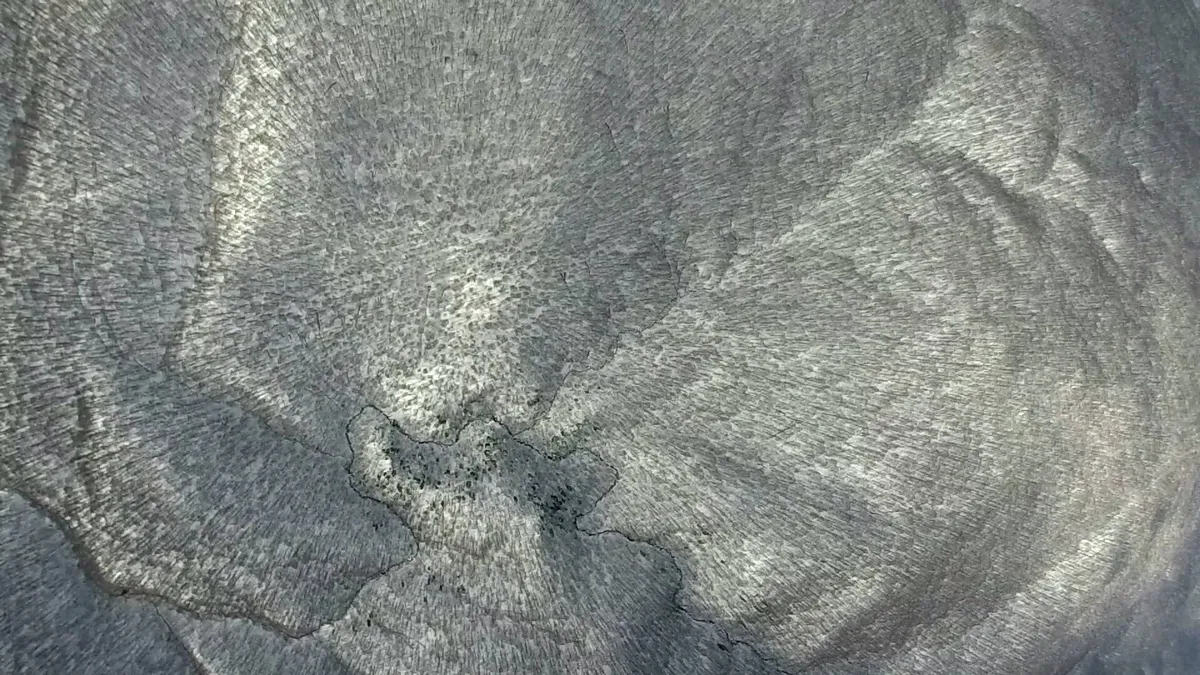
Science does not support equating coarse deadwood with fine vegetation that spreads fire quickly. The European Commission’s synthesis shows that large pieces of deadwood burn slowly and contribute relatively little to fire intensity, while salvage logging does not automatically reduce fine fuels [5]. The JRC also shows that primary and old-growth forests may be less fire-prone because of their complex structure, microclimate and the moisture in decaying coarse wood [6]. Other studies demonstrate that deadwood can act as a water reservoir [7] and that released organic matter improves soil porosity, micropore numbers and water retention [8]. Salvage logging may even increase fine woody fuel loads [11].
Agent Green calls for withdrawal of general obligations to remove deadwood and harvest immediately after fires. Fine-fuel management must target settlements, infrastructure and locations with demonstrated risk, rather than become a pretext for logging protected areas. Forestry rules must be rewritten for the climate: no planned contiguous openings larger than 0.2 hectares, with smaller thresholds in sensitive habitats; no enlargement of natural gaps; and mixed, uneven-aged, multilayered forests, natural regeneration, habitat trees, deadwood and canopy continuity. European research shows that gaps of 150–300 m² can largely retain the forest microclimate [9], while European nature-restoration legislation requires increasing trends for deadwood and uneven forest structures [10].
“After almost two months of fire, the state cannot ask the forest to pay for institutional delay. We will not accept Domogled’s autopsy being carried out by the same institutions that led the response, while the treatment for every forest is prescribed exclusively by the forestry of ‘sanitation’. We want independent experts from outside Romania, politics out of the laboratory and the natural sciences at the decision-making table. We do not adapt nature to incompetence; we adapt prevention, response and forestry to climate change,” says Gabriel Păun, President of Agent Green.
Agent Green has already filed a criminal complaint concerning the management of the fires (in Romanian) and will submit IGSU’s response and the request for clarification as additional documents. The complaint does not establish guilt or target firefighters or frontline staff; it seeks to preserve evidence and independently examine strategic decisions. The organisation also calls on the Ministry of Environment to suspend the draft in its current form and organise a genuine public debate with independent natural-science experts.
Press contact: Gabriel Păun, President of Agent Green — office@agentgreen.org
References
[1] IGSU, response No.C/1255/07.10.2026 sent to Agent Green, available on request.
[2] European Commission, “EU solidarity to combat wildfires across the continent”, 2022
[5] European Commission, JRC, “Deadwood and Fire Risk in Europe”, JRC134562, 2023, DOI 10.2760/553875
[10] Regulation (EU) 2024/1991 on nature restoration, Article12
[12] European Commission, JRC, “Climate change and wildfires – PESETA IV”
[13] Ministry of Environment, Natura 2000 standard data forms and official site data
Related articles
Gala Curaj: Agent Green’s invitation to the 3 June 2024 edition
Why the EU must stop subsidies for burning trees: a policy mistake that needs correcting