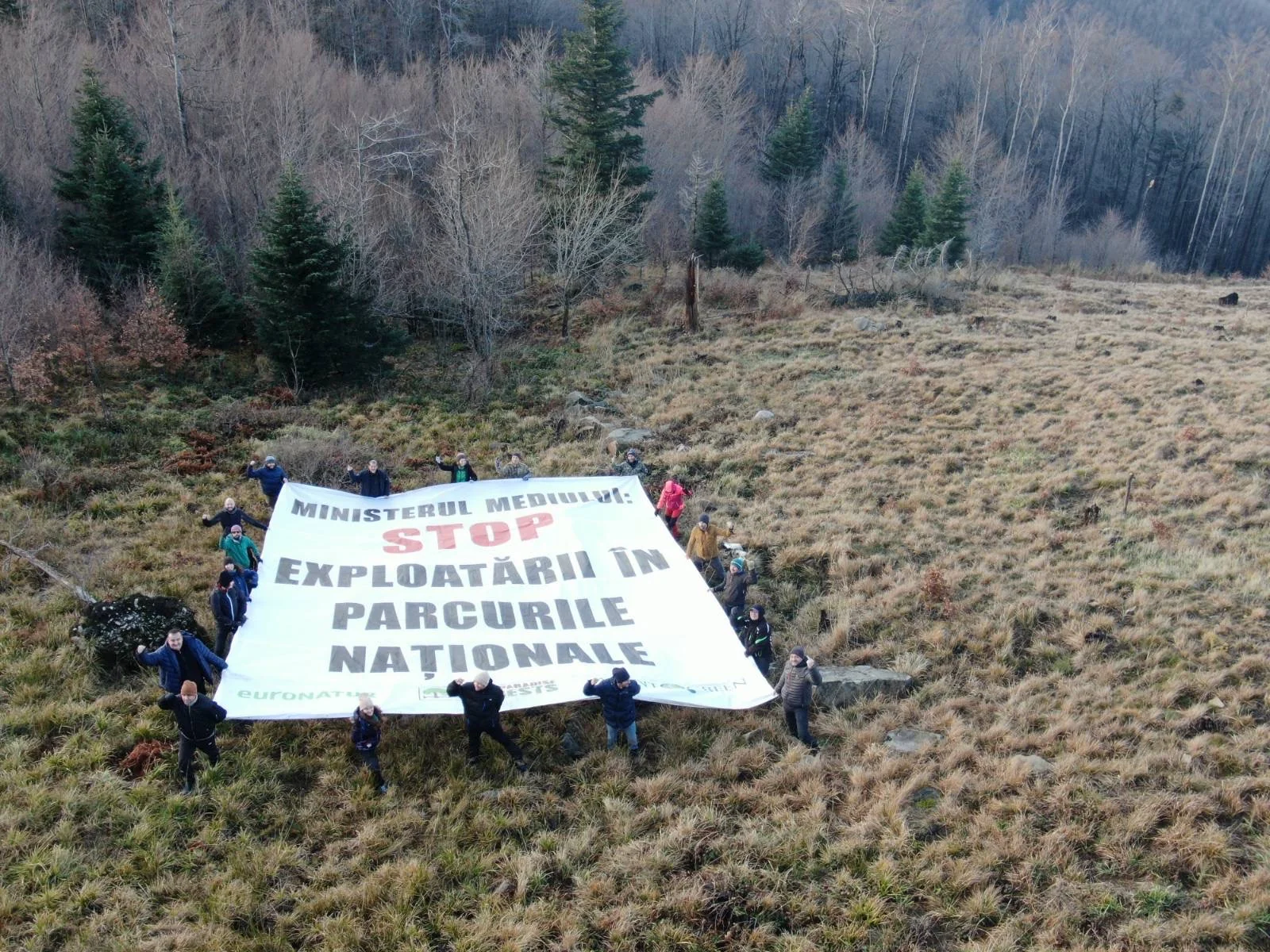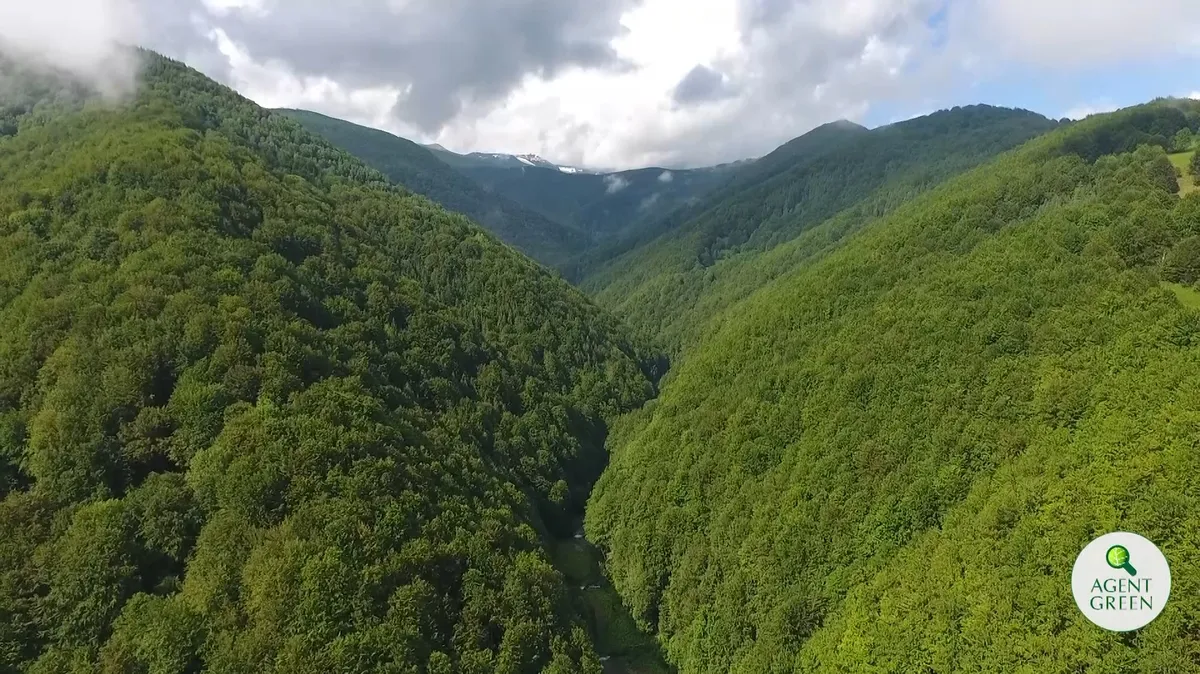
Romania promised 10% strict protection. The ministry puts only 2.54% on the map
Agent Green, Comunitatea Declic, Greenpeace Romania, Federația Peisaj Deschis and Platforma pentru Adaptare Climatică warn that the Environment Ministry’s proposal mainly recycles already protected areas.
Bucharest, 5 August 2026 - Agent Green, Comunitatea Declic, Greenpeace Romania, Federația Peisaj Deschis and Platforma pentru Adaptare Climatică warn that the Environment Ministry’s proposal mainly recycles already protected areas and does not build the ecological framework and climate shield on which Romania’s nature, society and economy depend.
The Environment Ministry has published a draft order designating 472 priority biodiversity areas, covering only 2.54% of Romania’s land area. This is the result presented six years after negotiations began and after three years of mapping, although Romania committed to contributing to the European objective of strict protection for one third of the 30% of territory protected by 2030, and the PNRR investment was created specifically to identify and designate these areas. [1]
Only 0.25% of the territory lies outside already protected areas
Analysis of the ministry’s published GIS database shows that the proposed land areas total approximately 609,400 hectares. Over 90% are already within existing protected natural areas: national and natural parks, the Danube Delta Biosphere Reserve, reserves, natural monuments, UNESCO sites and other protected-area categories. Land outside protected natural areas totals only approximately 59,800 hectares, or just 0.25% of the country’s territory.
Including areas that already have various conservation designations is necessary, but cannot be presented as progress toward the 10% objective. The ministry is not yet building a new, coherent and connected national network; instead, under a new name, it mainly brings together areas already present on conservation maps.
Moreover, the ministry’s GIS database indicates that only approximately 26% of the catalog’s area is designated exclusively for non-intervention. Almost 56% combines non-intervention with active management, while around 18% is assigned exclusively to active management. National legislation allows both regimes within priority biodiversity areas, obliging the ministry to demonstrate transparently which area actually meets European strict-protection criteria. Merely applying the label “priority biodiversity area” does not answer that question. [2]
Strict protection must be the country’s living framework
The stakes extend far beyond conserving individual species or habitats. The 10% must form intact, interconnected natural cores of infrastructure that supports the whole country: preserving water sources, protecting soils, moderating heat, retaining carbon and reducing the effects of drought, floods, fires and erosion. This ecological framework is also one of Romania’s last climate shields.
Without healthy natural cores and corridors connecting them, restoration of degraded ecosystems cannot produce lasting results either. The European Nature Restoration Regulation seeks restoration measures covering at least 20% of the Union’s land and sea areas by 2030 and at least 30% of the relevant habitat area that is not in good condition. Strict protection must provide the framework supporting that restoration, rather than a collection of isolated, vulnerable islands. [3]
“The ministry is delivering a sham of protection: a paltry 2.54% obtained simply by relabeling already protected forests, wrapped in a flimsy ministerial order extremely vulnerable to legal challenges. Without a Government Decision and an immediate moratorium on the 1.9 million hectares identified by experts, the ministry leaves nature at Romsilva’s mercy and sabotages the most important conservation project in Romania’s history.”
The organizations ask the ministry for transparency in the selection process:
“We ask the ministry to publish all proposals received from the specialists who have worked in recent years to map the areas that should receive strict protection. Then explain transparently how we went from 10% to 2.54%. On what criteria was the proposed protected area reduced? Is there really no potential, do we have no valuable natural areas? Or has the ministry become the advocate of private interests unrelated to scientific criteria for designating strict protection areas?”
“Strict protection for 10% of Romania was supposed to become the country’s living framework. More than a refuge for biodiversity, it should be the natural infrastructure supporting our society and economy: forests that retain water and cool the land, rivers and wetlands that ease drought and floods, living soils that sustain agriculture and intact ecosystems that absorb climate shocks. This is the climate shield Romania can still build.
We must then place the muscles of restoration on that framework. We can invest billions in restoring degraded nature, but without healthy, interconnected cores from which life can expand, we will restore fragile islands condemned to deteriorate again. Instead, the ministry offers only 2.54% of the country’s territory, mostly composed of land already within protected areas, and calls it the ‘first stage’. We cannot defend Romania by changing labels on the map. We need new, real, permanent and connected protection,” says Gabriel Păun, president of Agent Green.
What is missing from the “first stage”
The ministry says this is only the start of the process. Yet the published documents contain no schedule for approaching the 10% objective, committed interim areas, binding deadlines, funding sources or concrete mechanism through which subsequent stages will fill the gap. Without these guarantees, “first stage” risks becoming the administrative formula presenting an inadequate result as progress.
The organizations’ preliminary assessment indicates that approximately 80% of mapping proposals submitted by Agent Green, Greenpeace and Declic are absent from the published version, including areas with agreements from owners or administrators. The ministry has not published a complete matrix of proposals received, the assessment of each and the scientific or legal justification for acceptance or rejection.
This lack of transparency is especially serious because Agent Green warned as early as 2023 that the methodology, criteria and maps needed genuine consultation, all proposals needed analysis and the expert team needed to respond in writing to every observation. The organization requested consultations of at least 30 days, representation of all ecosystems and connectivity between designated areas so Romania would not be left with isolated islands of nature.
Instead, on 3 August the ministry published hundreds of technical sheets and the entire mapping database, allowed only ten calendar days for observations and scheduled the public debate for 10 August, requiring registration by 7 August at 14:00. In practice, the public and specialists have only a few days, in the middle of the holiday season, to analyze 472 areas, hundreds of documents and a national GIS database. [4]
The ministry justifies the urgency by citing the risk of a PNRR penalty of up to €25.69 million. But three years of accumulated institutional delay cannot be passed on to the public through a rushed consultation. Urgency to avoid losing money cannot replace the obligation to protect the nature for which it was allocated.
“We do not dispute the need for rapid adoption of protective measures. We dispute using speed to avoid essential questions: what has actually gained additional protection, which proposals were rejected, who decided and on what criteria? A PNRR milestone cannot be ticked off simply because an order was published in the Official Gazette. It must deliver the result for which Romania received funding,” state Agent Green, Greenpeace Romania and Comunitatea Declic.
“The entire political class seems ignorant and lacking in courage regarding the climate danger. Otherwise, it would understand that, if we want to keep freshwater and functioning nature, we must remove chainsaws from at least 10% of Romania’s forests,” says Ciprian Gălușcă, Platforma pentru Adaptare Climatică.
The organizations’ requests
The organizations ask the Environment Ministry to:
- present the complete list of proposals received and the reasoning for accepting or rejecting each;
- revise the catalog to include new, representative and ecologically connected areas;
- protect all remaining primary and old-growth forests;
- publish a binding schedule, with deadlines and interim areas, to reach the 10% objective;
- impose a moratorium on all identified areas until designation, to prevent their intentional or unintentional downgrading;
- clearly demonstrate which areas meet European strict-protection criteria.
Romania does not need a catalog that recycles existing protection and closes an administrative milestone. It needs the country’s living framework, without which biodiversity, water, agriculture, the economy and communities will become increasingly vulnerable to the climate crisis.
10% means 10%. Not 2.54%, not a new label and not a promise without a deadline.
Press contacts
- Agent Green: office@agentgreen.org
- Greenpeace Romania: mihnea.matache@greenpeace.org
- Platforma pentru Adaptare Climatică: contact@adaptareclimatica.ro
Sources
- EU Biodiversity Strategy for 2030. European Commission.
- OUG no. 57/2007 on the regime of protected natural areas. Legislative Portal.
- Regulation (EU) 2024/1991 on nature restoration. EUR-Lex.
- Draft order approving the National Catalog of Priority Biodiversity Areas. Ministry of Environment, Waters and Forests.
Related articles
Domogled is burning, the state is late and the environment ministry wants to “sanitise” Romania’s forests
Government approves biodiversity strategy – 10% of nature under strict protection remains only on paper