National parks are Romania’s most valuable natural territories. They represent the core of biodiversity and the foundation of the future “Romania’s Living Backbone” — a network of at least 10% strict protection. They contain primary and near-primary forests, intact ecosystems and species that have disappeared from the rest of Europe.
national parks
~1.3% of the country’s area
of the country’s forests
protected in national parks
non-intervention
the international standard (IUCN category II)
What are national parks?
National parks are protected natural areas intended to conserve representative territories, where natural processes must unfold freely, biodiversity is fully protected and human intervention is minimal.
They correspond to IUCN category II — the international standard for ecosystem protection.
Their main purpose: protecting nature, rather than exploiting it.
The fundamental rule: 75% strict protection
The international standard is clear: at least 75% of a national park’s area must be under non-intervention.
This means:
- ✗No commercial logging
- ✗No invasive infrastructure
- ✗No habitat fragmentation
The remaining maximum of 25% may include:
- ✓Traditional activities
- ✓Responsible tourism
- ✓Justified minimal interventions
The reality in Romania
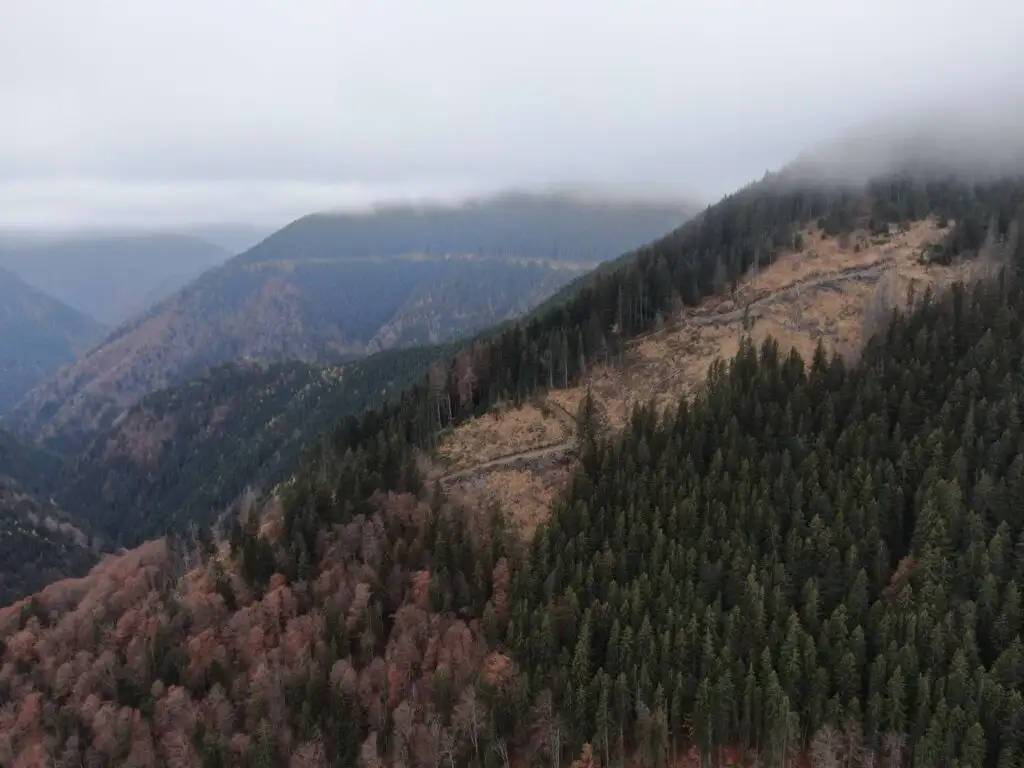
For decades, national parks were exploited rather than protected:
- ✗Logging took precedence over protection and conservation
- ✗Logging occurred even in primary and old-growth forests
- ✗Strictly protected zones were too small and fragmented
- ✗Management plans favoured exploitation
- ✗Administrations depended on timber revenue
In many cases, parks operated as logging areas rather than conservation areas.

A National Massacre — the complete series

The disaster in Rodna Mountains National Park
What a national park really means
A genuine national park must:
- ✓Conserve functioning ecosystems at a large scale
- ✓Maintain viable species populations
- ✓Protect natural processes (water, soil, biodiversity)
- ✓Support local communities through sustainable models
It is not a forest to be exploited. It is a living system that sustains life.
17 years of struggle: what Agent Green has changed
Securing real protection for national parks is one of Agent Green’s longest campaigns. Through investigations, litigation, scientific studies, protests and advocacy, we have achieved concrete victories.
Domogled–Valea Cernei
- ✓Radoteasa — saved
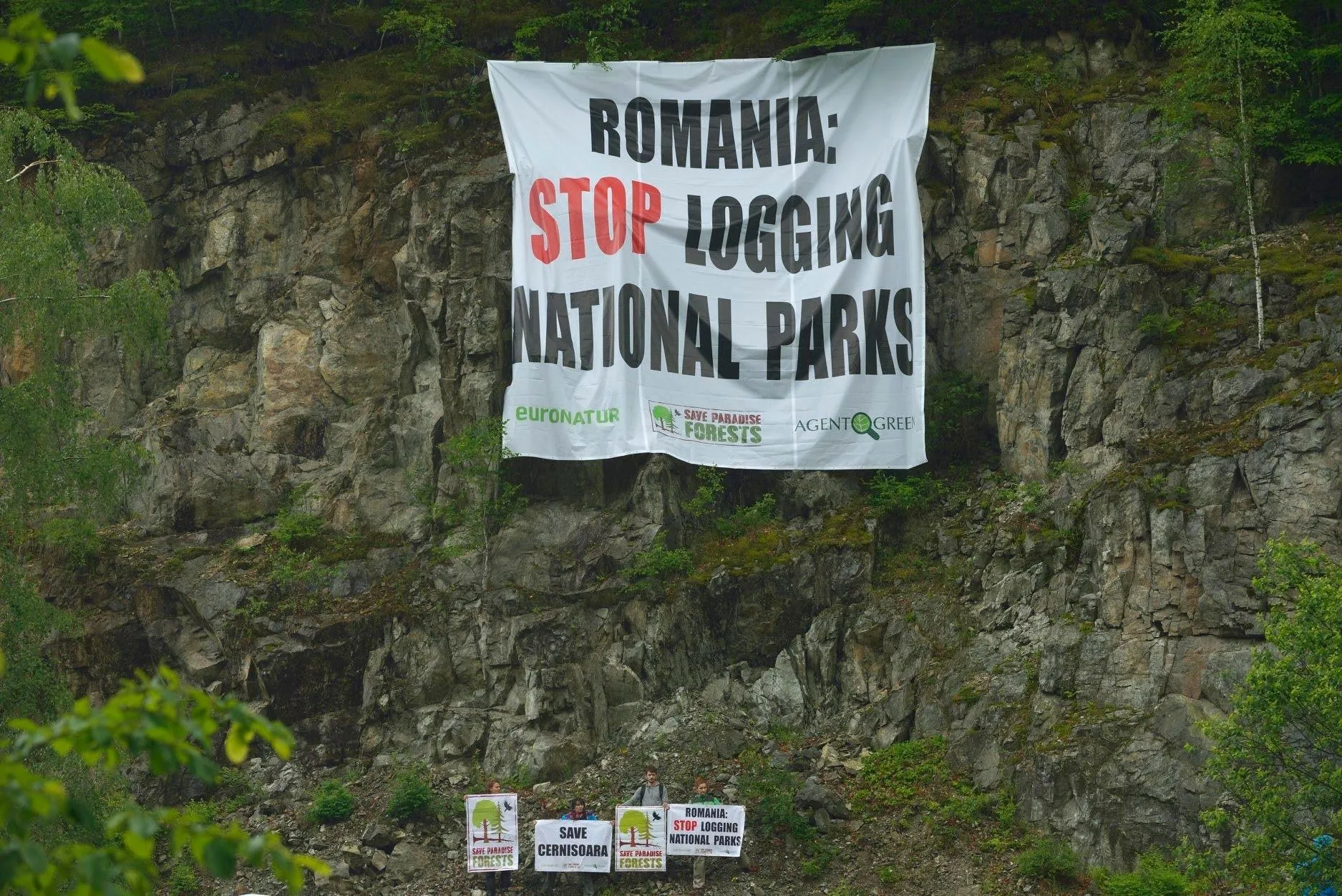
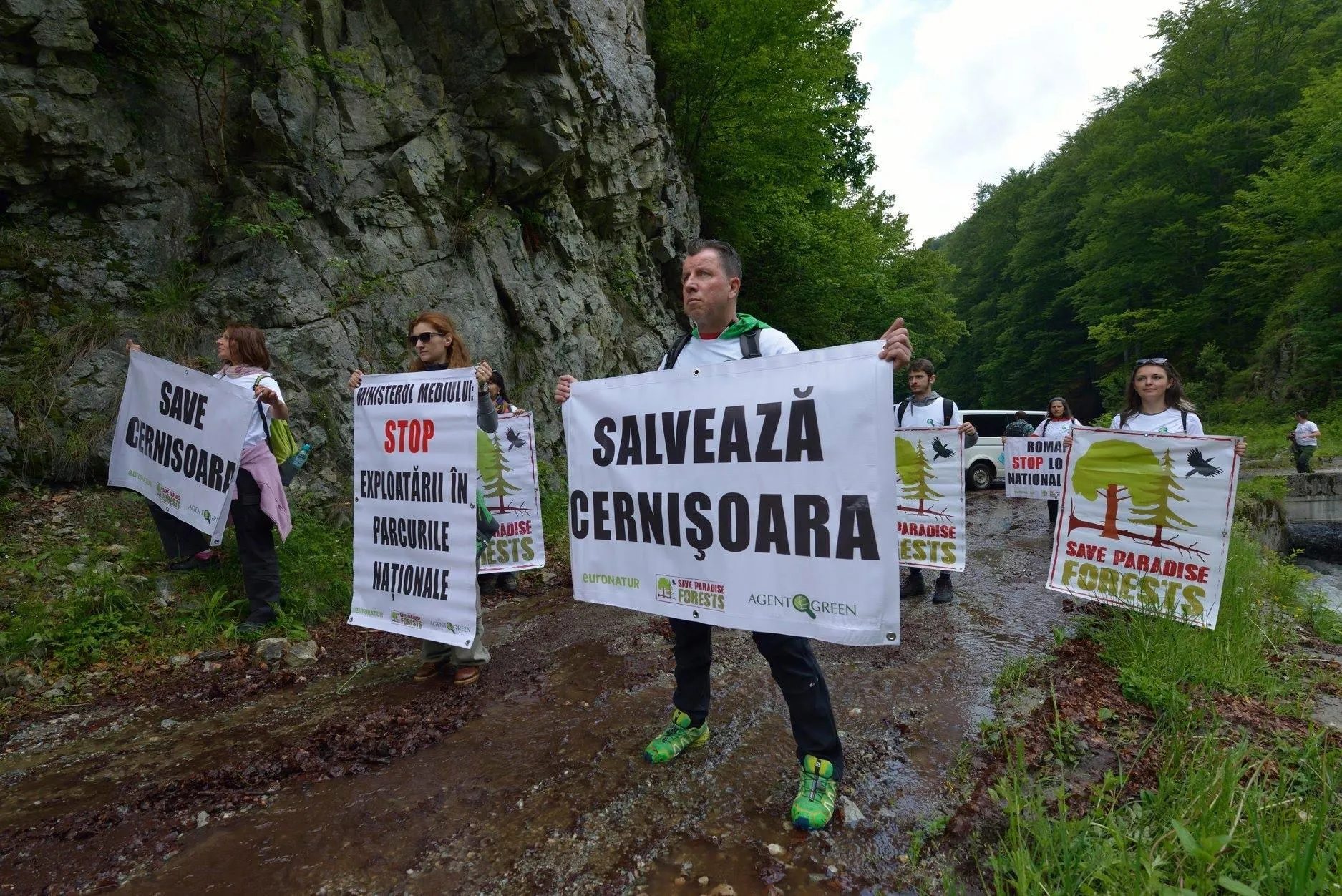
- ✓Cernișoara — saved
- ✓Other valleys removed from logging
Retezat
- ✓Lăpușnicul — protected
- ✓Râu-Șes — protected
- ✓Intact ecosystems conserved
Where we stand today
Romania is much closer to the threshold of 75% strict protection than it was 17 years ago.
But there are still:
- ✗Logging operations in some parks
- ✗Protection only on paper
- ✗Fragmentation and infrastructure
- ✗Economic and political pressures
The fight is not won. It is ongoing.
The link to “Romania’s Living Backbone”
National parks are the core areas of the 10% strict-protection network. They contain primary forests, intact ecosystems and ecological corridors — the essential building blocks of “Romania’s Living Backbone”.
The future: new national parks
Romania still has extraordinary areas that must be protected:
The Făgăraș Mountains
- •One of Europe’s last large wilderness areas
- •They could become a benchmark national park
The Țarcu Mountains
- •Intact ecosystems, exceptional biodiversity
- •Essential habitat for large carnivores
Ciucaș & Giumalău
- •Scientifically documented
- •Politically blocked
Bucovina Peace Park
- •A cross-border Romania–Ukraine park
- •Connecting Carpathian ecosystems
- •Freedom of movement for species
- •Cooperation between communities
carpathianpeaceparks.org →
Why it matters
Climate
- ✓They store carbon
- ✓They combat climate change
Nature
- ✓They protect water and soil
- ✓They maintain biodiversity
- ✓They reduce natural risks
Economy
- ✓Economic engines through ecotourism
- ✓They support local communities
What must be done
1
Real protection — at least 75% non-intervention in every national park
2
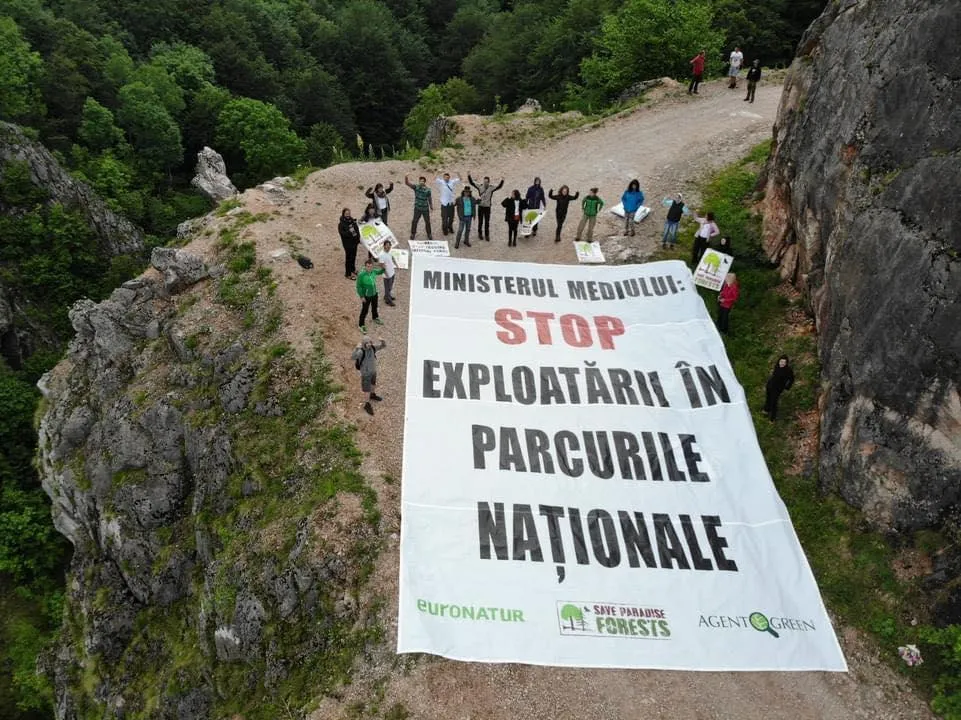
Stop commercial exploitation — eliminate industrial logging from parks
3
Independent administration — without conflicts of interest
4
Proper funding — from public budgets, rather than logging
5
Expand the network — Făgăraș, Țarcu, Ciucaș, Giumalău, Bucovina Peace Park
National parks are the last chance for Europe’s wilderness
Since 2009:
- ✓We have stopped destruction
- ✓We have saved ecosystems
- ✓We have changed direction
Real national parks, rather than parks on paper.
Strict protection, rather than disguised exploitation.
A “Romania’s Living Backbone” that sustains life in the long term.