Skip to content
active

IKEA 2.0

All campaigns

The world believes IKEA is sustainable. The reality is more complicated. Behind its “green” image lies a model that has changed the global industry: fast furniture — cheap furniture, produced quickly and replaced often. Just like fast fashion. But wood is not a one-season material. It comes from forests that take hundreds of years to grow.

The report by Agent Green and the Bruno Manser Fonds (BMF) exposes the destruction caused by IKEA and presents environmental organisations’ firm demands to the Swedish corporation.

In August 2021, Agent Green had already published its first report documenting destruction in Romania’s forests linked to IKEA. But IKEA did not begin the necessary change, which is why Agent Green and the Bruno Manser Fonds (BMF) published a new report in 2024: IKEA — Clever on the outside, rotten on the inside.

The real problem — forests become consumer products

IKEA has become Romania’s largest private forest owner. A new investigative report by Agent Green and the Bruno Manser Fonds reveals a worrying pattern:

  • •Aggressive logging in forests owned or used by IKEA
  • •Destruction of valuable ecosystems
  • •Natural forests transformed into monocultures

Living forests become plantations.

What we discovered

The analysis included official documents and field visits to half of IKEA’s 43 forests in Romania — a total area of approximately 51,000 hectares.

50+

suspected legal violations

43

IKEA forests in Romania

51,000 ha

total area investigated

Natura 2000

logging in protected areas

  • Old-growth forests affected
  • Deep forest roads fragmenting ecosystems
  • Logging in protected Natura 2000 areas

The figures that tell the truth

1,04%

of IKEA’s forests are strictly protected

10%

the EU’s strict-protection target

8,24%

partial protection in IKEA’s forests

30%

the EU’s overall protection target

IKEA has a major nature-protection deficit, far below the European Union’s goals and the needs of Romania’s Living Backbone.

Why this is serious

Climate

Natural forests:

  • ✓Store carbon
  • ✓Regulate the climate
  • ✓Protect water

Monocultures:

  • ✗Store less carbon
  • ✗Are vulnerable
  • ✗Cannot replace natural forests

Biodiversity

Native mixed forests:

  • ✓Complex
  • ✓Diverse
  • ✓Resilient

Monocultures:

  • ✗Biologically poor
  • ✗Fragile
  • ✗Dependent on human intervention

Water and soil

Natural forests:

  • ✓Retain water
  • ✓Protect soil
  • ✓Reduce the risk of floods and drought

Plantations cannot do this as well.

Fast furniture = forests cut down faster

“IKEA treats the forest like a maize crop.”

IKEA’s current model means more wood, faster, more often. But wood is not plastic — it cannot be mass-produced without consequences. A forest is not an agricultural crop. It is a living ecosystem.

The ARTE documentary: IKEA, the tree hunter

The recent ARTE documentary, to which Agent Green also contributed, reveals the true cost of IKEA furniture and the uncontrolled exploitation of timber and human labour. The film received millions of views worldwide.
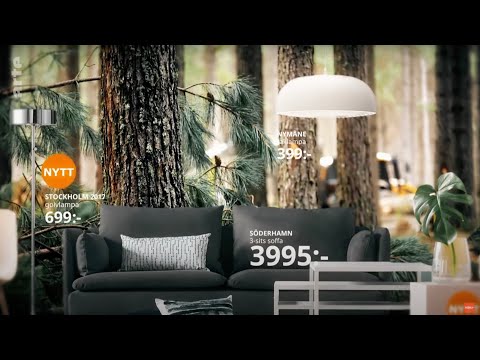
IKEA, the tree hunter — ARTE documentary

IKEA, the tree hunter — ARTE documentary

Protest at IKEA’s construction site in Iași

Agent Green, the Mai Bine association from Iași and Sweden’s Protect the Forest protested at IKEA’s construction site in Iași. Volunteers from the organisations planted trees to highlight that the company cannot continue expanding in the market while abusing Romania’s forests. The activists’ message: “Out of Iași, IKEA! Let the Trees Grow / Let The Trees Grow”.
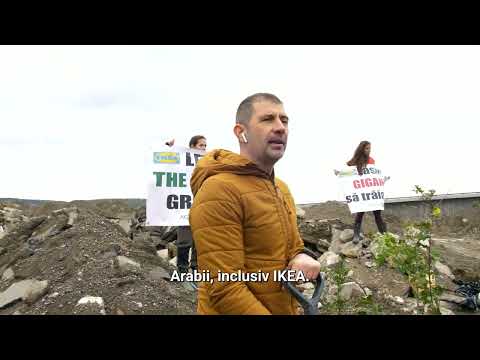
IKEA Iași protest — Agent Green, Mai Bine & Protect the Forest

IKEA Iași protest — Agent Green, Mai Bine & Protect the Forest

What we demand

We do not want to abolish IKEA. We want to transform it. IKEA can become a real leader in sustainability.

1. Furniture that lasts for generations

Wood comes from trees that grow for hundreds of years. Products must reflect this: an oak table can last for hundreds of years, and a solid-wood wardrobe can be passed from generation to generation. Furniture must be repairable, modular and reusable — not just for one season.

2. No monocultures

Stop converting natural forests into plantations.

The IKEA 2.0 film

The IKEA 2.0 film

3. Close-to-nature forestry

Apply the Forever Forest — Agent Greenmodel: selective logging, mixed forests, trees allowed to grow old, natural regeneration. Living forests, rather than timber crops.

4. Real protection

No logging in primary and old-growth forests. No timber from national parks. An urgent increase in protected areas.

5. Full transparency

Complete timber traceability. Access for civil society and journalists.

6. Certification is not enough

Many consumers believe labels such as FSC or PEFC guarantee timber comes from sustainable sources. Unfortunately, the reality on the ground tells a different story. Numerous investigations have documented destructive logging in certified forests: clear-cutting in valuable forests, interventions in protected areas and a lack of biodiversity protection.

Together with Cash Investigation journalists from France 2, we sent by post the documentation required to certify fictional forests. Shortly afterwards, we received a reply saying the supposed forests had been certified. But in reality, no forests existed at the coordinates in the application — only a nuclear power station, a pig farm, a supermarket car park, a nightclub and an airport.

True sustainability comes from real practices, rather than labels.
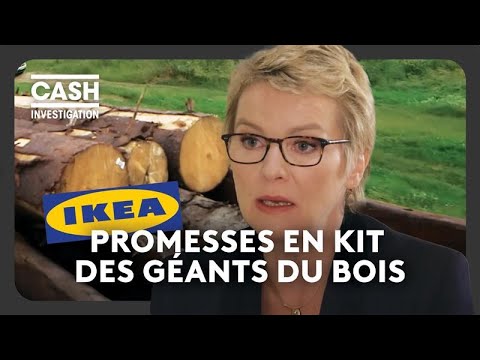
The PEFC trap — Cash Investigation & Agent Green

The PEFC trap — Cash Investigation & Agent Green

7. When furniture becomes a danger

In several internationally documented cases, children died or were seriously injured when unstable chests of drawers toppled onto them. These are not simple accidents — they are tragedies that led to product recalls and lawsuits. Furniture should do more than be affordable. It should be safe. Especially for children.

This reality is presented in the documentary “Broken”, episode 3 — “Deadly Dressers”, featuring Agent Green.

A historic opportunity

IKEA is Romania’s largest private forest owner and a global giant. It has the power to change everything. The question is: will it continue the current model or become a real global example, starting in Romania?

Furniture must not cost the planet its forests.

The future begins with IKEA 2.0. Support Agent Green’s efforts to change IKEA in Romania for the whole Planet.

Donate now

Video

IKEA, the tree hunter — ARTE documentary

IKEA, the tree hunter — ARTE documentary

IKEA Iași protest — Agent Green, Mai Bine & Protect the Forest

IKEA Iași protest — Agent Green, Mai Bine & Protect the Forest

The PEFC trap — Cash Investigation & Agent Green

The PEFC trap — Cash Investigation & Agent Green

The IKEA 2.0 film

The IKEA 2.0 film

External resources