
Drought has stopped a reactor. Agent Green offers viable energy-security solutions and calls for climate change to enter the National Security Strategy now
The memorandum sent to Romania’s President in March has received no response. Agent Green calls for a national plan for renewable generation, large-scale storage and a phased reduction in dependence on nuclear energy and fossil fuels.
Bucharest, 1 August 2026 - Today, Agent Green is resending to Romania’s President, the Government, the Supreme Council of National Defence and the institutions responsible for energy, water and critical infrastructure the summary version of its updated memorandum on climate change as a national security risk. This follows the controlled shutdown of Unit 1 at Cernavodă nuclear power plant because of the unprecedentedly low Danube level caused by severe drought. Nuclearelectrica stated that, if parameters continue to approach operating limits, it may be necessary to shut down one unit or even both. [1]
The energy crisis does not begin on the day a reactor stops, but with the signs every government has ignored: years of drought, infrastructure concentrated in a few locations and decisions delayed until the state hits the panic button.
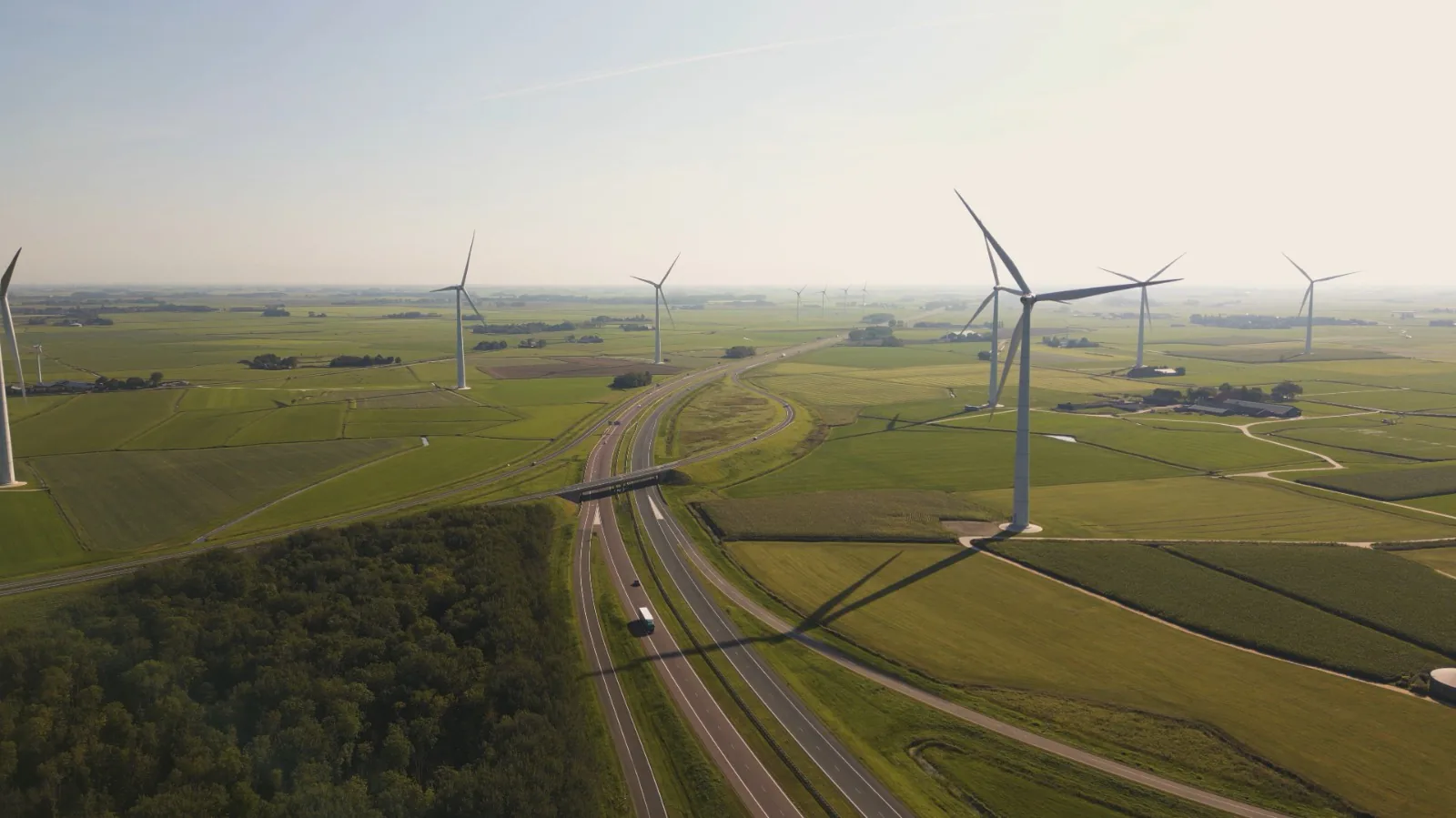
On 1 August, the Danube’s flow at Baziaș was 1,550 m³/s, compared with the July multiannual average of 4,700 m³/s. [2] This is no local accident. The Danube is the product of a shared river basin spanning 19 countries. The Sava is its largest tributary by flow; the Tisa, which crosses Ukraine and Hungary, has the largest sub-basin and is the longest tributary; and the Drava rises in Italy and crosses Austria, Slovenia and Croatia before reaching the Danube. [3] Drought in central Europe becomes, with some delay, an energy crisis in Romania. Rain in central Europe takes a week to help raise the Danube’s flow in Romania, but no substantial rain is forecast in the Alps over a seven-day horizon, apart from brief local storms.
“On 24 March, we sent Romania’s President a comprehensive 63-page memorandum calling for climate change, water and energy to be treated together as a matter of national security. We received no substantive reply. Four months later, one of the scenarios we warned about became reality: drought entered the energy system’s control room,” says Gabriel Păun, president of Agent Green and United Nations Champion of the Earth.
Nuclear safety worked, but energy planning did not
A controlled shutdown is the right measure when safety margins require it and is not a nuclear incident. It does, however, demonstrate that nuclear generation is not immune to climate change. A power plant dependent on a minimum flow for cooling can become unavailable precisely during heatwaves, when electricity demand is high.
Agent Green does not propose abruptly closing reactors and replacing them with fossil-fuel combustion. The organization calls for a phased, predictable reduction conditional on alternative capacity coming online in advance: solar and wind energy, modernized grids, batteries, demand flexibility and pumped-storage hydropower. Every megawatt withdrawn must be replaced before a shortfall emerges, not afterward.
Decisions must consider full costs over the entire life cycle. The European Investment Bank estimates the total refurbishment cost for Unit 1 at approximately €3.2 billion, for which it approved an €800 million loan. [4] Spent fuel remains in pools for at least six years and then in the DICA dry intermediate storage facility for up to 50 years; by definition, this is an interim arrangement, not final disposal. [5] Uranium is neither renewable nor infinite. It is a finite mined resource: the OECD-NEA and IAEA assessment finds sufficient resources for growth until 2050 and beyond, but only with timely investment in exploration, mines and processing, within a global chain exposed to geopolitical risks. [6]
The solution that “moves water around” without destroying rivers
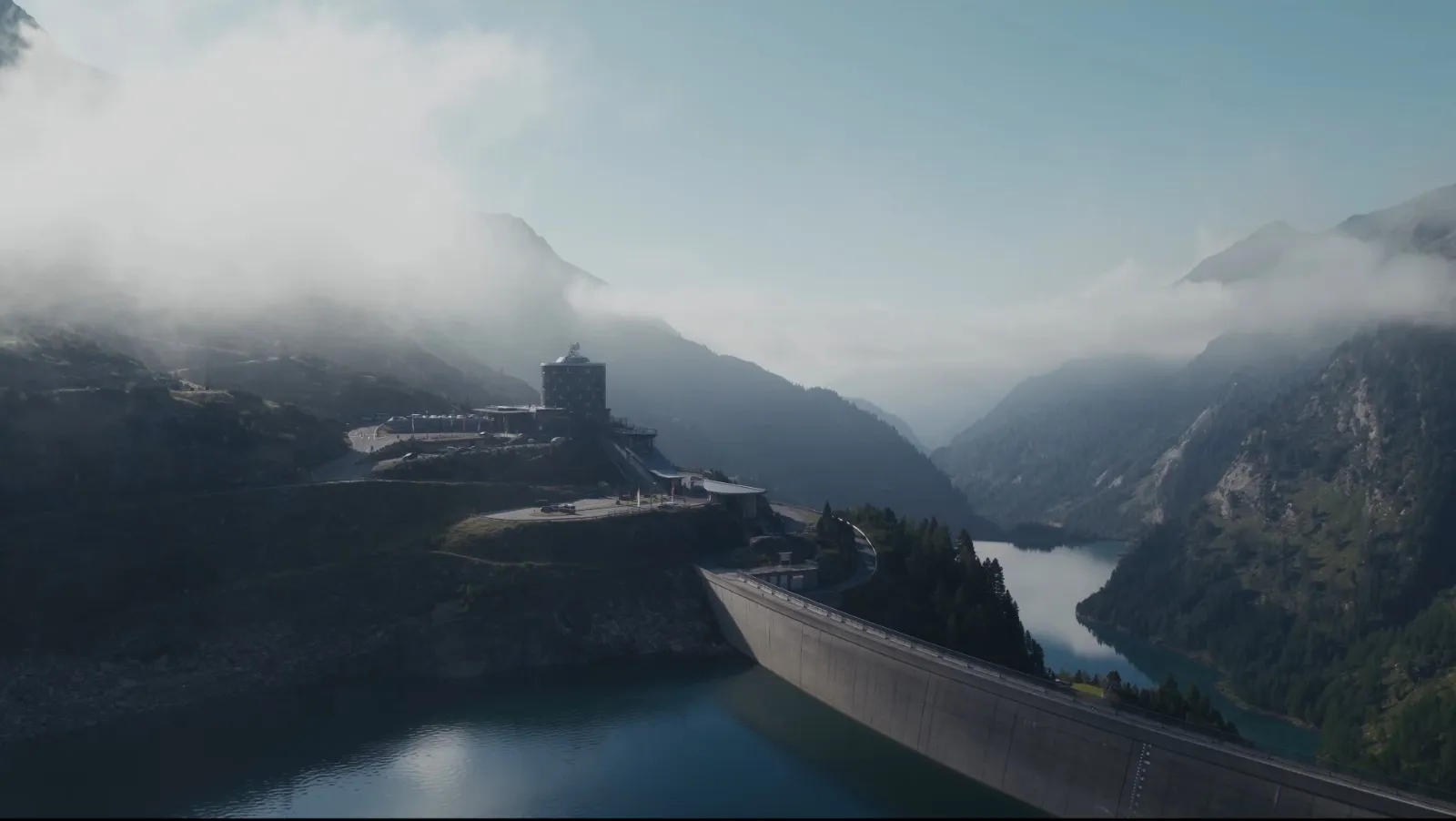
In July, after a technical visit to Austria’s Malta-Reißeck complex, Agent Green proposed a National Strategy for Pumped-Storage Hydropower Plants (CHEAP). The Austrian system has total turbine capacity of 1,545 MW and pumping capacity of 1,095 MW. Much of the infrastructure is built inside the mountain and shares existing reservoirs. [7]
CHEAP does not create energy; it shifts it through time. When sun and wind produce a surplus, water is pumped into an upper reservoir. When generation falls, water flows down through turbines and electricity returns to the grid. Closed-loop systems primarily recirculate the same water between two reservoirs and have no permanent connection to a river; they still require makeup water for evaporation and seepage losses. Underground siting, existing reservoirs, former mines and already altered land can reduce land take and impacts on nature. [8]
Worldwide, pumped storage already provides over 90% of the volume of long-duration electricity storage. [9] Romania has terrain, existing reservoirs, quarries and industrial areas where such projects can be studied without building new dams on the last wild rivers or sacrificing protected natural areas.
“We say YES to energy that withstands drought, reduces imports and does not pass the bill to future generations. Romania must not wait for the next panic situation. It must start building the system that recirculates water, stores surplus solar and wind power and delivers it when we need it,” adds Gabriel Păun.
Agent Green calls for six immediate key decisions
- Convene an assessment within the Supreme Council of National Defence and explicitly include climate, hydrological and energy risks in the National Defence Strategy.
- Conduct a first national energy-resilience audit, based on modeling and simulations of climate-water-energy crises, implementing the obligations of Regulation (EU) 2019/941, without deliberately shutting down capacity or interrupting supplies to the population.
- Develop the National CHEAP Strategy within a maximum of six months, identifying locations outside protected areas and prioritizing closed-loop, underground systems or those using existing reservoirs.
- Accelerate investment in solar, wind, batteries, grids, interconnections, demand management and energy efficiency so that energy imports and fossil-fuel combustion cease to be the automatic response to every shortfall.
- Publish an independent, comprehensive comparison of energy options, covering capital costs, water, waste, decommissioning, construction time, flexibility and climate risk.
- Establish a predictable schedule for a phased reduction in the nuclear share, linked to the prior installation of clean and storage capacity, without replacing nuclear energy with fossil fuels.
“Romania really no longer has the luxury of choosing between nature, climate and energy. The water disappearing from the Danube shows that they are one and the same problem,” Păun concluded.
Press contact: office@agentgreen.org
Notes
- Current report: Controlled shutdown of Unit 1 at Cernavodă nuclear power plant. Nuclearelectrica/BVB, 27 July 2026.
- Hydrological diagnosis and forecast for the Danube - 01.08.2026. INHGA: 1,550 m³/s at Baziaș, compared with an average of 4,700 m³/s.
- Danube River Basin and its main sub-basins. ICPDR; supplemented by the pages on the Sava, Tisa and Drava.
- Nuclearelectrica Cernavodă Rehabilitation. EIB: estimated total cost €3.2 billion and financing of €800 million.
- DICA - Intermediate Storage for Burnt Fuel. Nuclearelectrica: dry intermediate storage for 50 years.
- Uranium 2024: Resources, Production and Demand. OECD-NEA/IAEA: sufficient resources until 2050 and beyond, subject to investment.
- More power for Austria’s largest “green battery”. VERBUND: Malta-Reißeck - 1,545 MW turbine capacity and 1,095 MW pumping capacity.
- Pumped Storage Hydropower. U.S. Department of Energy: the difference between open-loop and closed-loop systems.
- The Paris Pledge. IHA/Eurelectric: over 90% of the global electricity-storage volume.
- Official memorandum - Romania: imminent systemic risk and unavoidable strategic decisions. Agent Green, 24 March 2026.
- Agent Green proposes an alternative to destroying the last wild rivers. Agent Green press release, 13 July 2026.
Related articles
Agent Green proposes an alternative to destroying the last wild rivers
Constitutional Court opens Pandora’s box: national parks may be sacrificed for controversial hydropower projects