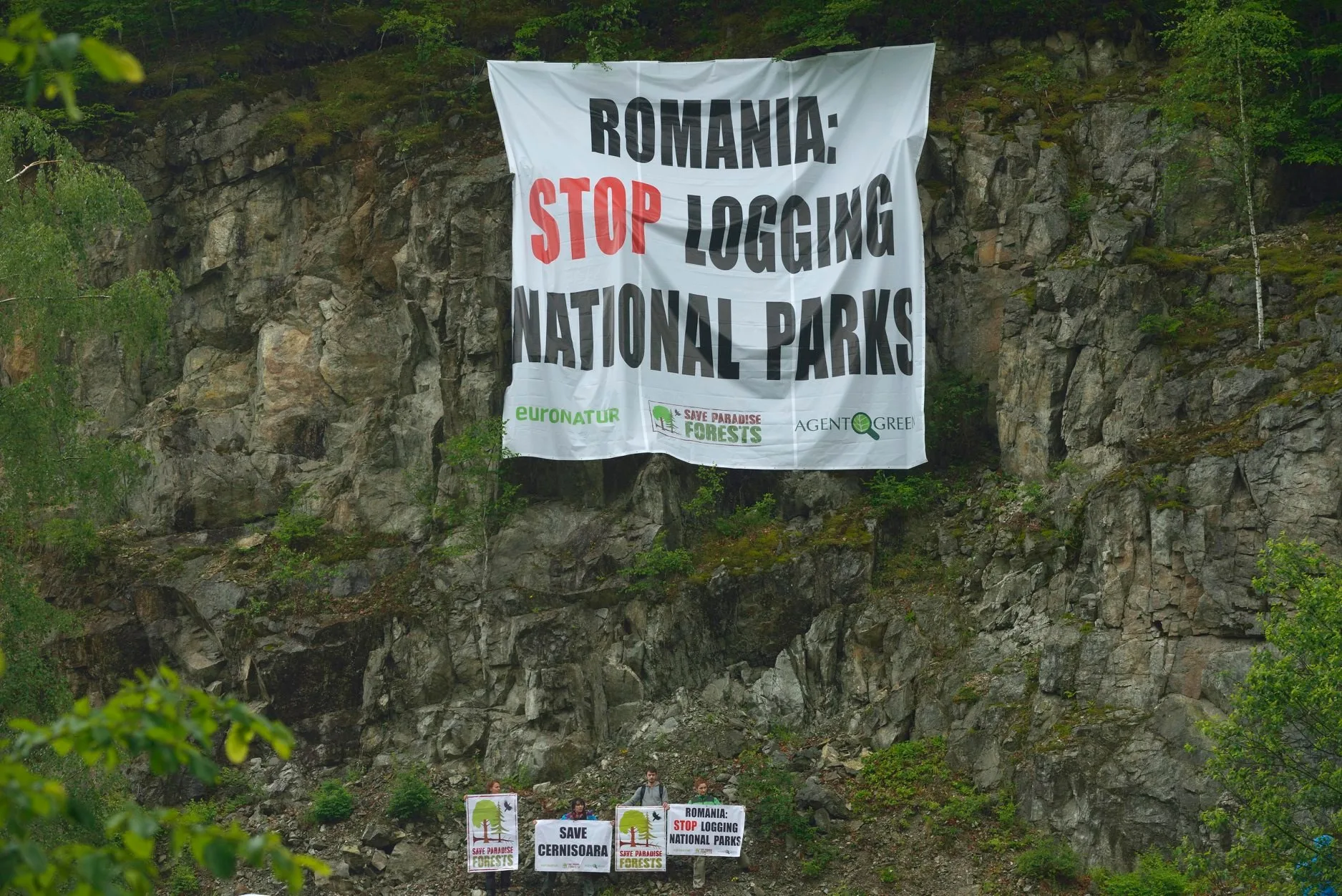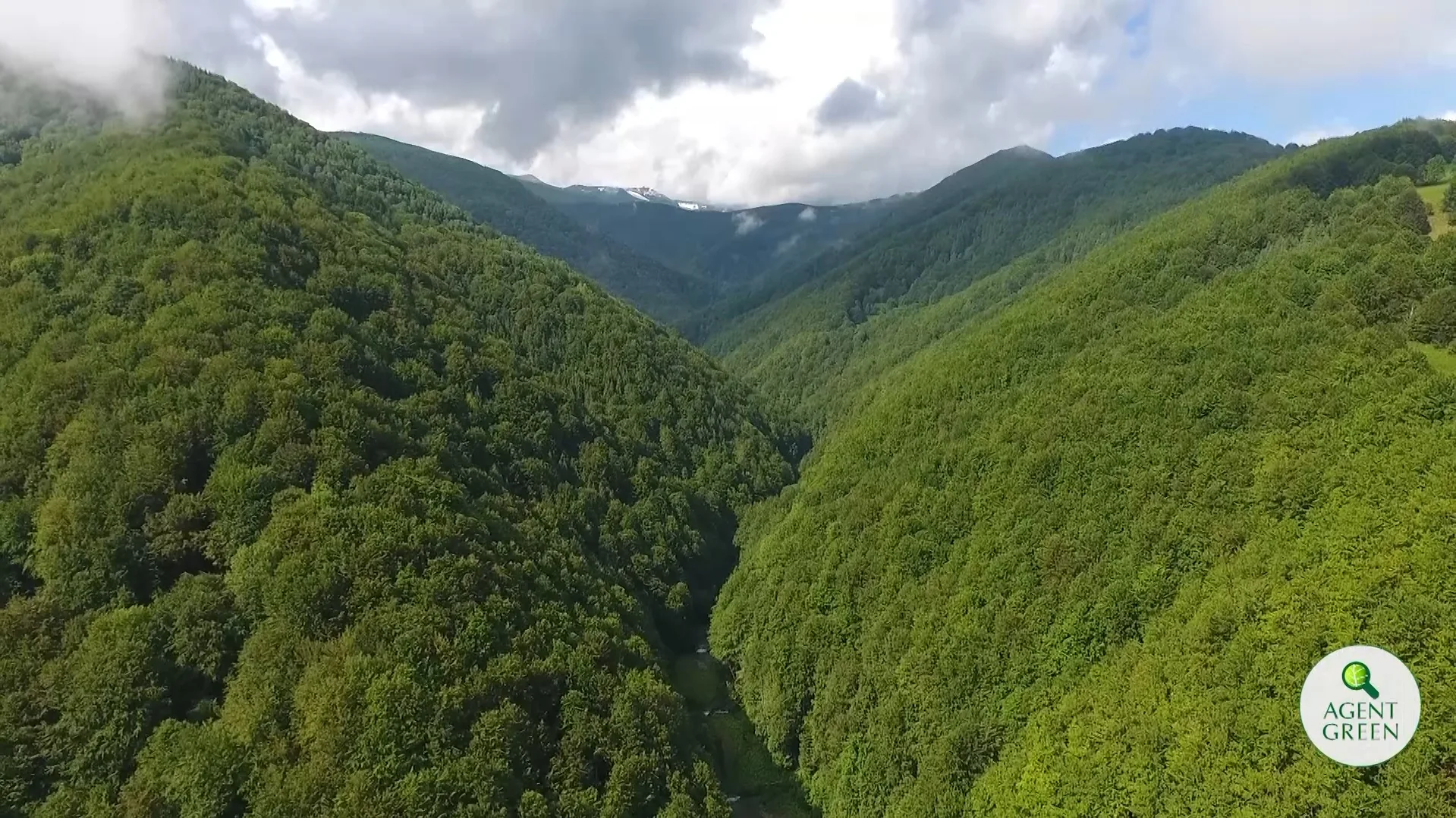
Government approves biodiversity strategy – 10% of nature under strict protection remains only on paper
Agent Green, Declic, Greenpeace and Federația Peisaj Deschis: adopting a strategy cannot conceal an opaque process that reduced proposed areas and weakened the very definition of strict protection
Bucharest, 27 July 2026 - Agent Green, Declic, Greenpeace Romania and Federația Peisaj Deschis warn that adopting the National Biodiversity Conservation Strategy 2026–2030 does not mean Romania has protected its biodiversity or fulfilled its firm commitment to place at least 10% of its national territory under strict protection.
We welcome the explicit inclusion of the 10% strict-protection target in the strategy. This necessary step follows six years of pressure from civil society and the scientific community. But a target written in a document does not protect a single hectare on its own. Making this commitment real requires legal designation of areas, publication of maps, an unambiguous protection regime, funding for compensation and binding implementation deadlines.
The Environment Ministry presents the strategy’s adoption primarily as a milestone that unlocks over €972.4 million in PNRR funding. We are glad Romania is not losing this money. But biodiversity cannot be used merely to tick off a financial milestone while the most valuable ecosystems remain exposed to exploitation.
From 2.3 million hectares to fragmented protection
The process begun in 2020 to identify the 10% of Romania’s territory that should be left to nature started with scientific criteria and approximately 2.3 million hectares considered eligible. Successive, opaque changes to the methodology reduced the area first to approximately 1.7 million hectares, then, through further administrative filters, to around 1.4 million hectares.
The Environment Ministry subsequently tried to make protection conditional on the consent of owners, administrators and local authorities. This condition could have reduced the final area to fewer than 700,000 hectares, below 3% of the country. The organizations documented these reductions in the technical fact sheet sent to the authorities and European Commission.
Owners’ consent cannot replace scientific criteria or turn the protection of a public interest into a private veto. Owners and communities must be consulted and compensated fairly and promptly, not invited to decide whether an ecosystem of national importance still deserves to exist.
Strict protection cannot include exploitation
Versions and proposals discussed during the process included terms such as “active management”, vague enough to allow logging, economic interventions in wetlands or other activities incompatible with strict protection.
Active interventions can be justified only in exceptional situations where they are scientifically necessary to restore an ecosystem or maintain a habitat. They cannot become a loophole for commercially exploiting resources. A hectare drawn on a map but still open to chainsaws, hunting, excavators or destructive infrastructure is not a strictly protected hectare.
A “participatory” process only in the ministry’s press release
The ministry says the strategy was developed through a participatory process involving nongovernmental organizations and experts. The signatory organizations contest this account.
Participation does not mean inviting civil society to meetings where decisions have already been taken. Essential observations on scientific criteria, ecological connectivity, eliminating owners’ vetoes, publishing maps and defining strict protection unambiguously were not properly incorporated.
Moreover, the public did not have genuine, complete access to the framework study, final methodology, all maps of candidate areas, the reasons for removing areas or the ministry’s responses to comments received.
The version of the strategy published by the ministry mentions the 10% target and refers to an Annex I that should contain the National Action Plan, including responsible institutions, deadlines, funding and indicators. When the adoption was announced, the final adopted text, complete annexes and maps needed to verify the promises were not made publicly available with the press release.
“Agent Green placed the ‘Romania’s Backbone’ project on the Government’s table in May 2020, immediately after the EU Biodiversity Strategy was launched. The process began promisingly, but over six years it has been delayed, fragmented and diluted. Today the Government celebrates adopting a strategy, while primary and old-growth forests, natural rivers and wetlands continue to be destroyed. Romania’s Backbone cannot be made of paper. We want genuine strict protection of 10%, ecologically interconnected and guaranteed by law,” said Gabriel Păun, president of Agent Green.
“Adopting this strategy is just another smokescreen. The Environment Ministry currently has its most opaque leadership team in decades when it comes to decision-making transparency. The institution triumphantly communicates modest administrative actions precisely to conceal its severe lack of transparency and tangible achievements in protecting nature. Papers do not mean action. Official documents issued so far have in no way protected Romania’s primary and old-growth forests, ensured strict protection of 10% of valuable ecosystems or stopped the timber mafia or illegal logging of over 10 million cubic meters annually. Moreover, without real funding, this document will remain another sterile strategy without impact. In its current form, the Government refuses to fund environmental and biodiversity protection. It is outrageous that money collected by the Environmental Fund Administration from ETS certificates is directed towards programs only tangentially related to the environment, even supporting industries with massive CO2 emissions, instead of going directly to saving our ecosystems,” said Valentin Sălăgeanu, forest and biodiversity campaign coordinator, Greenpeace Romania.
“Communities have the right to know what happened to the millions of hectares analyzed with European money and who decided to remove valuable areas. We will not accept public participation being invoked to legitimize decisions taken opaquely. Almost a billion euros cannot be unlocked in biodiversity’s name while nature receives only promises. We demand exactly what we demanded at the start of this process: strict protection based on scientific criteria. And that places national parks at the very top of the list of areas that should be protected against any destructive human intervention,” said a campaigner from Comunitatea Declic.
The organizations’ demands
Agent Green, Declic, Greenpeace and Federația Peisaj Deschis ask the Government and Environment Ministry to:
- Immediately publish the strategy’s final adopted text, National Action Plan, methodology, framework study and all maps of candidate areas.
- Publish the exact area proposed for strict protection and the scientific justification for each ecosystem category included or removed.
- Legally designate at least 10% of Romania’s territory as a coherent, interconnected network of strictly protected areas, rather than a collection of islands without ecological functionality.
- Eliminate any provisions making designation conditional on the consent of owners, administrators or local authorities.
- Define strict protection unambiguously and exclude commercial exploitation, hunting and destructive infrastructure. Active interventions must be allowed only when necessary for conservation or restoration and scientifically justified.
- Prioritize complete protection of primary, quasi-virgin and old-growth forests, non-intervention zones in national parks, natural rivers, wetlands, karst, coastal and marine ecosystems and ecological corridors.
- Suspend logging, construction and other destructive interventions in candidate areas until designation is completed.
- Create a permanent budget line, including through the Environmental Fund Administration, to provide fair, advance compensation to owners and communities affected by restrictions.
- Establish a public designation and implementation timetable with annual reporting and independent monitoring.
- Clarify how the results of the European-funded project were used and justify all changes to the methodology and resulting areas.
The European Commission confirmed that meeting the PNRR milestone requires adopting legislation through which Romania actually designates strictly protected areas. Adopting a general strategy cannot replace that obligation.
Romania needs more than a biodiversity strategy. It needs living nature protected on the ground. We will therefore assess the strategy’s final text and all annexes as soon as they are published. If the results of European-funded mapping have been removed or altered through political intervention, we will notify the European Commission, OLAF and the other competent institutions.
Press contacts:
- Mihnea Matache, Communications Director, Greenpeace Romania, +40 749 135 749, mihnea.matache@greenpeace.org
- Gabriel Păun, President, Agent Green, office@agentgreen.org
- Antoniu Bumb, campaigner, Comunitatea Declic, antoniu@declic.ro
- Viktoria Luft, Federația Peisaj Deschis, echipa@peisajdeschis.ro
Related articles
Romania promised 10% strict protection. The ministry puts only 2.54% on the map
Domogled is burning, the state is late and the environment ministry wants to “sanitise” Romania’s forests