GABRIEL PĂUN (Director of “Animals International Romania”): “Romania is the only country in Europe that sells antibiotics freely”
“The food in our shops is catastrophic”
– Recently, your environmental concerns seem to have moved beyond the established area of logging. You recently published the worrying results of an investigation into the “quality” of food in shops. What exactly did you discover?
– We discovered a disaster. The food we buy in shops and put on our plates contains either antibiotics or antibiotic-resistant bacteria, including e.coli and Staphylococcus aureus. In an initial phase, we took eleven samples of milk, eggs and meat. Five contained antibiotic residues. They were at the limit of detectability, but this was a clear signal that the animals had been given antibiotics. So we moved to the second phase of testing, taking another seven samples to see how many antibiotic-resistant bacteria they contained: pork, mixed pork and beef mince, chicken fillet, beef burger, chicken drumsticks and loose pork sausages. We would have tested more, but these analyses are very expensive. Moreover, we did not have them done in Romania but in Austria, at a federal laboratory, after being turned away by the only Romanian laboratory that did such tests, on the grounds that they do not work for journalists and NGOs. We took the seven samples from the products most commonly found on Romanian shelves, in randomly selected supermarkets. We did not target a particular product or shop, but the phenomenon. As I said, six of the seven samples contained antibiotics and four contained multidrug-resistant bacteria, the so-called superbugs. Catastrophic, I would say, for a routine check!
– What made you start such an investigation?
– There were two reasons why I began. One was the “Romanian tradition” of giving antibiotics in huge quantities to both people and animals, even before a clear diagnosis exists. Moreover, as soon as Dragnea came to power, he promulgated a law changing the old legislation and allowing antibiotics to be sold without a prescription. So I began investigating veterinary pharmacies in several Romanian towns.
I discovered there is a single pharmacy chain selling antibiotics, “Farmavet”. I easily bought any antibiotic I wanted, regardless of quantity or strength, not only without a prescription but without a leaflet too. Nobody asked whether I knew how to give injections, how to use it, or what problem I was buying it for. I simply bought them freely. To see how far this could go, in one pharmacy I said I had a list from several village neighbours: one had a listless cow, another had dazed chickens… and I wanted to buy for them too. I did not believe it could happen, but I actually left with a bucket of antibiotics! Then, together with a Pro TV reporter, I visited small farms and said we were students asking to be taken on for practical training. That let us see what happens. Small farms practically have their own pharmacy, a corner with substances from which they give animals antibiotics as they see fit, by eye… On large farms, an undercover colleague documented how antibiotics are given preventively, in either food or water…
“The animals are raised crowded together, in filth”
– Antibiotics given preventively? Does that exist?
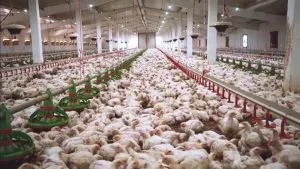
The “happy” chicken farm
– Yes… because conditions on farms are so filthy that you cannot believe the animals will not fall ill or die unless you put antibiotics in their water or food. There is a European Commission regulation prohibiting this, prohibiting antibiotic prophylaxis, yet it happens here! Romania not only fails to comply with that regulation, it is not prepared to do so either. To comply, it would have to change the standards under which animals are raised — density, hygiene and climate. From what we investigated, hygiene is entirely absent, density is catastrophic, and animals are raised crowded together in filth. So there is no connection with the happy animals on green pastures shown on product labels.
– Since antibiotics are sold freely to anyone, could we find the same contaminated goods from small farmers too? Their products enjoy great trust in the market…
– Wherever you buy, from farms or small farmers, the problem is the same: Romania is the only country in Europe allowing antibiotics to be sold freely, without prescription. Veterinarians sounded the alarm when Dragnea was preparing the law, saying it was wrong and a mistake. Their opinion was disregarded, and here we are today. No government or parliamentarian wanted to oppose it… practically nobody wanted to take on “Farmavet”, the company selling the antibiotics and holding a monopoly, or the very greedy and powerful meat industry.
“In 2019 alone, these bacteria killed over five million people worldwide”
– You say we are the only European country selling antibiotics freely? Does it not happen elsewhere?
– Absolutely not! If I had tried anywhere in Europe to do what I did in our pharmacies and ask for antibiotics without prescription, they would have said I was mad… I have travelled from Austria to Portugal and the Scandinavian countries on announced and unannounced inspections. Animal husbandry standards were respected in the vast majority of cases. They do not give antibiotics preventively; they understand that antibiotic resistance would destroy their businesses completely. If the animals fall ill, they no longer have anything to treat them with. Here, we already have resistance involving e.coli and Staphylococcus aureus! Taking antibiotics is pointless because they no longer work. And these are exactly the bacteria we found in the samples taken from shops.
– How dangerous are these bacteria?
– They are very dangerous! In 2019 alone, these bacteria killed over five million people worldwide. For comparison, COVID killed that many people in two years, and now there is a vaccine and treatment for it. For these bacteria, we have nothing… there is no treatment. That is why the UN views the problem with concern and says these numbers will increase tenfold in the coming years. The health system will collapse because it cannot care for so many people. Over 80% of these infections are due to animal farms, with hospitals coming only afterwards. It is a grim forecast, which is why I considered this a national security issue and proposed that it be discussed by the Supreme Council of National Defence (CSAT). This is the future and we must prepare because it is already late: we are on a road with no return. Alongside CSAT, scientific and veterinary experts should be involved urgently.
“It is immoral to let an animal live in filthy conditions just to end up on your plate”
– What you are saying is dreadful! How can we protect ourselves and eat reasonably healthily under current conditions?
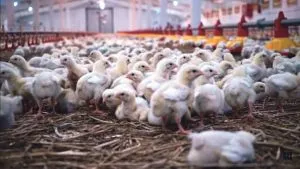
Ready for the knife
– My suggestion is either to give up meat as far as possible or switch to organic products. If we think about it, our parents and grandparents ate meat very rarely, perhaps once a week. We should cut back on meat on our plates both for our health and to reduce this gigantic animal farming industry. We eat meat even three times a day, which is abusive both to animals and our bodies. So we can return to less and better. It is also immoral to let animals live in filthy conditions just to end up on our plates. We should switch entirely to organic for other foods too, because they are the most thoroughly checked products. There is currently no other solution for the consumer. As for producers… hygiene and stocking-density rules on farms should be strictly respected, and selling antibiotics freely or solely for prophylaxis should be prohibited.
– Do you think Romania has enough organic products on the shelves for us to adopt this lifestyle?
– Not at present, precisely because the Agriculture Ministry, where we have a toxic minister, prefers to subsidise intensive rather than organic farming. If it changed course and gave more subsidies to organic farming, we would certainly have more choice and more attractive prices. It is shameful that Romania, one of Europe’s poorest countries, has the most expensive organic products. As soon as you head towards Austria, the price differences between organic and other products are very small, encouraging people to eat healthily. In central and western Europe, choosing organic food barely affects your personal budget, precisely because those states have heavily subsidised clean, healthy farming. They have also made organic farming attractive to producers, unlike Romania, where subsidies are small and bureaucracy enormous. Unfortunately, our political class is the shameful part of the problem.
Originally published in Formula AS — issue 1507
by CATALIN MANOLE