The peasant seed revolution
– First came the “eco” revolution. Then the “bio” revolution. What could come next? The peasant seed revolution! It will bring real, healthy vegetables, from varieties preserved for generations, to Romania’s villages –
A lost dream: our grandparents’ garden
A free market for those resisting in their gardens
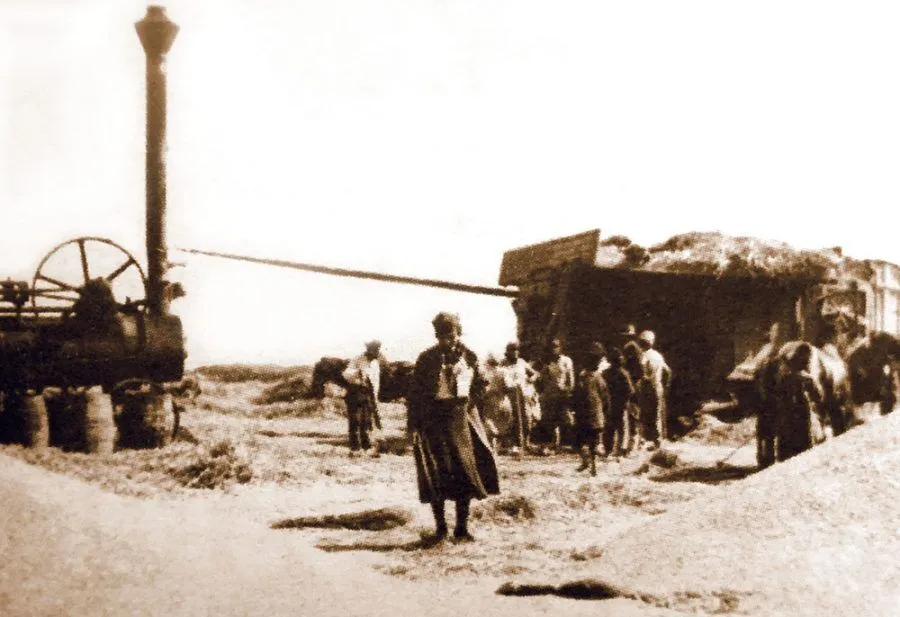
It all began in my little back garden, to the songs of the tits. I took some earth in my hand, and the still-damp soil, mixed with melted snow, clung to my fingers. That smell of earth softened by early spring and dried by the yellowish sun reminded me of other springs. Of my grandparents preparing their gardens, counting out one by one the seeds kept in pieces of newspaper on which they had written the varieties in pen, murmuring charms and secret prayers over them before putting them into the ground. And I said: “Why not? Why not plant the same varieties this year, with the same tastes and smells, in their memory?”
Where have Romanian seeds disappeared to?
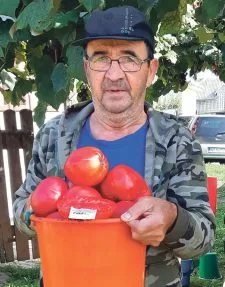
Tomatoes just like at Mum’s
Full of enthusiasm, I went to the first seed shop, where I was astonished to discover that my plan was not so easy to carry out: all the seeds on the shelves came from other countries – tomatoes from Germany, peppers and lettuce from the Netherlands, cucumbers and parsley from Poland… Not a single seed from Romania! Glossy, beautifully coloured packets which, as the seller would explain, did not even contain seeds of pure varieties, but “hybrids, because they rule the market now. I’ll give you a good price, including fertilisers and insecticide, so you can get a super crop!” he added, pulling two containers of chemicals out from under the counter. But I did not want a “super” crop; I missed my grandparents and their garden. By the end of the day, I had visited every specialist shop in the area, and there was only one conclusion: Romanian seeds were not available commercially, the old varieties were “out of fashion”, and imports from the West were the only offer. Could that be the answer?
“Eco Ruralis”
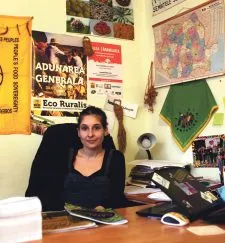
Raluca Dan – Eco Ruralis Association
I had heard that there were still peasants in Romania who had preserved their old seeds, inherited from generation to generation, producing vegetables with the taste of the past. To find out where to look for them and what would be best to plant, I went to Cluj, to the Eco Ruralis Association, where I knew there were specialists in traditional peasant farming. Raluca Dan welcomed me into an office that resembled the headquarters of a Cuban revolution, full of posters, flags, photographs and papers. Hardened by the struggle to save Roșia Montană, Raluca now fights for Romanian peasants’ rights within Eco Ruralis, an association that is 12 years old. Having travelled to Brussels and Bucharest, she knows international and national laws on peasants’ rights well, along with the real situation in Romanian villages. To my question, “What should I sow in my garden so that it tastes like it did in my grandparents’ day?”, she replied immediately, without hesitation: “Don’t be fooled by shopkeepers, by glossy packets with beautifully coloured pictures! Look for old seeds, the so-called peasant seeds! Only those will give you vegetables with the taste and smell of the past, real vegetables! The seeds sold in shops are hybrids, made in laboratories, totally unadapted to environmental conditions. Peasant seeds have evolved over time; they have existed for hundreds of years, passed their adaptation to the environment down from generation to generation, and interact differently with the place, from drought and cold to diseases and pests. That is why old seeds need no treatments! Another argument in favour of peasant seeds is that you can propagate them from year to year. The hybrid ones in shops are designed to become infertile after a single use, so that the farmer buys them every year. Have you bought hybrid seeds, planted them and grown tomatoes? You will not be able to use the seeds from those tomatoes to plant the following year, because nothing will grow – they are designed to be infertile, to force you back to the shop to buy more… You can use peasant seeds not just for years, but for entire generations. Moreover, over time they adapt better and better to the soil, climate and place where you grow them. Last but not least, it is about the quality of what you eat – peasant varieties are tastier, but also much more nutritious and healthy!”
Underground vegetables
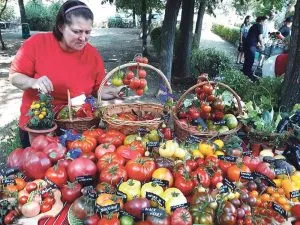
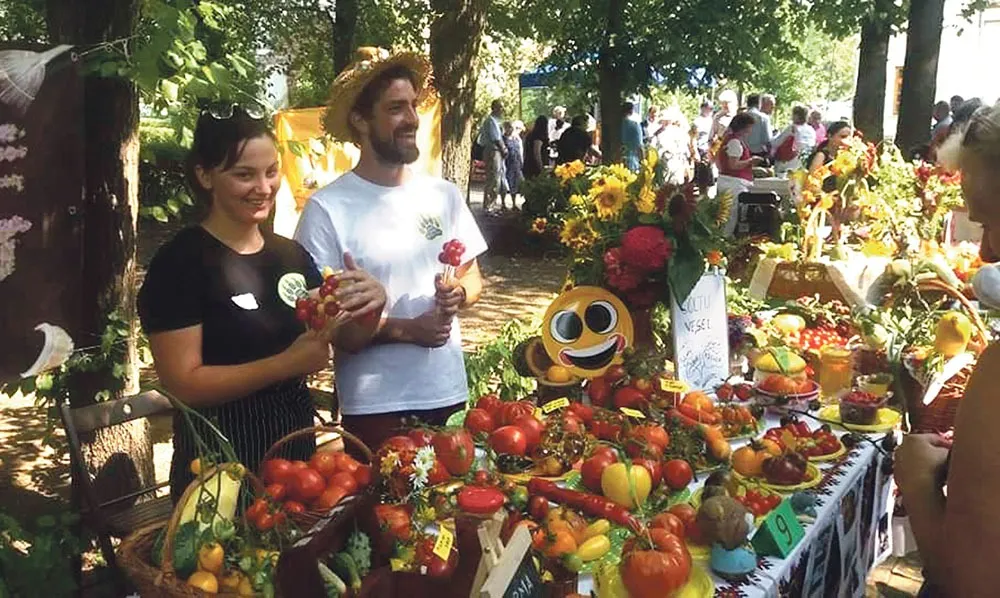
Dozens of tomato varieties displayed at a free market
I was convinced on the spot: this was what I wanted for my garden – peasant seeds, old varieties handed down by our elders! But my joy was cut short by the guillotine of reality. To my question, “And where could I buy such seeds?”, the answer was blunt: “There is nowhere to buy them. Selling peasant seeds is illegal!” A long silence followed. I no longer understood anything. Why should you be unable to buy precisely the better, more valuable seeds in shops?
The answer is simple and “chemicalised”. Romania, along with many other countries, signed treaties agreeing to apply these measures. So peasants’ seeds have no place on the market. But something entirely unexpected happened! Driven out of shops by the big companies selling only approved hybrid seeds, without any state support, peasants set up a “resistance”. This time not in the mountains, but in their own gardens. The old, healthy, real seeds began passing from person to person and village to village. Illegally, discreetly, like contraband. And the “revolution” spread. Starting with a few villagers, today the community planting peasant seeds has thousands, perhaps tens of thousands, of members in Romania. The exact number is unknown because, although organised into volunteer groups that exchange seeds, they are not officially registered anywhere and appear in no statistics. Some have closed online forums; others organise themselves into “free markets”, associations or independently. But the phenomenon is exploding. At Eco Ruralis in Cluj alone, while there were five families exchanging seeds at the beginning in 2010, today volunteer peasants donate more than 100 thousand seeds every year. Waiting lists are drawn up for them, with thousands of enthusiasts, and the seeds sometimes run out in just a few hours. But how did this “resistance movement”, this quiet “revolution” of peasant seeds, begin? To my astonishment and pride, I would discover that it all began in Suceava, with… an interview published in Formula AS magazine!
The treasure in Suceava
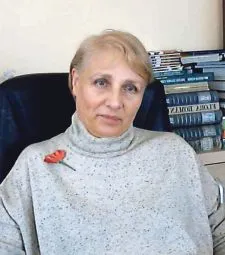
The guardian of the treasure – director Silvia Strajeru
The Gene Bank in Suceava keeps samples of more than 18,000 varieties from across Romania in secure bunkers! Silvia Străjeru, director of this phenomenal institution, recalls: “It was in 2009, and Mr Ion Longin Popescu, your colleague from Formula AS, interviewed me about the treasure of old peasant seeds, many of them lost but saved in our collections. We spoke about the importance of this disappearing national treasure and the value of what peasants once grew. As soon as that interview appeared, the phone in the secretary’s office started ringing. People were asking whether we could lend them a few seeds so they could grow them and carry the old varieties forward. At first I answered the phone myself, noted down the person’s name and address and which seeds they wanted, and sent them by post. Then the calls multiplied and we could no longer cope; we had to hire a secretary especially for this. Year after year, requests increased; more and more people called from every corner of the country asking for old seeds. It was unusual for an institution like ours to deal with something like this. Very few gene banks in the world donate seeds; usually they only preserve and study them. But we thought that, after all, there was also an opportunity in what we were doing. These old-variety seeds risk disappearing; some exist only here. Why not propagate them, why not try to restore a little of this genetic heritage? So we set some criteria for providing seeds, created an online form and continued donating seeds. Having these traditional varieties is very important, and requests have increased enormously in recent years. People are very happy with what they receive from us because we have studied it and know what we are giving. We try to spread them into cultivation as widely as possible, so that they are not just kept here but propagated and allowed to continue their natural development. In the face of climate change, having varieties adapted to the environment is very important, and they adapt only if they are cultivated and strengthened year after year. These traditional varieties can be grown without pesticides and chemicals, which means something extremely important for our health too. Of course intensive agriculture is also needed, but that does not mean we should kill off our traditional agriculture, the vegetables in people’s gardens.”
The “gold” seekers
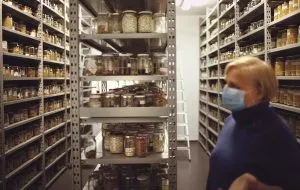
Silvia Strajeru and the treasure in Suceava
Since 1990, teams from Suceava’s Gene Bank have travelled through Romanian villages at least twice a year, especially the most isolated ones, to discover old seeds passed down from generation to generation. From village to village and door to door. In this way, they have managed to save more than 3000 varieties of beans and garlic with a special flavour, tomatoes such as we only remember from childhood, and much more. The collected seeds were placed under the microscope and their structure studied; records were made, each seed with its story as told by the peasant from whom they obtained it. Even recipes in which the peasant vegetables could be used. All the seeds collected and saved from disappearance are now kept in enormous stainless-steel bunkers at -20 degrees, in aluminium packets bearing special identification codes. I visited this gigantic treasure house, holding seeds gathered by thousands of peasants. A kind of frozen cathedral, home to miraculous seeds just waiting to sprout again and tremble in the spring sunshine. Treasures hiding our grandparents’ gardens, as a memory for the future.
Seeds with soul
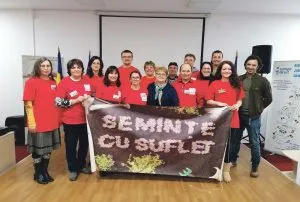
Some of those promoting seeds with soul
But who are these seed “resisters”? Who are these “underground” peasants with faith in the gardens of old, and what revolution are they planning? To meet them, I travelled the length and breadth of the country. One of the “revolutionaries” is a grandmother in Săhăteni, Buzău County. She opens the gate with a broad smile, adjusts her glasses to see me better, and we set off slowly so she can show me the garden behind her house. Her name is Rodica Meiroşu. In 2015, she joined a few friends to form the “Semințe cu suflet” association, although they did not officially register it. They had only intended to pass on the old peasant seeds they themselves grew in their gardens. In a short time, they reached almost 2000 members. They organised 60 “free markets” throughout Romania, and even in Chișinău, where they gave away their surplus seeds, explaining how to grow them and why preserving Romanian varieties matters.
Rodica sits on a little stool, hands in her lap, and tells me: “We take our bags of seeds and travel around the country. We pay for our own transport, accommodation and meals, and if we cannot find free premises, we pay for those too, to organise ‘free markets’. Sometimes we spend a whole night on the train. At first people hardly came because they did not know what it was about and did not trust us when we said we were giving good seeds away for free. But as they took them, planted them in their gardens and word spread that these tomatoes tasted like the old days, things changed. In Sibiu, for example, where we organised a free market, people came from several parts of the country, even Teleorman! The market opened at 10, but by eight people were already gathering; we thought they would crush us! In an hour, we gave away all the seeds. People who had missed out begged us to sell them some. And it was always like that afterwards, with hundreds coming to our markets. Look, I am tearing up now just remembering it. There was a Romanian lady from Belgium, and I gave her a packet of seeds and she was delighted like a child! She held it to her chest, happy and crying, and hugged me until I started crying too… Young families come here to see me, children by the hand, families who have moved from the city to the countryside, asking for seeds. They are the ones I travelled around the country for, people who understand what our peasant seed means, preserved from generation to generation. One day a gentleman appeared saying he lived in Canada and wanted Romanian tomato seeds for his little garden there, so his children would know what real tomatoes from home, from Romania, tasted like. He was worried about taking them across the border – because bringing foreign seeds into that country is forbidden. He was thinking of putting them in a jam jar and taking them that way, to sow in his garden there. What have we come to! Is this the world we want to live in? People wrote to me from Denmark asking me to send old dill and parsley seeds, with that real smell from home!”
Taking grievances to Brussels
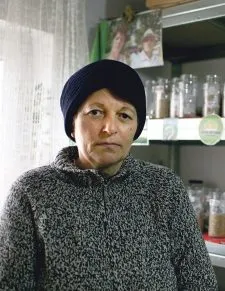
Stela Zamoiu
In another village, Dâmbroca in Buzău County, on a rather rutted street, lives Stela Zămoiu. She introduces herself like this: “My grandmother was a peasant, my mother was a peasant, and I too have been a peasant for as long as I can remember.” She has three daughters, and together they tend four gardens. Her home is one of the collection points for seeds donated by other peasants and redistributed through Eco Ruralis. She invites me into the little room where the seeds are kept. Shelves from floor to ceiling, crammed with jars, boxes, bags and envelopes, all carefully labelled with the plant’s type and variety. In her voice, one hears the anger of villagers left without support, marginalised and ignored by every state authority: “We went to Brussels and protested because we peasants get so little help and have no rights: why should we not have the right to sell our seeds? Why not even locally? We do not have much land, so we get no subsidies either. Our vegetables are healthier and tastier, cheaper to grow and do not pollute, and yet nobody sees us, nobody pays attention! They received us in Brussels and we told them all this; we were a delegation of peasants. They listened and said they would contact us. Two years have passed since then and nobody has contacted us. There… it is high-level politics, and it is still those who have power who make it…”
Stela shows me what she has on the shelves from her own production: 62 tomato varieties, “basils and herbs”, more than 20 varieties of climbing beans and “about 15 dwarf ones”, dill, climbing spinach, bitter cucumber for diabetics, patience dock, curly dock – “like patience dock, but a bit more sour” – and many other vegetables. Even flowers to protect the gardens from little flies: marigolds “to bring bees for pollination”, sunflowers, columbines… She never sprays them with anything, using only nettle, greater celandine and horsetail tea if there is blight.
The seeds are white and clean; Stela “writes on them” so as not to mix them up. She has special cleaning techniques, sometimes soaking them for three days, washing them in ten changes of water, drying them on pieces of gauze. That is what she learned from her mother, what she does herself, and what her daughters have learned to do.
Stela looks at the seeds neatly arranged on the shelves and tells me: “When I was a little girl, I used to go to the market in Buzău. Grandma was poor and old, and I went with her to carry her buckets of tomatoes, because that was how she took them to market. I still remember Grandpa spending all day in the polytunnel. It is in my blood too, gardening and vegetables…”
Vali Cucu and the giant tomatoes
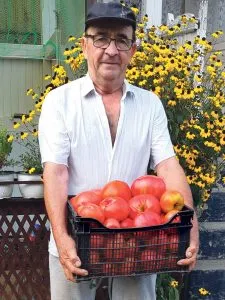
Vali Cucu and the giant tomatoes
From Stela Zămoiu’s home I travelled to northern Moldavia, to Neamț County. Of all the peasant seeds, tomato seeds are the most sought-after. And in this field Vali Cucu from Bălțătești is a champion! He has seeds of giant tomatoes weighing as much as 1.5 kilograms! An agronomist once gave him five seeds. “This is a special variety! It grows giant tomatoes!” the engineer told him. And so it did! From those five seeds, Vali Cucu now sends giant tomato seeds all over the country. They were even fought over in Greece, where he went “to exchange experience and seeds”: “In Greece, in two hours I gave away all 300 packets I had with me. I don’t speak English, but do you know how I got along with the peasants there? We were like brothers! We understood each other through looks and gestures! The land connected us, these plants connected us, you see…”
Vali Cucu is almost 70, but still works with determination: “Seed is as valuable as gold! And whoever holds the seed holds control! There have been attempts to ban us, those with peasant varieties, but they failed. They would like only hybrids on the market because the business is huge! And beyond business, it is about control – if you no longer have your own seed, you will buy it, and when you depend solely on the seller… you are at their mercy. Plus you have to buy 4-5-6 treatments as a package, otherwise you will not grow much. So why poison your food, depend on others, spend your money and end up with bad food? Here in our village, most people grow peasant varieties, saving their own seeds year after year, because they have understood. Only those selling at the market buy hybrids.”
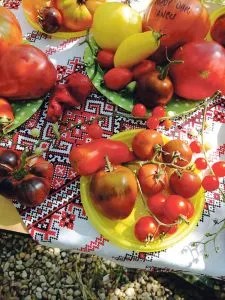
The treasure of seeds with soul
Vali Cucu has not only peasant seeds but also advice and clean treatments without chemicals. To increase production, he has an old Russian recipe using chicken manure and brewer’s yeast, and for insect pests he is now preparing a solution of wild chrysanthemum flowers.
Vali Cucu knows Stela from Dâmbroca and Rodica from Săhăteni. In general, these peasants preserving old seeds know one another, not just within their villages but across the country. They call, meet, delight in seeing one another and exchanging seeds, talk about what else they have grown in their gardens and what challenges they have overcome. Perhaps that really is the spirit of the seeds of old – bringing people together, making them feel part of a large family, creating friendships and teaching respect for the earth.
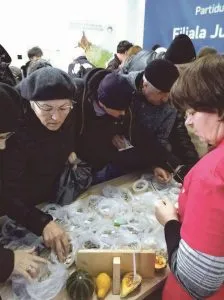
A free market with peasant seeds
My journey was over. I returned home with many seeds given to me by the people I had met. I shared them with family, friends and neighbours. In this way, we all became accomplices of those resisting in their gardens, scattered through Romania’s villages. Will this “revolution” of peasants who believe in the destiny of Romanian seeds succeed? Will those governing wake up before it is too late? While waiting for an answer, for now I have scattered my seeds in the seedbed, thinking of my grandparents and the wonderful garden where I grew up. And the day the first plants emerge, lighting the window with their tender green, will be a sign that dreams, when we believe in them, come true!
by CATALIN MANOLE, originally published in Formula AS, ISSUE 1465