Following the traces of life in Homorod
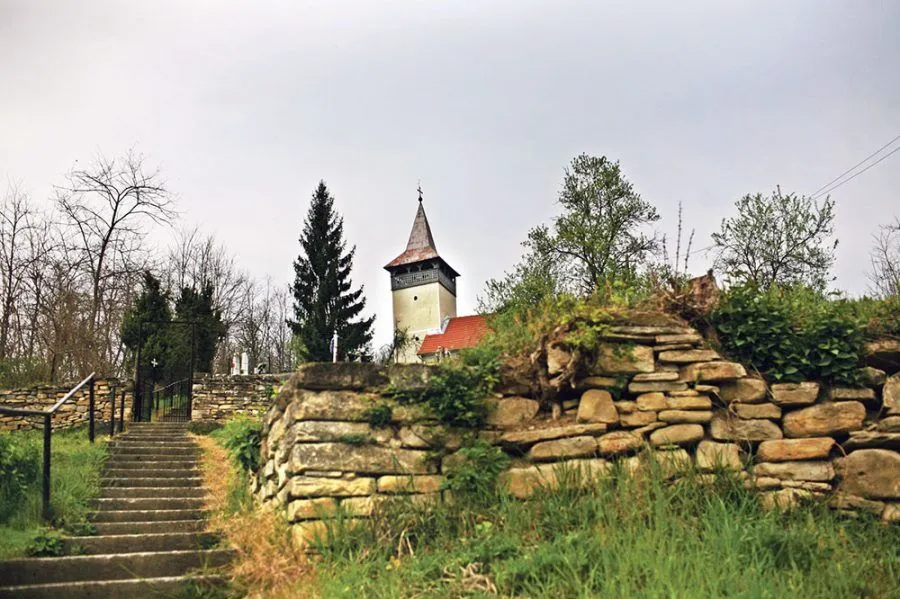
The church in the upper part of Homorod
The reportage by Catalin Manole, published in Formula AS on 18 May 2020, in issue 1416, follows life in Homorod, a village across the Mureș towards Geoagiu, at the foot of the Apuseni Mountains. This summary presents the themes and people encountered in the reportage from the pandemic period, alongside the photographs and captions preserved in the archive.
Working the land and caring for animals
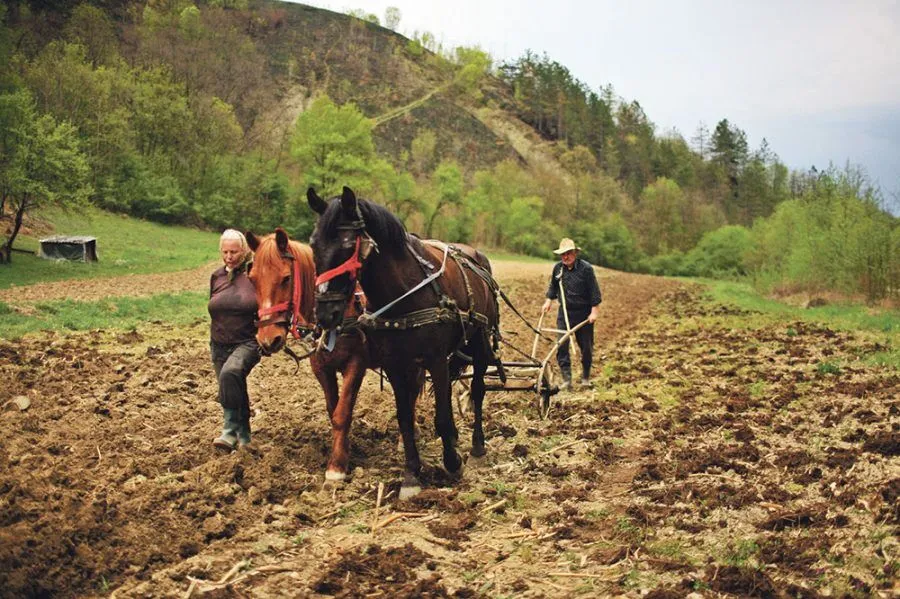
In the part of the village called Văleni, Nicu and Jenica plough their land with a plough drawn by two horses. The stony soil and lack of rain make the work harder, but preparing the ground and sowing maize cannot wait. The animals, garden, potatoes, hay and firewood set the rhythm of their days, from morning to evening.
The sacred work and the sacred plough
The account brings together physical effort and the sense of independence of those who work their own land. Nicu’s question about restrictions on leaving home brings the context of the 2020 pandemic into this agricultural scene.
Gardens, birds and closeness to nature
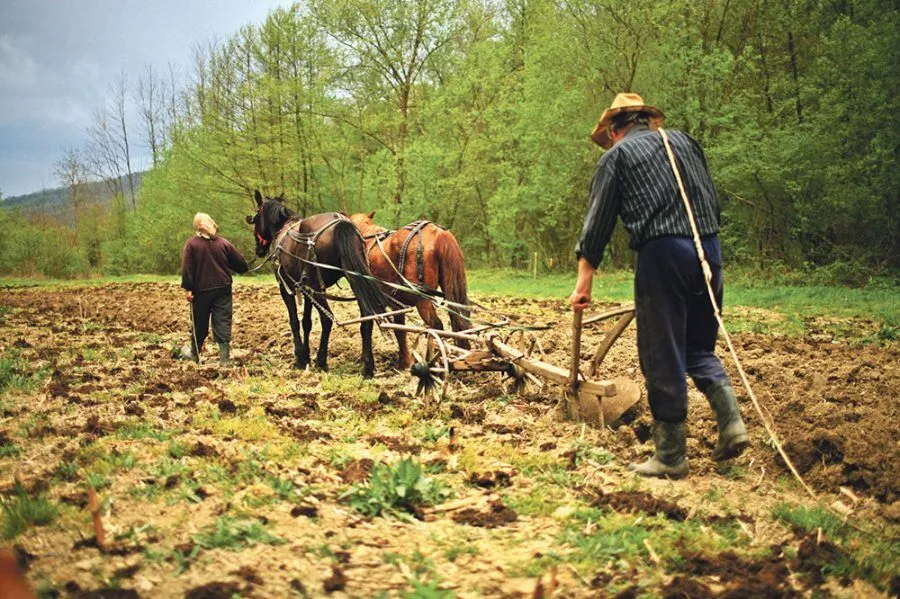
The sacred work and the sacred plough
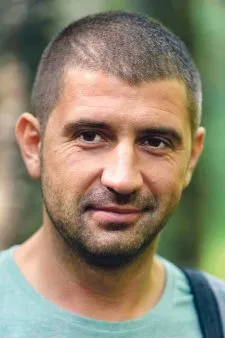
Claudiu, who moved to the village in 2000 after selling a flat in town, explains why he chose Homorod: its proximity to town, the river outside his gate, the households and the birdsong. After his workplace closed during the pandemic, he has been staying in the village for two months, tending the garden and beehives, making repairs and maintaining the well.
The reportage captures the village through the sounds of birds and households, the river with its small bridges and the view from beside one of the churches. These scenes accompany people’s concern about drought and their dependence on farming.
Households and food from the yard
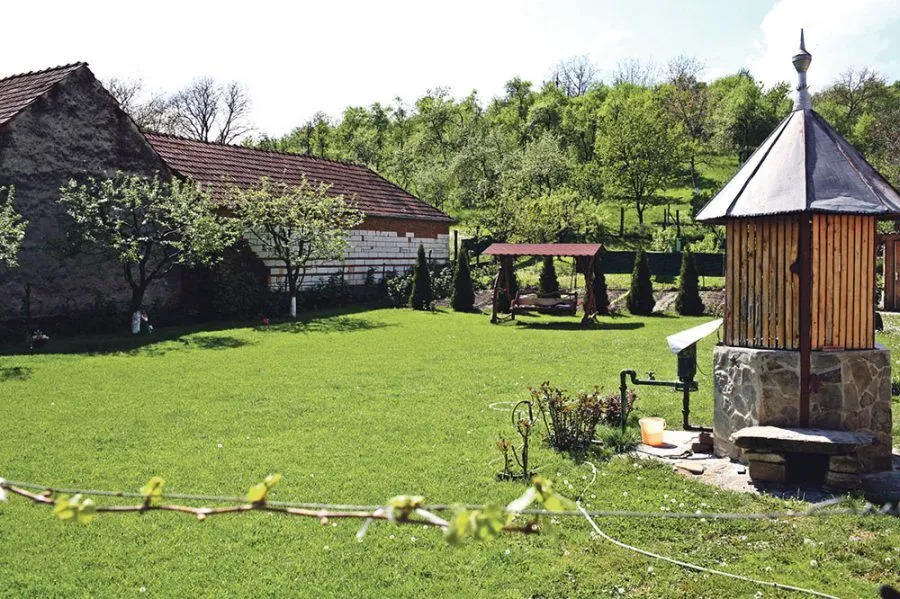
Around the homestead
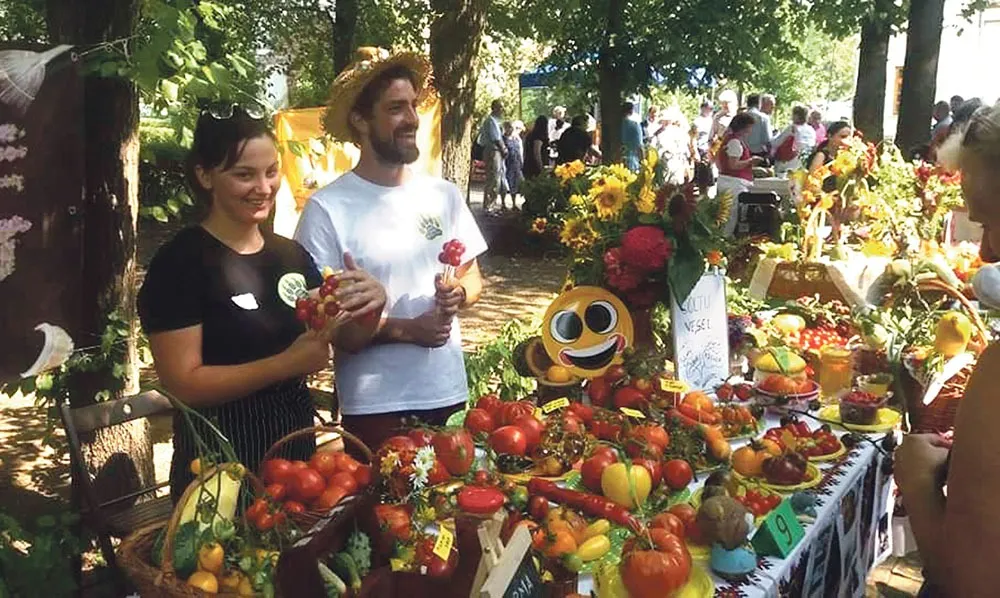
Conversations with nana Ana and Vetuța describe gardens, vegetables, flowers and the work needed to care for them. Valentin combines his job as a security guard at a furniture factory with looking after the house, horses, cows and land. He also speaks about the difficulty of selling calves during the outbreak, but also about the resources and space village life offers him.
Stone houses and local traditions
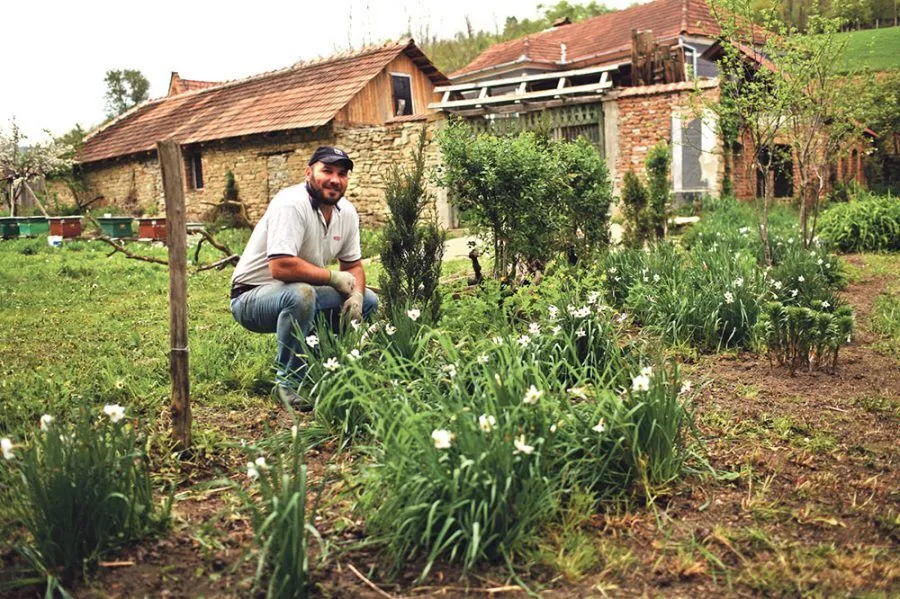
Claudiu and the daffodils
Nana Bucur presents the meals she prepares with what she has in her household: soup, vărzări, vegetables, milk and cheese. She then talks about the stone house inherited from her parents and how houses used to be built, using stone brought down by the river, earth and other nearby materials. Her memories also preserve the customs that accompanied the completion of a building.
Waiting for rain
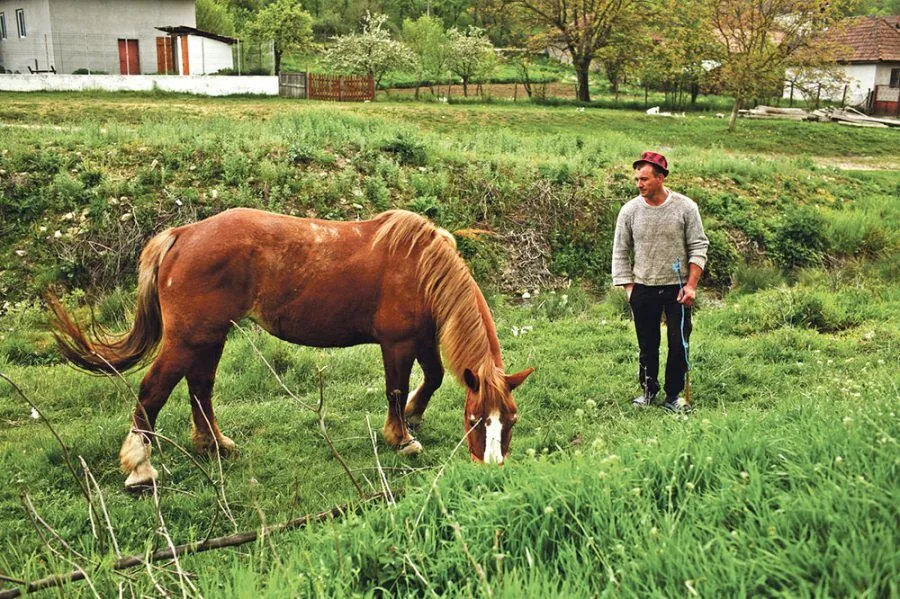
Valentin and his horses
In the afternoon, activity moves from the village lanes to the fields in the Mureș floodplains. People sow, bring water and try to limit the effects of the drought. The reportage ends with their return from the fields and the arrival of a May rain, awaited for the soil and crops.