GABRIEL PĂUN: “Let’s stop the torment of exported animals!”
– Two years ago, we saw those terrifying images from Midia, where a ship sank and more than ten thousand sheep drowned. Since then, nothing seems to have changed for Romania’s poor animals sent abroad. We spoke about this problem, the animals’ ordeal, with the tireless environmentalist Gabriel Păun. Not just to revisit a sombre topic, but to see the situation and possible solutions as clearly as possible –
“Ships that transport animals are floating prisons”
– Animal suffering is a subject that makes many people look away. I admit that I too cannot watch those images of human cruelty… Why is it important to discuss this issue in Romania?
Păun Gabriel
– Of course it is not easy to watch people’s cruelty towards animals, but looking away does not make the problem disappear. It is still there; animals continue to suffer. However difficult it is, we are better off seeing reality and trying to find solutions. It is an urgent and important problem, considering that Romania ranks first in the world for the number of animals exported, cattle and sheep combined. Romania is also responsible for authorising more than half the ships approved to export live animals. And it must be said clearly: most such ships came to Romania against a backdrop of corruption, endangering not just animals but also crews and maritime traffic. The fleet transporting live animals is the oldest on the planet, with the oldest ships, effectively floating prisons. Of the 78 ships that come to collect animals from Romania, 50 are on Europe’s blacklist. Tragedies are therefore inevitable and soon occur. Yet things only come to light if they happen before our eyes. As if by fate, the ship called “Queen Hind” capsized at Midia in November 2019, as soon as they raised anchor and removed the ropes from shore. There, 99% of the more than 14,000 sheep died. This accident revealed secret decks, absent from the ship’s plans, overloaded with animals. In other words, they would add a mezzanine between decks to cram in more sheep. Obviously, this raised the centre of gravity and the ship capsized. It is a tragedy we heard about, but who knows how many other tens of thousands of animals have died of heat, hunger or thirst…
“The ugliest face of the meat industry”
– You have investigated live animal transport for several years. What strikes you as the most tragic part of this story?
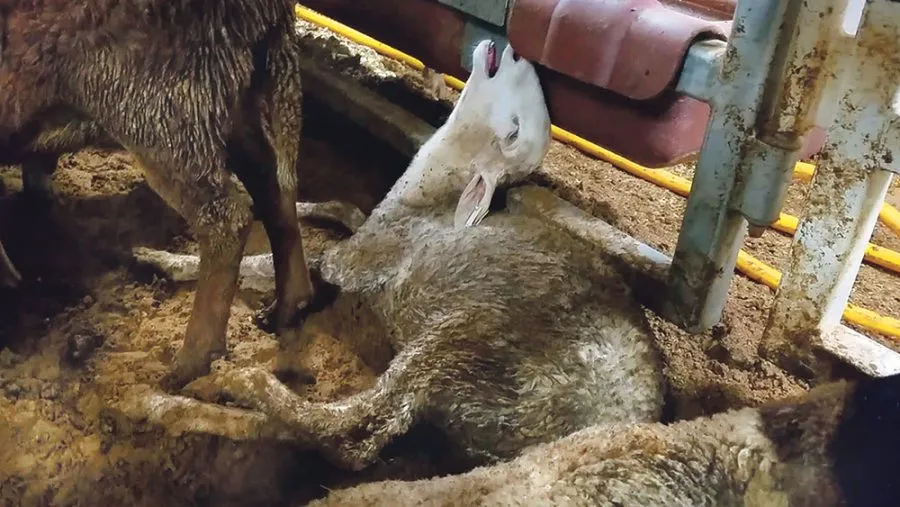
– I have investigated this problem for over 10 years, alongside partner organisations in Europe. I have been to all European ports and followed the animals’ route throughout the East, as far as the streets of Lebanon, Palestine and Jordan. I can say that when we talk about live animal exports, we are talking about the ugliest face of the meat industry and the most barbaric industry that exists or has ever existed on the planet! We are talking about unnecessary suffering. Although an animal should be slaughtered as close as possible to where it lived, as the European Food Safety Authority requires, transporting animals by ship, plane or lorry can take days to weeks. For example, the journey to the Persian Gulf can last three weeks, on rough seas, in summer, in unbearable temperatures. These voyages do not take place without deaths and unnecessary suffering, and heat stress in summer is unimaginable. There have been voyages where animals were cooked alive in their own skin… These animals’ suffering is unacceptable, and the vast majority of Romanians were surprised to learn these transports exist. Even customers in Arab countries do not understand why live animals are transported instead of frozen or chilled meat. Israeli rabbis are unhappy that animals reach them dirty, exhausted and full of stress hormones, so they too believe this trade in live animals should stop. What matters to them is that the meat arrives in sanitary conditions and respects religion: animals to be slaughtered must not suffer hunger, thirst or fear, must not see one another before slaughter and must be killed with a single cut. It seems nobody wants this tragedy for animals any more, yet it continues under Romania’s flag.
“Romania must export meat, not live animals”
– Romanian farmers earn money from these animal exports; it is important to them. What else could they do with the animals to earn an income?
Unnecessary suffering on ships of death
– Romania must export meat, not live animals; Romanian farmers would earn more and more reliably that way. Exporting live animals gives us a bad reputation worldwide, and we also export jobs and tax money, because the added value does not stay in Romania, even subsidies too, since breeders are heavily subsidised by the state and the EU. Romania mainly exports young lambs, kids and calves. Farmers are happy to receive money quickly from trading companies, which are not Romanian, but Romanian farmers are caught in a trap: they are at the mercy of Arab countries. A more or less real disease is invented, as happened in the past with bluetongue, when they suddenly stopped imports from Romania until prices fell. Romanian economist Claudiu Cazacu carried out a study showing that gradually replacing live animal exports with chilled and frozen meat exports would give Romania almost 6000 jobs and over 60 million euros annually in taxes alone.
– What companies are behind the live animal export business?
– They are not Romanian companies, except for one under the control of the former Securitate. All the others are Arab companies from Syria, Lebanon and the Persian Gulf. I was alarmed a few years ago when a Syrian without citizenship, whose wedding godfather was none other than Liviu Dragnea, was illegally brought into the Ministry of Agriculture. In Syria he was a specialist in growing bananas in greenhouses, but he was brought to Romania as an expert in opening new markets for live animal exports. He was therefore a political puppet, something the state overlooked and even encouraged.
“The horrors I saw made me ill”
– Do our farmers know what happens to their animals? Do they know where they end up and in what conditions they are transported there?
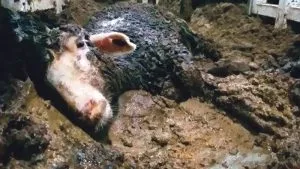
On the ship, without water or food
– Our farmers are very attached to their animals, and we know that a cow or calf is like a family member to them. During one investigation, we managed to follow a calf from a farmer in Hunedoara, from the Hațeg market, all the way to its slaughter on the edge of a pavement, right in the street, in Palestine. We then went back to show him the footage. He could not watch the whole film. He started crying and walked away from us. He said that, had he known where his heifer would end up, he would not have sold her. He had sold her to pay some debts, not to get rich.
– How did you withstand seeing and filming so much suffering? Did it not affect you?
– It affected me physically, with an illness caused by stress, and emotionally too, to the point where I began speaking regularly with a psychologist. After a day in Arab countries filming animals being slaughtered in the street or in car boots, I would have blood all over my clothes and camera… I would come home and feel I could not escape that horrible smell of blood, however many showers I took… But my trauma is the smallest problem; the trauma should belong to the politicians who have the power to change this reality and do not. What hurts most is that, although I risk my life, health and emotional balance to film these horrors, most decision-makers turn their heads and refuse to see. Fortunately, the European Union has been much more receptive and will most likely impose firm measures. As for the country’s image, I will not even begin…
– What do you think is the best solution to this problem of live animal exports?
– The solution is to establish collection centres as close as possible to where the animals grew up, and take them to the nearest slaughterhouses. There, “Halal” and “Kosher” slaughter should be certified, and subsidies should be paid from the slaughterhouse for animals delivered, rather than for rearing and pasture. That way, everything is brought into the tax system, benefiting both the state and farmers who want prompt payment and stability through a long-term contract. We would put an end to the unnecessary suffering animals currently endure.
Source: CATALIN MANOLE, Formula AS, issue 1486.