Agent Green’s proposals for reforming Romsilva
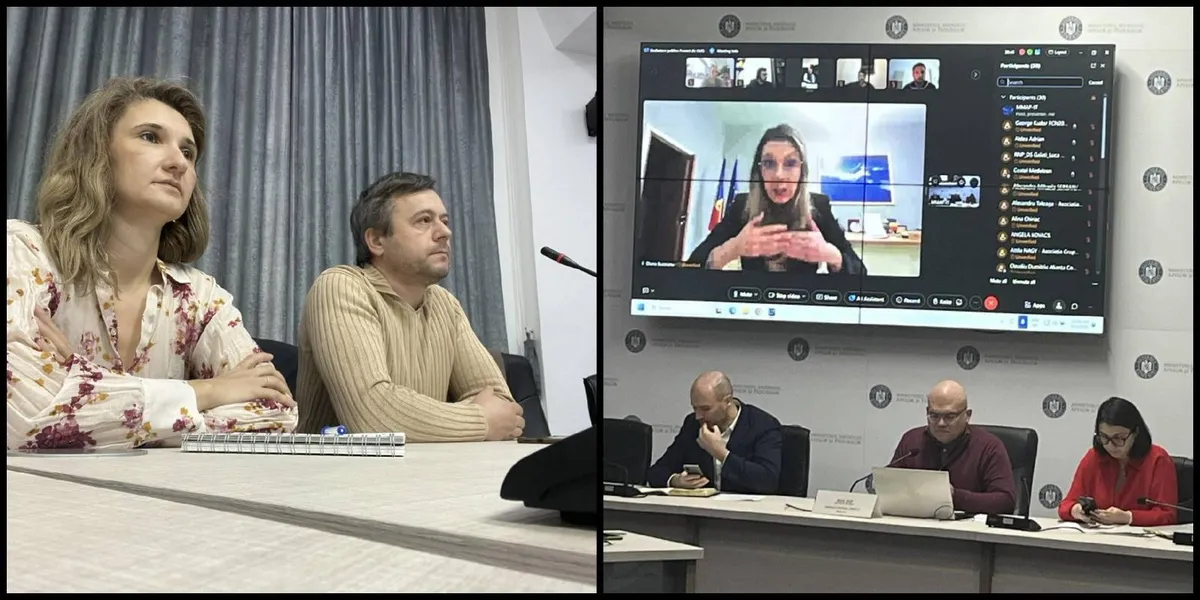
Agent Green welcomes the Ministry of Environment, Waters and Forests’ initiative to submit for public consultation the draft Government Decision approving the Regulation on the organization and operation of Regia Națională a Pădurilor -Romsilva, in accordance with Law no. 52/2003 on transparency in public administration decision-making, republished.
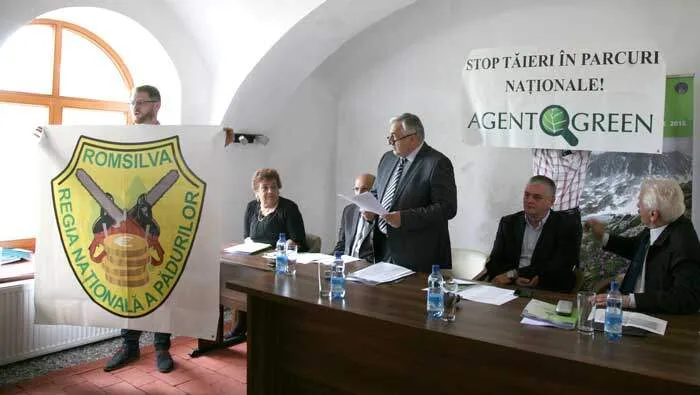
In this context, Agent Green today sent the environment ministry the observations and recommendations of the organization, which for the last 16 years has strongly criticized Romsilva in national and international public debate for its poor management of Romania’s forests, including those in protected natural areas. We have brought hundreds of cases against Romsilva and continue to do so to correct the shortcomings, but only a fundamental reform such as the one you have initiated can resolve the systemic problems of this profoundly deficient administration, which has led to the forest’s sharp degradation and the weakening of its functions.
Romania’s forest is in steep decline, and forestry is regressing. The forest continues to face unprecedented aggression, despite the Romanian Presidency’s 2015 initiative, supported by the Romanian Academy, to introduce provisions into national security law treating such acts as threats to national security, as set out in the 2016 position paper entitled “The Current State and Future of Romania’s Forests in the Romanian Academy’s Vision”: “any action or inaction that harms Romania’s strategic economic interests, those that result in endangering, illegal management, degradation or destruction of natural resources, the forest estate and game resources, with consequences at national or regional level”.
Data from all cycles of the National Forest Inventory (2008-2024) show that between 27 and 37 million cubic metres of timber go missing annually from Romania’s forest, despite the Romanian Academy’s recommendation to limit logging to no more than 17 million m3/year. The missing volume is divided almost equally between state forest managed by Romsilva and private forest, for which Romsilva also often holds management contracts.
The area of forests receiving tending operations has rapidly decreased, while the area subject to aggressive cutting (clear-cutting and progressive cuts), with incomplete regeneration or species unsuited to natural forest types, has grown. Romsilva’s deficient management of Romania’s forests is also reflected in the very high share of sanitary and salvage cuts, often invoked abusively to remove alleged effects of various damaging factors, and sometimes even prepared through interventions designed to justify salvage cuts. This shows that stand-tending and management cuts and regeneration cuts, which are systematic, preventive operations that strengthen stands, are not performed correctly or are not performed at all. They then have to be replaced by special, circumstantial cuts, also used to fell quality timber once the approved annual quota has been exhausted, under the false pretext that the wood has been badly damaged by various causes. According to INS data, approximately 2 million m3 are harvested annually through sanitary and salvage cuts.
The volume of works to manage torrential catchments has reached its lowest level in the last 80 years. Here we do not mean controlling torrents through structural changes to the natural environment and its functions and fragmenting aquatic habitats by pouring concrete, but creating discharge, calming and flow-stabilization areas, including wooded areas that can periodically flood and become wetlands. Moreover, most springs in the Romanian Plain have disappeared following the clearing of highly natural old forests, while those that remain have reduced and unstable flows.
Despite the worsening effects of climate change and the insistence of various entities, efforts to increase forest shelterbelts protecting agricultural crops, transport routes and human settlements are practically negligible. We remind you that Romania initially committed under the PNRR to increase its forested area by 56000 hectares, but owing to inability and lack of interest, this target has now been reduced to 27000 hectares, and all the data show that even this will not be achieved.
Romsilva’s current forest management contrasts with the scale and intensification of drying and degradation in many forests already affected by climate change; the national programme for the ecological reconstruction of forests whose structure has been disrupted is insufficiently regulated.
Agent Green frequently visits public state forest entrusted to Romsilva to document this illegal, immoral and irresponsible management and the illegal cases we pursue in court. Almost every time, we encounter unacceptable hostility, even when accompanied by representatives of the European Parliament or major national and international television channels. Romsilva representatives invariably behave like authoritarian owners, rather than transparent, dedicated managers willing to be helpful.
Romsilva today is a structure based on the realities of 1980-1986 (when forest management was conceptualized through the adoption of forestry standards), struggling with its own inability arising from a failure to adapt to the current context (market economy, society’s diversified demands on forests, climate change). Assigning state forests to a single public enterprise inevitably created a monopoly, with competition for sustainable forest management now entirely absent.
Moreover, Romsilva has regulatory and control responsibilities that it exercises even over its commercial partners and competitors, operating as a hybrid company of the state monopoly on the market for forest products and forestry services.
In much of the forest managed by Romsilva, forestry has given way to commercial logging without regeneration and the other measures needed to preserve the forest’s native character. The enterprise also exploits weaknesses in the Forest Code, whose legal definition of forest specifies only “land with forest use”, according to forest management plans from the 1990s. Valuable forests with essential environmental and social protective functions receive the same single “treatment” the enterprise knows best: cutting. Old forestry practices are not adapted to forests’ real needs, with increasing numbers of forests with protective functions placed under intensive harvesting regimes. Current legislation does not sanction Romsilva when it instructs forest management planners to classify forests incorrectly into inappropriate functional categories, resulting in degradation or loss of their integrity. Forest management planners are designers, just as in other fields where financial and criminal penalties or withdrawal/suspension of the right to practise exist, similar to suspending certification/accreditation for logging companies.
Ideologically, forest administration today faces a crossroads similar to the one at the end of the nineteenth century, when Johann Pitschak brought to Romania the intensive Scandinavian forestry model based on vast clear-cuts and monocultures. The model had gained much ground in Bucovina. But Romania then had a tradition of ecological forestry and a generation of foresters trained in France following the G. Hüffel model. Romania’s government and King Carol I invited both Hüffel and Pitschak to Bucharest to defend their positions. Ecological forestry won at that time. The 1894 forestry congress voted almost unanimously for the Hüffel model. Forests managed according to ecological forestry principles have today (a century later) regained their irregular, natural structure. Meanwhile, practice shows that the two ideologies have continued to coexist, so half of Romania’s forests today are far removed from ecological forestry. These are spruce, pine, black locust and Euro-American poplar monocultures. Chemical insect control in oak forests adds to this. These forests today have the least biodiversity and are the most vulnerable to windthrow and insects. Forests managed in this way also jeopardize national security.
Today, the economic pressure promoting aggressive forestry and monocultures is unprecedented and extends even to protected areas and the last primary and old-growth forests. Only a small percentage of the last primary and old-growth forests are protected today, although Romania’s 1999 National Sustainable Development Strategy expressly provided for protecting this extremely valuable forest treasure: “Conserving biodiversity and ensuring forest stability, health and multifunctionality through: protecting, by specific means, the approximately 400,000 ha of natural and quasi-virgin forest existing in the Romanian Carpathians.”
Over the last 20 years, Romsilva has placed unprecedented stress on forests in two main directions, without a serious assessment of the cumulative environmental impact and ecosystems’ carrying capacity. For this reason, Agent Green has brought and continues to bring hundreds of court cases across the country to stop abusive logging. The background that made this unprecedented pressure possible must be linked to growing market demand for timber, which Romsilva has not hesitated to satisfy irresponsibly:
- a) the opening of new high-capacity processing factories: sawn timber and biomass
- b) a growing number of residences and holiday homes using wood for heating, cooking and hot water.
The situation is acknowledged and recently documented by the National Institute of Statistics (INS) and presented in the “Preliminary examination report on the market for timber intended for firewood”, prepared in 2018 by the Territorial Directorate of the Competition Council.
According to the report, INS estimated official firewood production from the national forest estate at approximately 5,163,000 m³/year. But actual total national firewood consumption (including biomass) was estimated at approximately 22,783,000 m³ for 2016 and 23,004,000 m³ for 2017. Out of total national firewood consumption (including biomass), INS estimated household consumption alone at 18,698,360 m³ for 2016 and 19,178,000 m³ for 2017. Yet total national timber production was estimated at 17,198,000 m³ for 2016 and 18,316,000 m³ for 2017: more wood was burned than was legally harvested, without counting the wood needed for industry and other uses, approximately 20 million m³.
The very large quantity of firewood from forests managed by Romsilva, burned in installations with very low energy efficiency and no pollution-reduction filters, used predominantly by households in our country, has a series of negative ecological, economic and social consequences, including:
- A source of forest degradation through illegal logging generated by demand for firewood exceeding the firewood harvest sold by forest managers and owners, namely small, low-quality wood. This directly affects every ecosystem service provided by forests.
- A source of environmental pollution owing to the low efficiency with which the stoves widely used by households convert firewood into heat and the pollutants emitted into the atmosphere, also affecting public health.
- It runs counter to climate-change mitigation through reducing greenhouse gas emissions by using timber in durable goods.
- It affects the quantity of timber used for higher-value purposes by the wood industry (products with high added value and long service lives).
In this context, pressure on the forest has also resulted in a significant reduction in the area of harvestable stands because of excessive logging in recent decades. Most mountain and hill stands are now under 80 years old (below harvesting ages). Interested parties in this segment of the timber industry therefore irresponsibly request increased logging volumes by lowering cutting ages. They disregard the fact that almost a quarter of the country’s forests perform special protective functions of great importance for national security (functional types I and II), meaning non-intervention or conservation works only. There is also a major shortage of forested areas and harvestable stands, especially in plains and hills.
As a result, citizens’ quality of life and forests’ potential to combat climatic, hydrological and geomorphological hazards have declined significantly, and biodiversity has been affected. Every year, 20 755 citizens residing in Romania die because of pollution, including 15 126 because of air pollution, according to the latest report by the Global Alliance on Health and Pollution (GAHP), established jointly by the World Bank, European Commission, UN and environment and health ministries from more than 25 countries.
Romania’s forest heritage needs an administration that will restore its health. It must be improved and its ecosystem services restored, ensuring the social, ecological and economic conditions for the country’s development. The forest should be cared for exclusively according to naturalistic/close-to-nature principles (ecological forestry), capable of ensuring national security, economic and social sustainability and biodiversity conservation, as well as increasing Romania’s forests’ contribution to mitigating climate change and various natural disasters. The potential for sustainable economic growth through ecotourism, based on Romania still possessing the most valuable natural forest heritage in temperate Europe, is being realized.
Proposals for reforming Romsilva:
- (Re)professionalizing and depoliticizing forest administration and recruiting/promoting staff on the basis of competence, value, performance and meritocracy in management positions at every level. Regia Națională a Pădurilor must become a State Administration funded from taxes to eliminate its current financial dependence on harvested timber volumes (following the successful interwar model).
- Removing logging and commercial activities from the State Forest Administration’s responsibilities.
- Financial and criminal penalties for forest administration and forest management planners when they incorrectly classify forests into inappropriate functional categories, leading to degradation or loss of integrity and affecting national security. Withdrawal/suspension of the right to prepare forest management plans, similar to suspending certification/accreditation for logging companies.
- Developing biodiversity-based performance requirements/conditions for activities affecting the environment (logging, forest-road construction, etc.), which the economic operators carrying them out must undertake contractually.
- Developing and implementing an effective environmental assessment procedure for forestry activities with significant environmental impacts, based on clear conditions/requirements and procedures that must be followed from the preparation/design stage of the programmes, plans or projects concerned.
- Modernizing logging with equipment that reduces and limits environmental impacts. Any forest construction (forest road, signs, barriers) must comply with construction law. Timber extraction routes must be precisely planned, and the soil must be fully restored or alternative solutions sought where transporting trees risks damaging soil and rock.
- Transparency in all forestry activity through public consultation on all forestry works and online publication of every plan, schedule and permit issued. Publication of inspection results and measures ordered.
- Making the monitoring and control of forestry activities more effective.
- Ensuring transparency and citizens’ passive participation in monitoring forestry activities and combating illegal logging by developing tools enabling their involvement and making appropriate data, information and tools for assessment and reporting illegality publicly available.
- Replacing foresters in every protected-area management structure with natural science specialists who understand forest and non-forest ecosystem functions holistically.
- Establishing national and natural park administrations under the ANMAP structure as a state institution to coordinate all protected areas consistently and efficiently, including the visual identity entirely lacking in Romania. Creating a constructive and competitive environment in protected-area management by allowing areas to be managed by consortia that may include ANMAP, universities, institutes, local authorities, NGOs and other private entities.
- Establishing protection throughout national parks, eliminating logging, stopping any expansion of construction and abolishing internal zoning to reduce bureaucracy and simplify management.
- Immediately stopping and banning any logging in nature reserves, forests with an average age above 130 years and forests containing trees at the limits of their longevity.
- Holding forestry directorate management accountable. Adding a performance criterion requiring dismissal of a forestry directorate’s management if the integrity of the national forest estate is affected, whether intentionally or negligently.
- Removing the horse breeding and improvement directorate and the Silva complex from Romsilva’s structure.
- Marking company cars with the Romsilva logo and monitoring them by GPS.
- Setting profitability at forest-district level without exception.
- Removing management of hunting grounds, wild-animal breeding facilities and hunting complexes from Romsilva’s activities.
- Serious integrity testing of all personnel by an independent entity.
- Reviewing performance indicators annually or whenever necessary during a year.
- Forest-district heads must be graduates with an overall average above grade 9 in one of these specializations: forestry or logging.
- Annex 3 should include other performance indicators and impose higher targets, for example for profit margin and invoice collection rates, and lower ones for the volume of timber placed on the market annually. Performance indicators cannot be economic alone. They must also concern biodiversity in the forest ecosystems managed. When a logging site is handed back, the number of species must never be lower than before logging began.
- Examples of indicators that should lead to termination of the management contract include administrative acts suspending subordinate units’ activities, unauthorized logging roads, water, air and soil pollution, suspension or withdrawal of logging accreditation, and occupational accidents resulting in loss of life.