Romsilva reform is absolutely necessary
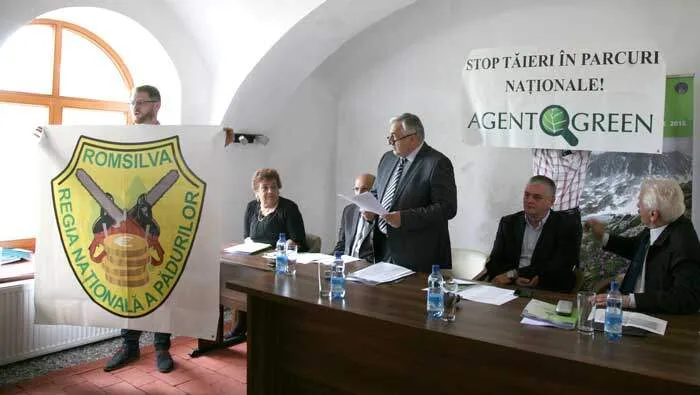
Romsilva revolted outside the Government today because it is about to lose its monopoly over the administration, control and exploitation of Romania’s forests. Agent Green points out that Romsilva reform, including the elimination of conflicts of interest, is a necessity, not a matter for debate.
Photo: Ilona Andrei / G4Media
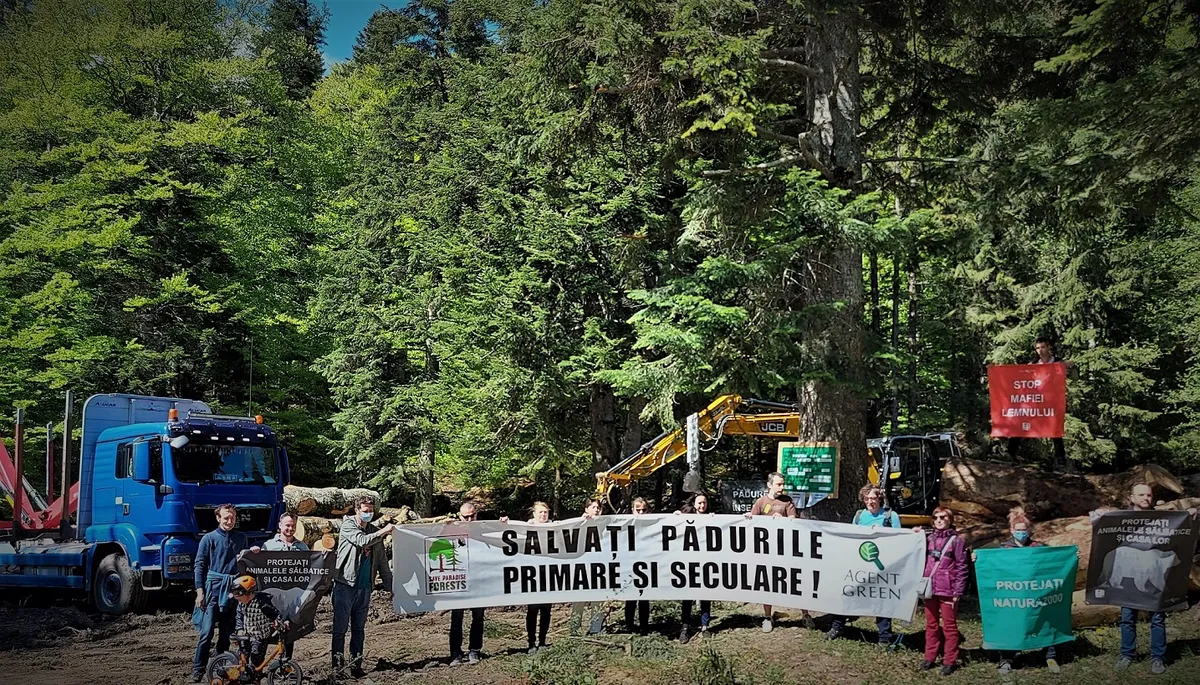
Romania’s forests are in decline, and forestry is regressing. The current administration is underperforming and profoundly distorted by political interference. Illegal logging is out of control, while the authorities detect only 1% of it. The phenomenon has not even been slowed down, despite the efforts of some state institutions and public pressure. Current legislation does not penalise forest management planners when they wrongly classify forests in inappropriate functional categories, resulting in their degradation or impairment. The planners working with Romsilva are designers just like those in other fields where financial or criminal penalties exist, or where the right to draw up forest management plans can be withdrawn or suspended, similar to the suspension of certification or accreditation for logging companies.
The area of forest receiving tending work has decreased, to the detriment of forests subject to aggressive felling and incompletely regenerated or regenerated with species inappropriate to natural forest types. The current Forest Code causes the degradation of many forests affected by climate change, while the ecological restoration of disrupted forests stagnates. The technical standards are designed for a state-owned industry, yet the state now owns less than half of the country’s forests. Forests cover only 29% of the country, a major discrepancy from the optimal forest cover. Afforestation outside the forest fund is now at its lowest level in post-war history. Taking the average of 157.5 hectares of newly established forests in the last 2 years, the optimal forest cover of 40% would be reached in 16577 years. There is currently not enough nursery stock to supply the seedlings needed to reach optimal forest cover.
As a result of excessive logging in recent decades, most forests are under 80 years old (below harvesting age). Lowland and hill areas have a major deficit of forest cover. Consequently, citizens’ quality of life and forests’ potential to counter climatic, hydrological and geomorphological hazards have declined significantly, and biodiversity has been affected. Each year, 20755 Romanian residents die because of pollution, including 15126 because of air pollution.
The forest area receiving tending work has decreased rapidly, while the area subject to aggressive felling (clear-cutting and progressive felling) and incompletely regenerated or regenerated with species inappropriate to natural forest types has increased. The poor management of Romania’s forests is also reflected in the very high share of sanitary and salvage felling, used to remove the effects of various damaging factors. This demonstrates that tending and stand-management work and regeneration felling, which are systematic interventions with a preventive and strengthening role for stands, are not carried out correctly or at all. They must therefore be replaced by special, circumstantial felling, also used to harvest quality timber once the approved timber quota for the year has been exhausted, under the pretence that the wood is severely damaged. According to INS data, sanitary and salvage felling harvest approximately 2 million m3 annually.
The volume of work to manage torrential catchments has reached its lowest level in the last 80 years. Here we do not mean torrent correction through structural and functional changes to the natural environment and fragmentation of aquatic habitats by pouring concrete, but the creation of areas for discharge, slowing and stabilisation of flows, including wooded areas that can periodically become marshes. Moreover, most springs in the Romanian Plain have disappeared following historical deforestation, while those that remain have reduced flows and an unstable regime.
Agent Green’s vision aligns with the European Commission’s biodiversity strategy for 2030 and entails mandatory systemic reform to protect national security, urgently improve Romania’s forest heritage and restore ecosystem services, ensuring the country’s social, ecological and economic conditions for development. It is essential to restore professionalism to forest administration, remove political influence and transform it into a state administration. Forests must be tended exclusively on close-to-nature principles capable of ensuring national security, economic and social sustainability and biodiversity conservation, as well as increasing Romania’s forests’ contribution to mitigating climate change and various natural disasters. At least 15% of forest cover must gradually be taken out of forestry production by 2030, becoming strictly protected forests with a conservation role for biodiversity and a carbon reservoir to combat climate change. The remaining forests will aim to reach, in stages, and permanently retain at least 70% of the potential volume specific to the composition of each forest. A crucial role lies in realising the potential for sustainable economic growth through ecotourism, starting from the premise that Romania still possesses natural heritage unmatched in Europe.