Jiu Gorge National Park threatened with disappearance
Agent Green is concerned that the draft management plan for Jiu Gorge National Park would lead to the protected area’s disappearance if approved. Today the organisation submitted the following necessary observations to the Environment Ministry to stop this plan and save the park.
To: Ministry of Environment, Waters and Forests
Bvd. Libertăţii No. 12, Sector 5, Bucharest
For the attention of: Ms Diana Buzoianu, Minister of Environment
Email: biodiversitate@mmediu.ro
Bucharest, No. 1 / 29 October 2025
Re: draft Order approving the integrated management plan for Jiu Gorge National Park, the ROSCI0063 Defileul Jiului Natura 2000 site and the protected natural areas within their territory.
Dear Minister,
The Agent Green Association, organised under Government Ordinance 26/2000 on associations and foundations, whose general purpose is the protection and conservation of the environment, people’s natural living conditions and the advancement of social awareness concerning environmental protection, continually monitors how national parks are managed, regardless of ownership.
On 23 October, the Ministry of Environment, Waters and Forests announced a debate to be held on 28 October, although it should have announced it at least 30 days beforehand, as stated on page 137 of the Aarhus Convention Implementation Guide:
https://unece.org/DAM/env/pp/Publications/Aarhus_Implementation_Guide_interactive_eng.pdf
The purpose of a management plan is to facilitate a protected area’s conservation objectives and, generally, to protect that natural area. Yet the plan under discussion would not merely degrade the park: it would completely nullify the entire scientific basis for establishing Jiu Gorge National Park, probably Romania’s most spectacular national park and the best preserved of all.
Approving a management plan that legitimises the destruction of the park from end to end is complete nonsense. There is a total contradiction between the purpose an ideal management plan should serve and the purpose of this plan for destruction.
Rather than approve such a plan, it would be far better for the park to have no management plan at all. Having gone 20 years without a plan, it can continue to do so.
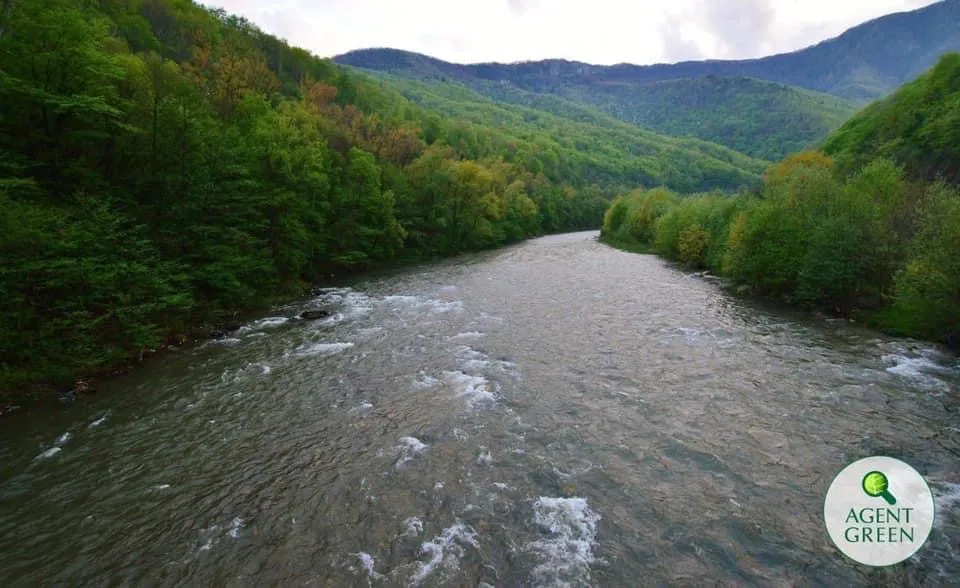
This plan, which includes the pseudo-hydropower project to destroy the national park (AHE Bumbești – Livezeni) and provides for zoning according to pseudo-hydropower interests rather than the law, is an international disgrace, which is why we will also notify IUCN. Nowhere in the world, not even in an insane dictatorship, would anyone think of doing such a thing in an IUCN category II national park: hydropower plants that wipe out the park’s river network and destroy the central feature for which it was established. As the name itself states, the Jiu is the central feature of Jiu Gorge National Park.
IUCN’s principles and criteria for national parks are incompatible with what is proposed in this draft management plan. National parks do the opposite of what this plan envisages: such nature-destroying structures are removed and nature is freed from pre-existing human pressures.
National Parks are protected natural areas whose objectives are the protection and conservation of territories representative of the national biogeographical space, including natural features of outstanding physical-geographical, floral, faunal, hydrological, geological, palaeontological, speleological, pedological or other value, offering opportunities for scientific, educational, recreational and tourist visits.
National park management should ensure that the physical-geographical setting is maintained in its natural condition, ecosystems are protected, genetic resources and biological diversity are conserved under conditions of ecological stability, and any exploitation of natural resources or land uses incompatible with the assigned purpose are prevented and excluded. Within national parks, only traditional activities practised solely by communities in the national park area are permitted; these traditional activities will be regulated by the management plan.
National parks correspond to IUCN category II, “National park: protected area managed mainly for ecosystem protection and recreation”.
Category II: National park
Definition: Category II protected areas are large natural or near-natural areas established to protect large-scale ecological processes, together with the species and ecosystems characteristic of the area, which also provide a basis for environmentally and culturally compatible spiritual, scientific, educational, recreational or tourist visiting opportunities.
Primary objective
To protect natural biodiversity together with its underlying ecological structure and supporting environmental processes, and to promote education and recreation.
Other objectives:
- To manage the area so as to perpetuate, in as natural a state as possible, representative examples of physiographical regions, biotic communities, genetic resources and unimpaired natural processes;
- To maintain viable and ecologically functional populations and assemblages of native species at densities sufficient to conserve ecosystem integrity and long-term resilience;
- To contribute in particular to the conservation of wide-ranging species, regional ecological processes and migration routes;
- To manage visitor use for inspirational, educational, cultural and recreational purposes at a level that will not cause significant biological or ecological degradation of natural resources;
- To take account of the needs of indigenous populations and local communities, including subsistence resource use, insofar as this will not adversely affect the primary management objective;
- To contribute to local economies through tourism.
- Distinguishing features: Category II areas are usually large and conserve a functioning “ecosystem”, although achieving this may require the protected area to be complemented by appropriate management of surrounding areas.
- The area should contain representative examples of major natural regions and biological, environmental or landscape features in which native plant and animal species, habitats and geodiversity sites are of special spiritual, scientific, educational, recreational or tourist significance.
- The area must be of sufficient size and ecological quality to maintain ecological functions and processes that allow native species and communities to persist in the long term with minimal management intervention.
- Biodiversity composition, structure and function should be largely in a “natural” state or have the potential to return to it, with a relatively low risk of invasion by non-native species.
Environmental civil society has struggled since 2017 to block this illegal management plan!
https://www.declic.ro/alerta-defileul-jiului/
It would be strange and inconceivable for this plan to be approved precisely during the term of a minister who publicly opposes illegal hydropower plants.
Screening decision No. 53/21.11.2022, issued without an environmental assessment by the Gorj Environmental Protection Agency for a plan that has a serious environmental impact through its inclusion of AHE Bumbești – Livezeni, is wholly illegal.
The Ministry of Environment, Waters and Forests goes so far as to breach even its own environmental opinion.
The environmental opinion for the “Strategy for the economic, social and environmental development of the Jiu Valley for 2022–2030” contains, on page 12, a clear prohibition concerning AHE Livezeni – Bumbești:
“Prohibition of investments to bring new hydropower operations into service in Jiu Gorge National Park, given the uniqueness and national importance of Jiu Gorge National Park …”
If the Ministry of Environment, Waters and Forests itself breaches its own opinions, how can we expect businesses in this country to comply with any regulatory act issued by the environmental authorities?
It has been said that an environmental agreement exists for the illegal hydropower project in question. If we still have any trace of the rule of law, this agreement will be suspended on 7 November:
https://portal.just.ro/33/SitePages/Dosar.aspx?id_dosar=3300000000080081&id_inst=33
And annulled in the case brought by Agent Green and Bankwatch against your ministry and Hidroelectrica:
https://portal.just.ro/33/SitePages/Dosar.aspx?id_dosar=3300000000080326&id_inst=33
In any event, that environmental agreement breaches final judgment No. 5378/14.12.2017 of the Bucharest Court of Appeal, following the case Bankwatch won against Hidroelectrica:
The court ruled that execution of the ecocidal project in question “cannot continue … unless the probability or risk of habitat deterioration or disturbance affecting species and potentially having a significant effect in relation to the objectives of this directive is excluded.”
This refers to the Habitats Directive, and the significant negative impact of the project in question is already extensively established in the scientific literature.
https://doi.org/10.1126/science.aar2216
https://www.danube-iad.eu/docs/DN_articles/2022-Hydropower_plants_Jiu_Gorge-DN45-Dejeu_et_al.pdf
https://www.austriaca.at/0xc1aa5576%200x0034c881.pdf
https://studiabiologia.reviste.ubbcluj.ro/index.php/studiabio/article/view/134/21
https://novapublishers.com/shop/water-resources-management-methods-applications-and-challenges/
Thus, the risk of deterioration or disturbance cannot in any way be excluded; on the contrary, significant deterioration and disturbance are certain if the ecocidal hydropower project resumes.
The irony is that even people from the administration proposing this criminal management plan have published work confirming its significant negative impact:
The article “Data on the distribution of a protected crayfish, Austropotamobius torrentium, in the Jiu Gorge National Park, Carpathian Mountains, Romania” concludes:
“Nevertheless, the Dumitra valley will be affected because a small hydropower plant will be built at its confluence with the Jiu River. Even if the other three habitats are not directly affected, the change in the river’s water flow will certainly affect the region’s ecological balance (Telcean et al. 2017), which will affect the crayfish known as ‘racul de ponoare’. Thus, the crayfish populations that have just been identified risk disappearing in the near future, as do other rare and protected species recently identified in various regions of Romania.”
https://biozoojournals.ro/bihbiol/cont/v16n1/bb_e221205_Sucea.pdf
A manifestly illegal environmental agreement is not a valid pretext for an illegal management plan. The lawful course is to draw up and approve a lawful plan, then proceed to review the environmental agreement because relevant new elements have arisen (the management plan).
For decades, the park administration has acknowledged that AHE Bumbești-Livezeni is incompatible with national park status. This is now known worldwide, after the prestigious publisher Elsevier published the book The Danube River and The Western Black Sea Coast this year, in which page 261 states: “In January 2010, the Jiu Gorge National Park Administration wrote to the Ministry of Environment alerting that if the hydropower project will be completed, the national park will be destroyed (Dossier of the Case No 720/33/2017).”
But the park administration is continuously subjected to pressure and has ultimately even issued an unconditional favourable opinion for the hydropower project that destroys the park.
The Ministry of Environment, Waters and Forests must, first and foremost, conduct a serious internal inquiry into the pressure placed on the administration at the CAT meeting of 19 March 2025. It is the greatest disgrace in the history of this already so “controversial” ministry.
One form of fraud involving European funds is that APNDJ was financed with public money from European funds to manage the park, yet now proposes a plan that contradicts the measures resulting from the project.
The measure “Maintaining current flows on the Jiu and its tributaries” is mentioned on page 103 of the report “Completion of the inventory and mapping of mammal species in Jiu Gorge National Park: Final study” (prepared by academic specialists from Ovidius University).
https://bankwatch.ro/wp-content/uploads/2024/10/Raport-final-Mamifere.pdf
The report was prepared under the project “Measures to improve management and public awareness in PNDJ”, code SMIS-CSNR 1314, financed through the Environment Sectoral Operational Programme, with the Environment Ministry as managing authority. Thus, the Environment Ministry is complicit in this mockery of European funds.
It is absolutely abusive for the park’s first management plan to completely disregard even the “Study on the establishment of Jiu Gorge National Park”, on the basis of which the national park was declared!
The study revealed the hydropower project’s devastating environmental impact, describing it vividly: “The Jiu River, like a tree, will look like a stump: without a top and without branches. The gravel of the riverbed, deprived of its aquatic, dynamic, living, resonant element and its constantly changing colours throughout the hours, will reveal all its ugliness to dismayed onlookers. The rushing waters that give every landscape its special charm, and above all the spectacle of these last wild Carpathian gorges, will have fallen silent forever. Instead of the whirlpools and foaming cascades that once enlivened the air, a sluggish trickle of water will wind its way, absorbed by stagnant pools with unbearable stenches. An unhealthy cesspool will drive away thirsty wildlife and visitors seeking a hike. The former vegetation and distinctive local flora, represented by rare habitats protected as a priority under European and Romanian laws, will linger for a few years only in the collective memory of the elderly.”
Even if AHE Bumbești – Livezeni had been built legally, completed and were operational, the management plan would still have to provide for its removal. We recall that IUCN defines a national park as follows:
“A National Park is a relatively large area 1) where one or several ecosystems are not materially altered by exploitation and human occupation, where plant and animal species, geomorphological sites and habitats are of special scientific, educational and recreational interest or which contains a natural landscape of great beauty, and 2) where the highest competent authority of the country has taken steps to prevent or eliminate as soon as possible exploitation or occupation throughout the area and to enforce effectively respect for the ecological, geomorphological or aesthetic features that led to its establishment, and 3) where visitors are allowed entry, under special conditions, for inspirational, educational, cultural and recreational purposes.”
“The highest competent authority of the country” is the Ministry of Environment, Waters and Forests, and it must take steps to “eliminate as soon as possible exploitation or occupation throughout the area”.
The ministry is an IUCN member, and Emergency Ordinance 57/2007, by mentioning IUCN in the categories of protected natural areas, recognises IUCN’s role as a regulatory body for nature protection.
Last but not least, the plan flagrantly breaches Emergency Ordinance 57/2007.
It is absolutely evident that the Jiu River is the most valuable natural heritage asset within Jiu Gorge National Park. Article 22(4) clearly provides:
“(4) Integral protection zones comprise the most valuable natural heritage assets within national and natural parks.”
Therefore, the Jiu’s main channel must be included in the integral protection zone, rather than the sustainable conservation zone as shown on page 21 of the plan.
Annex 1 states, specifically concerning national park management:
“National park management ensures that the physical-geographical setting is maintained in its natural condition …”
The river’s flow is part of the physical-geographical setting, so under the law it must be the natural flow!
Certainly not approximately 24% of the natural flow, as indicated by environmental agreement No. 2/2025 issued by the Ministry of Environment, Waters and Forests.
Emergency Ordinance 57/2007 also contains the essential provision that the management plan should have taken into account:
“Within national parks, only traditional activities practised solely by communities in the national park area are permitted; these traditional activities will be regulated by the management plan.”
In conclusion, the management plan must be rejected or fundamentally revised so that it complies with the law and is based on the measures resulting from the project “Measures to improve management and public awareness in PNDJ”, code SMIS-CSNR 1314, financed through the Environment Sectoral Operational Programme, with the Environment Ministry as managing authority.
We hope that the information we have sent will be useful to you and that you will act on our observations and requests. We look forward with great interest to your written response within the statutory deadline at office@agentgreen.org
Thank you in advance!
Yours respectfully,
Gabriel Păun
President of Agent Green
UN Champion of the Earth