Agent Green's observations on the bill for a new Forest Code
Agent Green submitted its technical comments yesterday on the bill for the New Forest Code, which is under public consultation at the Ministry of the Environment. Besides the short period allocated for public comments during the holiday season, the organization believes that the bill will encourage abusive logging, turn Romania’s forests into an agricultural plantation and restrict free public access, even on foot.
Agent Green’s observations on Romania’s New Forest Code
10 August 2023
To Mr Dănuț Iacob – danut.iacob@mmediu.ro, 0723667322
Mr Gabriel Oltean – gabriel.oltean@mmediu.ro
Having examined the bill for the New Forest Code, publicly announced on 01.08.2023 on the Ministry of the Environment’s official website and available for download here, Agent Green submits the following for your consideration:
- We request an extension of the public consultation period, taking into account the complexity of the bill. According to the decisions of the Aarhus Convention Compliance Committee and the decisions of the Convention’s member states, consulting the public for only a few days during the holiday season is unlawful. In this regard: ACCC/C/2008/24 (ECE/MP.PP/C.1/2009/8/Add.1) concerning Spain and Decision IV/9f on Spain’s compliance with the obligations established by the Convention, as well as communication ACCC/C/2010/51 (ECE/MP.PP/C.1/2014/12) concerning Romania’s compliance.
- We request that the public consultation period also be extended beyond the holiday season, starting in September, by at least 15 days, as provided by the Aarhus Convention Case Law, pp. 65 and 188 – Aarhus Convention Case Law (PDF)
- We request a public debate on this subject outside the holiday season, starting in September;
- Mr Dănuț Iacob – the contact person specified on the Ministry’s official website for this complex bill – does not answer the telephone or our requests sent by message during the public consultation period, during working hours;
- We provide Agent Green’s observations and suggestions concerning this document (we note that these are only some of them, as the public consultation period is insufficient to analyze such a complex document). To make our observations easier to follow, below we specify the article and paragraph to which we refer, placing the version in the New Forest Code (NCS) in a two-column table alongside our suggested version:
Version specified in the NCS
Agent Green observations
Art.1. National forest fund
(2) Land designated for forestry is that included in forest management plans in force on 1 January 1990, including changes in area in accordance with inclusion-exclusion operations carried out and/or administrative acts issued under the law.
(3)f)-land with uses specific to forest administration: land intended to provide food for game and produce fodder;
**(3)g)-**land occupied by buildings and their associated yards: administrative offices, cabins, pheasant farms, trout farms, farms for animals of hunting interest, forest roads and railways for transport, industrial areas and other technical facilities specific to the forestry sector;
(2) Land designated for forestry and its associated boundaries are those included in forest management plans in force on 1 January 1990, including changes in area in accordance with inclusion-exclusion operations carried out and/or administrative acts issued under the law.
(3)f)-land with uses specific to game-management activities: land intended to produce fodder and places where food is provided for species of
fauna;
(3)g)– land occupied by buildings and their associated yards: administrative offices, cabins, pheasant farms, trout farms, farms for animals of hunting interest, forest roads and railways for transport, industrial areas and other technical facilities specific to the forestry sector;
Art.2. Definition of a forest
(1) For the purposes of this law, FFN land covering at least 0.5 ha, covered with trees that reach a minimum height of 5 m at maturity under normal growing conditions, is considered forest**.**
(2) The following are treated as forests:
a)
b)
(1) For the purposes of this law, FFN land covering at least 0.3 ha, covered with trees that reach a minimum height of 5 m at maturity under normal growing conditions, is considered forest.
(2) The following are treated as forests:
a)
b)
+c) Areas covered with forest vegetation outside the FFN that meet the conditions specified in paragraph(1)
Art. 6. Principles of sustainable forest management
h) ensuring an adequate level of legal, institutional and operational continuity in forest management;
i)…
j) promoting and protecting the health-promoting, educational, tourism and recreational role of forests.
h) ensuring, with full transparency, an adequate level of legal, institutional and operational continuity in forest management;
i)…
j) promoting and protecting the protective, health-promoting, educational, tourism and recreational role of forests.
+k) separating and managing forests according to all 3 of their main roles: ecological-conservation, social-recreational and economic.
Art. 7. Forms of ownership
(7) No land tax/levy is payable for forest fund areas other than publicly owned ones for which the timber production process is not regulated, certified areas, or those with stands up to 20 years old.
(7) No land and income tax/levy is payable for forest fund areas other than publicly owned ones for which the timber production process is not regulated, certified areas, or those with stands up to 20 years old.
+(8) Owners of forest land who voluntarily forgo harvesting the main products and those resulting from conservation operations scheduled in the management plan also benefit from exemptions from taxes and levies for the area not subject to logging.
Art.10. Central public authority for forestry
The central public authority for forestry, hereinafter the Authority, is organized and operates as a specialized body of central public administration and represents state authority in forestry.
The central public authority for forestry, hereinafter the Authority, is organized and operates as a specialized body of central public administration and represents state authority in forestry, with a regulatory, coordination and control role.
Art. 11. National Forest Guard
(1) The National Forest Guard operates under the Authority as a public institution established as a specialized body of the Authority, with legal personality, whose main duty is to exercise control over the application of forestry legislation.
(1) The National Forest Guard operates under the Authority as a public institution established as a specialized body of the Authority, with legal personality, whose exclusive main duty is to exercise control over the application of forestry legislation.
Art. 12. Forest districts
(1) Administration or, as applicable, the provision of forestry services for FFN land is carried out through authorized forest districts, hereinafter forest districts, which are of two types:
(1) Administration or, as applicable, the provision of forestry services for FFN land and other land requiring similar interventions is carried out through authorized forest districts, hereinafter forest districts, which are of two types:
Art. 13. Management, organization and operation of forest districts
(3) The management and legal representation of a non-state forest district, other than that provided for in paragraph(2), are ensured by the district head, appointed by decision of the sole owner, the board of directors or the general meeting, as applicable.
(4) The heads of the forest districts provided for in Art. 12 paragraph(1) must be graduates of long-cycle higher education or hold bachelor’s and master’s degrees in forestry, with at least 5 years’ experience as forestry engineers, in accordance with the regulations in force.
(6) If the head of a non-state forest district is appointed in breach of paragraphs(2)–(4), the owner/owners’ association that established the forest district must appoint another district head within 45 days of notification by the Authority, failing which the district’s operating authorization will be suspended until compliance, while the obligation to ensure the guarding and integrity of the FFN is maintained.
(3) The management and legal representation of a non-state forest district, other than that provided for in paragraph(2), are ensured by the district head, appointed after passing a competition/examination by decision of the sole owner, the board of directors or the general meeting, as applicable.
(4) The heads of the forest districts provided for in Art. 12 paragraph(1) must be graduates of long-cycle higher education or hold bachelor’s and master’s degrees specializing in forestry or forest harvesting, with at least 6 5 years’ experience as forestry engineers, in accordance with the regulations in force.
(6) If the head of a non-state forest district is appointed in breach of paragraphs(1)–(5), the owner/owners’ association that established the forest district the responsible entity must comply with the law appoint another district head within no more than 30 45 days of notification by the Authority, failing which the district’s operating authorization will be suspended until compliance, while the obligation to ensure the guarding and integrity of the FFN is maintained.
Art. 16. Education
(3) The state promotes and supports the sustainable management of FFN land, for which purpose it provides the framework for transferring specific technical, legal, economic, social and environmental knowledge.
(3) The state promotes and supports the sustainable management of FFN land and forests in general, for which purpose it provides the framework for transferring specific technical, legal, economic, social and environmental knowledge.
Art. 17. Research, development and innovation in forestry
(5) Experimental plots may be established in the FFN only after notifying the administrator for FFN land in state public ownership, or with the owner’s consent in other cases.
(6) Users of long-term experimental plots in the public and private FFN, after informing the owners or administrators in advance, register these areas in the national public catalogue of experimental plots established by the Authority and managed by it directly or through an entity whose principal activity is scientific research and innovation, accredited by the ASCD.
(7)…
(5) Experimental plots in the FFN may be established only are generally established after notifying the administrator for FFN land in state public ownership, or with the owner’s consent in other cases.
(6) Users of long-term experimental plots in the public and private FFN, after informing the owners or administrators in advance, register these areas in the national public catalogue of experimental plots established by the Authority and managed by it directly or through an entity whose principal activity is scientific research and innovation, accredited by the ASCD.
(7)…
+(8) Research topics whose results risk being compromised by disclosure of the data collection locations are exempt from paragraphs(5) and (6).
Art. 23. Owners’ obligations regarding compliance with the forest regime
(2) In addition to the other obligations expressly provided for by this law, owners of FFN land covering more than 10 ha also have the following obligations:
a)…
…
k)…
(2) In addition to the other obligations expressly provided for by this law, owners of FFN land covering more than 10 ha also have the following obligations:
a)…
…
k)…
+l) carry out an appropriate assessment for the interventions provided for in the forest management plan for FFN land overlapping sites of Community importance
+m) comply with the provisions of the management plans for the protected areas they overlap and the conservation measures established for habitats and species
(4) In addition to the other obligations expressly provided for by this law, owners of FFN land covering no more than 10 ha, inclusive, also have the following obligations:
a)…
…
d)…
(4) In addition to the other obligations expressly provided for by this law, owners of FFN land covering no more than 10 ha, inclusive, also have the following obligations:
a)…
…
d)…
+e) carry out an appropriate assessment for forest regeneration operations on FFN land overlapping sites of Community importance
+f) comply with the provisions of the management plans for the protected areas they overlap and the conservation measures established for habitats and species
(7) Owners of forest vegetation outside the FFN have the following obligations:
a)…
…
b)…
(7) Owners of forest vegetation outside the FFN have the following obligations:
a)…
…
b)…
+c) comply with the provisions of the management plans for the protected areas they overlap and the conservation measures established for habitats and species
Art. 25. Owners’ rights
(1) In addition to the other rights provided for by this law, owners of FFN land covering no more than 10 ha, inclusive, also have the following rights:
a) to harvest a timber volume of no more than 5 m³/year/ha, depending on the structural characteristics of the stand, on the basis of registration in the integrated information system for tracking timber materials;
b) to carry forward quantities not harvested under point a) to subsequent years, in order to carry out silvicultural operations properly in accordance with the structural characteristics of the stand;
c) to harvest all accidental products, offsetting them against the volume provided for annually for subsequent years, in accordance with the records in the integrated information system for tracking timber materials;
d) to be exempt from land taxes under Art. 7 paragraph(7);
(1) In addition to the other rights provided for by this law, owners of FFN land covering no more than 10 ha, inclusive, also have the following rights:
**a)**to harvest, in the absence of a management plan, a timber volume of no more than 1 m³/year/ha resulting from forest sanitation operations, on the basis of registration in the integrated information system for tracking timber materials, only if the area lies outside zones of no silvicultural intervention;
b) to carry forward quantities not harvested under point a) to subsequent years, in order to carry out silvicultural operations properly in accordance with the structural characteristics of the stand;
c) to harvest all accidental products, offsetting them against the volume provided for annually for subsequent years, in accordance with the records in the integrated information system for tracking timber materials, except for FFN areas included in functional type TI or in non-intervention zones within protected areas under their management plans, respectively in the Catalogue of Virgin and Quasi-Virgin Forests
d) to be exempt from land and income taxes under Art. 7 paragraph(7);
(2) In addition to the rights provided for by this law, owners of FFN land covering more than 10 ha have the following rights concerning the harvesting of timber products:
**a)**to choose the target assortment in forests with a production role, in accordance with the technical forest planning standards, where forest management plans are prepared under Art. 63 paragraph(3);
b) to harvest timber in accordance with the forest management plans;
c) to harvest all accidental products, offsetting them against the allowable cut established by the forest management plans;
(2) In addition to the rights provided for by this law, owners of FFN land covering more than 10 ha have the following rights concerning the harvesting of timber products:
**a)**to choose the target assortment in forests with a production role, in accordance with the technical forest planning standards, where forest management plans are prepared under Art. 63 paragraph(3). Replacing the fundamental natural forest type with plantations of other species is prohibited;
b) to harvest timber in accordance with the forest management plans;
c) to harvest all accidental products, offsetting them against the allowable cut established by the forest management plans except for FFN areas included in functional type TI or in non-intervention zones within protected areas under their management plans, respectively in the Catalogue of Virgin and Quasi-Virgin Forests;
Art. 27. Contract for guarding and minimum forestry services
(2) A contract for guarding and minimum forestry services may be concluded by the owner, the successor in title or any of the co-owners, even without the consent of the other co-owners. Persons entered in the Agricultural Register may conclude a contract for guarding and minimum forestry services with a forest district concerning FFN land whose owner was the deceased person whose succession proceedings have not been completed. The contract is concluded after the forest district carries out a comprehensive inspection in the presence of the contract holder.
(2) A contract for guarding and minimum forestry services may be concluded by the owner, the successor in title or any of the co-owners, even without the consent of the other co-owners. Persons entered in the Agricultural Register may conclude a contract for guarding and minimum forestry services with a forest district concerning FFN land whose owner was the deceased person whose succession proceedings have not been completed. The contract is concluded after the forest district the Forest Guard carries out a comprehensive inspection in the presence of the contract holder.
Art. 31. Ensuring guarding and minimum forestry services for land with an unidentified owner
(2) Except for experimental and scientific stations and bases, the notification provided for in paragraph(1) is also sent simultaneously to the forest district designated to ensure guarding and minimum forestry services for this area, which carries out a comprehensive inspection/assesses, under the law, any damage to the forest fund on the land that does not benefit from minimum forestry services.
(3) For the land provided for in paragraph(1), guarding and minimum forestry services are ensured by the designated forest district on the basis of a findings record concluded between the representative of the designated forest district and the representative of the territorially competent Forest Guard, after the representative of the designated forest district has assessed, under the law, any damage to the forest fund.
(6) For forest fund areas of more than 30 ha for which there is no administration or for which minimum forestry services are not ensured, forestry services are provided by the designated forest district on the basis of a findings record concluded between the representative of the designated forest district and the representative of the territorially competent Forest Guard, after the forest district has carried out the comprehensive inspection/assessed, under the law, any damage to the forest fund.
(2) Except for experimental and scientific stations and bases, the notification provided for in paragraph(1) is also sent simultaneously to the forest district designated to ensure guarding and minimum forestry services for this area, which carries out a comprehensive inspection/assesses, after which the comprehensive inspection and assessment under the law of any damage to the forest fund on land that does not benefit from minimum forestry services take place**.**
(3) For the land provided for in paragraph(1), guarding and minimum forestry services are ensured by the designated forest district on the basis of a findings record concluded between the representative of the designated forest district and the representative of the territorially competent Forest Guard, after the latter the representative of the designated forest district has assessed, under the law, any damage to the forest fund.
(6) For forest fund areas of more than 30 ha for which there is no administration or for which minimum forestry services are not ensured, forestry services are provided by the designated forest district on the basis of a findings record concluded between the representative of the designated forest district and the representative of the territorially competent Forest Guard, after the latter the forest district has carried out the comprehensive inspection/assessed, under the law, any damage to the forest fund.
Article 32. Administration of state-owned FFN
(4) Romsilva has the right to use FFN land in state public ownership that it administers to establish game farms and hunting complexes as well, under the law.
(5) Romsilva’s revenue consists of:
g) allocations from the state budget to support the administration of the FFN in state public ownership, to finance the administration of natural protected areas in accordance with Art. 30 paragraph(2) of Government Emergency Ordinance No. 57/2007 on the regime of natural protected areas and the conservation of natural habitats, wild flora and fauna, approved with amendments and additions by Law No. 49/2011, as subsequently amended and supplemented, and to finance the Directorate for Horse Breeding, Use and Improvement, in accordance with Art. III of Law No. 99/2019 amending and supplementing Government Emergency Ordinance No. 139/2002 on the dissolution of Societatea Națională «Cai de Rasă» – S.A. and the takeover of its assets by Romsilva;
**(6) d)**Non-state forest districts operating as autonomous enterprises of local interest, in the case of isolated land, under a contract with Romsilva.
(7) For isolated FFN land in state public ownership, guarding and minimum services may also be provided by non-state forest districts under a contract with Romsilva.
(4) Romsilva has the right to use FFN land in state public ownership that it administers to establish game farms and hunting complexes as well, under the law.
**(4)**Romsilva is a budget-funded institution whose own revenue consists of the value of the specialized services provided and other sources in accordance with its objects of activity.
(5) Romsilva generates revenue on behalf of the state from the following sources:
g) allocations from the state budget to support the administration of the FFN in state public ownership to finance the Directorate for Horse Breeding, Use and Improvement, in accordance with Art. III of Law No. 99/2019 amending and supplementing Government Emergency Ordinance No. 139/2002 on the dissolution of Societatea Națională «Cai de Rasă» – S.A. and the takeover of its assets by Romsilva;
**(6) d)**Non-state forest districts operating as autonomous enterprises of local interest, in the case of isolated land, under a contract with Romsilva.
(7) For isolated FFN land in state public ownership, guarding and minimum services may also be provided by non-state forest districts under a contract with Romsilva.
Art. 37. Occupations
(1) Occupations recorded as such in forest management plans are resolved amicably or through the courts. Within 5 years of this law entering into force, or of the date they are recorded in the forest management plan, administrators of publicly owned FFN land must initiate court proceedings to resolve the occupations.
(3) Depending on the duration of the structure/operation, the occupation provided for in paragraph(1) may be approved for no more than 10 years, with the possibility of extensions for successive periods of no more than 10 years.
(1) Occupations recorded as such in forest management plans are resolved amicably or through the courts. Within 5 years 6 months of this law entering into force, or of the date they are recorded in the forest management plan, administrators of publicly owned FFN land must initiate court proceedings to resolve the occupations.
(3) Depending on the duration of the structure/operation, the occupation provided for in paragraph(1) may be approved for no more than 10 years, with the possibility of extensions for no more than two successive periods of no more than 10 5 years.
Art. 39. Reduction of the FFN area
(1) Reducing the FFN area is prohibited, except in the cases provided for in Art. 40 and 41 where permanent removal is permitted without land compensation. Any act to the contrary is void by operation of law.
(1) Physically reducing the FFN area and/or reducing it in the records is prohibited, except in the cases provided for in Art. 40 and 41 where permanent removal is permitted without land compensation. Any act to the contrary is void by operation of law.
Art. 40. Removal from the FFN without compensation
(1)b) implementation of the national tourism development program «Skiing in Romania», at the request of the territorial-administrative units;
(1)c) locating/extending components of the National Meteorological Monitoring Network and those needed for locating/extending special telecommunications infrastructure, at the request of the National Meteorological Administration and the Special Telecommunications Service, respectively;
(1) h) on which natural gas extraction facilities associated with natural gas extraction works of national interest are located, at the request of the beneficiary entity;
(1)b) implementation of the national tourism development program «Skiing in Romania», at the request of the territorial-administrative units;
1)c) locating/extending components of the National Meteorological Monitoring Network and those needed for locating/extending special telecommunications infrastructure, at the request of the National Meteorological Administration and the Special Telecommunications Service, respectively;
(1) h) on which natural gas extraction facilities associated with natural gas extraction works of national interest are located, at the request of the beneficiary entity;
Art.41. Removal from the FFN with compensation
(3) The compensation provided for in paragraph(1) is made with land meeting all the following conditions:
**a)**it covers at least 3 times the area of the land being removed from the FFN;
**b)**the value of the compensatory land is 5 times the value of the land being removed from the FFN.
(5) By way of exception to paragraph(3), for areas of less than 50 m², the beneficiary of permanent removal may offer no compensatory land, in which case they must pay, before approval, an amount 5 times the value of the land being removed, which is transferred to the fund for improving land designated for forestry; in this case, they do not pay the costs of establishing and maintaining forest vegetation until stand closure.
(10) The facilities needed to create forest parks are not subject to permanent removal or temporary occupation of the FFN and are permitted only where their construction does not involve tree felling or deforestation.
**(3)**The compensation provided for in paragraph(1) is made with land meeting all the following conditions:
a) it covers at least 3 5 times the area of the land being removed from the FFN;
**b)**the value of the compensatory land is at least 6 times the value of the land being removed from the FFN.
+c) it is free of encumbrances;
(5) By way of exception to paragraph(3), for areas of less than 50 m², the beneficiary of permanent removal may offer no compensatory land, in which case they must pay, before approval, an amount 5 6 times the value of the land being removed, which is transferred to the fund for improving land designated for forestry; in this case, they do not pay the costs of establishing and maintaining forest vegetation until stand closure.
(10) The facilities made of environmentally friendly materials needed to create forest parks are not subject to permanent removal or temporary occupation of the FFN and are permitted only where their construction does not involve tree felling or deforestation.
Art. 42. Ownership and designated use of land removed from the FFN
(3) Changing the designated use of the structure built on land permanently removed from the FFN earlier than 5 years after its final acceptance is prohibited. The territorially competent Forest Guard is responsible for making this finding.
(3) Changing the designated use of the structure built on land permanently removed from the FFN earlier than 5 years after its final acceptance is prohibited. The territorially competent Forest Guard is responsible for making this finding.
Art. 44. Approval of permanent removals from the FFN and temporary occupations of FFN land
(1) Requests for permanent removal or temporary occupation of FFN land under Art. 38, 40 and 41, with the owner’s consent and a favorable opinion from the forest district ensuring administration and/or forestry services for privately owned land and land in the public ownership of administrative-territorial units, or with the opinion of Romsilva, the INCDS, state forestry educational institutions or the forest district established by RAPPS, as applicable, for FFN land in state public ownership, are approved by:
a) the head of the territorially competent Forest Guard, for areas up to and including 1 ha;
b) the head of the Authority, with the opinion of the territorially competent Forest Guard, for areas from 1 ha up to and including 10 ha;
c) the Government, on a proposal from the Authority and with the opinion of the territorially competent Forest Guard, for areas exceeding 10 ha, as well as in other cases provided for by law.
(1) Requests for permanent removal or temporary occupation of FFN land under Art. 38, 40 and 41, with the owner’s consent and a favorable opinion from the forest district ensuring administration and/or forestry services for privately owned land and land in the public ownership of administrative-territorial units, or with the opinion of Romsilva, the INCDS, state forestry educational institutions or the forest district established by RAPPS, as applicable, for FFN land in state public ownership, are approved by:
a) the head of the territorially competent Forest Guard, for areas up to and including 1 ha 250 m²;
b) the head of the Authority, with the opinion of the territorially competent Forest Guard, for areas from 1 ha 250 m² up to and including 10 ha;
c) the Government, on a proposal from the Authority and with the opinion of the territorially competent Forest Guard, for areas exceeding 10 ha, as well as in other cases provided for by law.
Art. 45. Financial obligations for land permanently removed from the FFN
(1) For land removed permanently from the FFN in the cases provided for in Art. 40 and 41, the financial obligations are as follows:
a)
. ..
e)
(2) The financial obligations provided for in paragraph(1) points b)–e) are paid before the handover of the land for which approval of permanent removal from the FFN has been issued.
(3) The handover of land for which permanent removal from the FFN has been approved takes place in the presence of the representative of the territorially competent Forest Guard, only after payment of the financial obligations provided for in paragraph(1) points b)–e), as applicable, within no more than 180 days of the date of approval of permanent removal.
(1) For land removed permanently from the FFN in the cases provided for in Art. 40 and 41, the financial obligations are as follows:
a)
. ..
e)
+f) The reparatory levy for restoring and conserving the affected species and habitats will be included in the methodology provided for in Art. 49;
(2) The financial obligations provided for in paragraph(1) points b)–e) b)–f) are paid before the handover of the land for which approval of permanent removal from the FFN has been issued.
(3) The handover of land for which permanent removal from the FFN has been approved takes place in the presence of the representative of the territorially competent Forest Guard, only after payment of the financial obligations provided for in paragraph(1) points b)–e), b)–f), as applicable, within no more than 180 days of the date of approval of permanent removal.
Art. 46. Financial obligations for land temporarily occupied within the FFN
(1) For FFN land temporarily occupied as needed to build the structures provided for in Art. 38 paragraph(1) points b) and c), the financial obligations are as follows:
a)
…
e)
(4) The financial obligations provided for in paragraph(1) points b)–e) are paid before the handover of the land for which approval of temporary occupation of the FFN has been issued.
(1) For FFN land temporarily occupied as needed to build the structures provided for in Art. 38 paragraph(1) points b) and c), the financial obligations are as follows:
a)
…
e)
+f) The reparatory levy for restoring and conserving the affected species and habitats will be included in the methodology provided for in Art. 49;
(4) The financial obligations provided for in paragraph(1) points b)–e) b)–f) are paid before the handover of the land for which approval of temporary occupation of the FFN has been issued.
Art. 47. Change in the land-use category of land designated for forestry
(3) The following are exempt from paragraph(2):
**a)**land needed to build forest roads and carry out torrent-control works;
**c)**land needed for timber depots with an area of no more than 1 ha;
**g)**land intended to extend the safety zone of existing power lines and road and railway transport infrastructure.
(5) Updating land-use categories identified during the preparation/revision of the forest management plan is exempt from the levies provided for in paragraph(2).
(3) The following are exempt from paragraph(2):
**a)**land needed to build forest roads and carry out torrent-control works;
**c)**land needed for timber depots with an area of no more than 1 ha;
**g)**land intended to extend the safety zone of existing power lines and road and railway transport infrastructure.
(5) Updating land-use categories identified during the preparation/revision of the forest management plan is exempt from the levies provided for in paragraph(2).
Article 54. Land exchanges
(1) Administrators of FFN land owned by the state or administrative-territorial units take measures to eliminate enclaves, correct the FFN perimeter and consolidate the land they administer through land exchanges based on authentic instruments.
(1) Administrators of FFN land owned by the state or administrative-territorial units take measures to eliminate enclaves, correct the FFN perimeter and consolidate the land they administer through land exchanges based on authentic instruments. The state may also exchange land for private land within the FFN to acquire private areas on which timber harvesting is prohibited by forest management plans, through their inclusion in the Catalogue of Virgin and Quasi-Virgin Forests or in non-intervention zones under protected-area management plans, in order to avoid permanent compensation payments.
Art. 56. Conditions for land exchanges
**(1)c)**ensure an increase in forested areas in areas with a forest deficit.
**(1)c)**ensure an increase in forested areas in areas with a forest deficit.
+ d) ensure the transfer into public ownership of private FFN land on which timber harvesting is prohibited in the cases covered by Art. 54(1), to avoid permanent compensation payments to its owners.
Art. 58. Recreational access to FFN land
(1) People access FFN land at their own risk and without causing harm.
(2) Access on foot is permitted within the FFN.
(3) Owners of private forests may restrict the conditions of access on foot by displaying those restrictions in a visible place.
(4) Administration structures may temporarily restrict access to ensure people’s safety by displaying those restrictions.
(6) Public access to forests by bicycle is permitted on forest roads, paths and designated trails, at the rider’s own risk and in compliance with the conditions established by the land administrator/owner, as applicable. In privately owned forests, the owner may restrict the conditions of bicycle access by displaying those restrictions in a visible place.
(7) Paths and trails for walking, running, equestrian tourism and cycling may be created within the FFN with the administrator’s consent for forests in state public ownership, or the owner’s consent for other forms of ownership. In forests within natural protected areas, such facilities may be created only with the approval of the natural protected area’s administrator.
(9) Public access within the FFN by self-propelled or animal-drawn vehicles is prohibited.
(10) By way of exception to paragraph(9), sporting, utility, recreational and tourism events that have a designated organizer and involve the use of these motorized vehicles may be organized only outside natural protected areas, on specially marked routes, and only with the consent of the administrator of publicly owned land or the owner in other cases.
(11) By way of exception to paragraph(9), access by self-propelled or animal-drawn vehicles on forest roads for transit purposes may be permitted under the conditions established by the owner/administrator where the roads serve tourism, utility or leisure facilities, if this does not endanger the integrity of the FFN.
(1) Access to FFN land without causing harm is guaranteed by the state and takes place at people’s own risk.
(2) Free access on foot within the FFN is permitted unconditionally;
(3) Owners of private forests may restrict the conditions of access on foot by displaying those restrictions in a visible place.
(4) Administration structures may temporarily restrict access to ensure people’s safety by displaying those restrictions.
(6) Public access to forests by bicycle is permitted on forest roads, paths and designated trails, at the rider’s own risk and in compliance with the conditions established by the land administrator/owner, as applicable. In privately owned forests, the owner may restrict the conditions of bicycle access by displaying those restrictions in a visible place.
(7) a) Paths and trails for walking, running, equestrian tourism and cycling may be created within the FFN with the consent the advisory opinion of the administrator for forests in state public ownership, or with the consent the advisory participation in decision-making of the owner for other forms of ownership. In forests within natural protected areas, such facilities may be created only with the approval of the natural protected area’s administrator.
b) On marked tourist trails, it is prohibited to create timber extraction routes (skidding and forwarding roads) or forest roads, or to mark and remove trees bearing tourist trail markings. A strip at least 50–100 m wide will be retained on both sides of marked trails, within which trees will not be removed. This strip may be delineated as separate subcompartments in forest management plans, and only the clearance of trees fallen onto the tourist trail will be permitted. Marked trails created on forest roads that predate the tourist trails will be exempt.
(9) Public access within the FFN by self-propelled or animal-drawn vehicles is prohibited.
(10) By way of exception to paragraph(9), strictly for non-competition organizational activities associated with sporting, utility, recreational and tourism events with a designated organizer, the use of motorized vehicles may be permitted for a limited period only outside natural protected areas, on specially marked routes, and only with the consent of the administrator of publicly owned land or the owner in other cases.
(11) By way of exception to paragraph(9), access by self-propelled or animal-drawn vehicles on forest roads for transit purposes may be permitted under the conditions established by the owner/administrator where the roads serve tourism, utility or leisure facilities, if this does not endanger the integrity of the FFN and does not affect the conservation status of habitats.
Section 7. Access to FFN land
Art. 59. Access to the forest fund for administration, control, economic activities and scientific research.
a)
…
g)
Art.59. Access to the forest fund for administration, control, economic activities, scientific research and documenting topics of social interest.
a)
…
g)
+h) people from non-governmental associations promoting ecological principles, journalists, activists, whistleblowers and volunteers publicly recognized for their involvement in environmental matters.
Article 63. Preparation of forest management plans
(1) The forest management plan is prepared for production and/or protection units on the basis of technical forest planning standards.
(12) Forest management plans for land in state public ownership are prepared under Art. 17 paragraph(7), and the associated costs are borne by its administrator, except in the case provided for in Art. 32 paragraph(6) point d) of this law, where Romsilva bears the costs.
(1) The forest management plan is prepared for production and/or protection units on the basis of technical forest planning standards and the associated good-practice guide.
(12) Forest management plans for land in state public ownership are prepared under Art. 17 paragraph(7), and the associated costs are borne by its administrator, except in the case provided for in Art. 32 paragraph(6) point d) of this law, where Romsilva bears the costs.
Art. 64. Environmental assessment and endorsement of forest management plans
(2) The environmental administrative act for forest management plans is issued within the deadlines provided for by the specific legislation establishing the environmental assessment procedure for plans and programs, but no later than 75 days after the meeting for preliminary endorsement of the technical solutions – the second forest planning conference.
(4) Information of public interest in the forest management plan is published by the Authority on a publicly accessible portal dedicated to this purpose.
(5) The information referred to in paragraph(4) is established by order of the head of the Authority.
(2) The environmental administrative act for forest management plans is issued within the deadlines provided for by the specific legislation establishing the environmental assessment procedure for plans and programs, but no later than 90 days after the meeting for preliminary endorsement of the technical solutions – the second forest planning conference.
Any unscheduled intervention in the FFN with an environmental impact, whether or not it results from implementation of a forest management plan, is subject separately to environmental assessment procedures.
(4) The forest management plan in its entirety constitutes a document of public interest and is posted by the Authority on a portal dedicated to this purpose.
(5) The information referred to in paragraph(4) is established by order of the head of the Authority.
Article 65. Approval of forest management plans and their entry into force
(1) Forest management plans and amendments to them are approved by order of the head of the Authority.
(2) The forest management plan enters into force on the date of its approval and is valid until 31 December of the tenth or, as applicable, fifth year of implementation. The first year of implementation is the year in which the forest management plan was approved.
(3) Forest management plans in force remain valid until the new management plan is approved, but no later than 31 December of the year following their expiry. Until the new forest management plan enters into force, the following activities and actions are permitted under the forest management plan that remains valid:
**a)**Granting compensation equivalent to the value of products that owners do not harvest as a result of the protective functions established by forest management plans that impose restrictions on timber harvesting;
**b)**Carrying out afforestation, reforestation, tending and management operations for young stands provided for in the forest management plan, and forest protection operations, including through the harvesting of
accidental and extraordinary products;
**c)**Evaluating and harvesting the standing timber remaining unharvested, up to the volume corresponding to the allowable cut established by the forest management plan, and transporting timber stocks from lots authorized for harvesting before approval of the new forest management plan and not fully harvested by the date of its approval.
(1) Forest management plans and amendments to them are approved by order of the head of the Authority.
(2) The forest management plan enters into force on the date when the approval order is published in the Official Gazette and is valid until 31 December of the tenth or, as applicable, fifth year of implementation. The first year of implementation is the year in which the forest management plan was approved.
(3) Forest management plans in force remain valid until the period for which they were prepared expires. the date when the new management plan is approved, but no later than 31 December of the year following their expiry. Until the new forest management plan enters into force, the following activities and actions are permitted under the forest management plan that remains valid:
**a)**Granting compensation equivalent to the value of products that owners do not harvest as a result of the protective functions established by forest management plans that impose restrictions on timber harvesting;
**b)**Carrying out afforestation, reforestation and plantation maintenance and restocking operations, assistance to natural regeneration, release operations and forest protection tending and management operations for young stands provided for in the forest management plan, and forest protection operations, including through the harvesting of accidental and extraordinary products;
**c)**Evaluating and harvesting the standing timber remaining unharvested, up to the volume corresponding to the allowable cut established by the forest management plan, and transporting timber stocks from lots authorized for harvesting before approval of the new forest management plan and not fully harvested by the date of its approval.
Art. 66. Technical standards and guides for sustainable forest management
(3) The Authority prepares good-practice guides supplementing the technical standards; these guides are not mandatory.
(4) Acceptance by the forest owner of options in the good-practice guides provided for in paragraph(3) is encouraged through the application of financial incentive and/or owner compensation instruments, defined in Art. 121–122, and owner support instruments, defined in Art. 123.
(3) The Authority prepares good-practice guides supplementing the technical standards; these guides are not mandatory.
(4) The Authority prepares protocols differentiated by protection levels, according to which it applies financial incentive and/or owner compensation instruments, defined in Art. 121–122, and owner support instruments, defined in Art. 123.
Art. 68. Informing and raising awareness among owners of FFN land
(1) The state supports the sustainable management of FFN land through activities to inform and raise awareness among owners.
(1) The state supports the sustainable management of FFN land and forests in general through activities to inform and raise awareness among owners.
Art. 71. Application of the clear-felling treatment
(4) For extraordinary products, the area of the felling site is determined by the size of the area on which these products occur.
(5) Clear-felling treatment on small felling sites within natural protected areas is prohibited, except for stands with short production cycles.
(4) For extraordinary products involving the removal of all forest vegetation from the area, the felling site may cover no more than 3 ha and may not be located less than two tree lengths from other similar fellings.
(5) Clear-felling treatment on small felling sites within natural protected areas is prohibited, except for stands with short production cycles, where the maximum contiguous area that may be treated is limited to 1 ha.
Art. 72. Rules for harvesting the allowable cut
(3)
a)
…
c)
**d)**with the volume of timber scheduled for harvesting from stands included in the ten-year plan, to take advantage of seed years in stands based on oaks;
**e)**with advance harvesting of a maximum cumulative volume equivalent to one annual allowable cut over the entire period of validity of the forest management plan.
(4) By way of exception to paragraph(1), the allowable cut established by the forest management plan for its period of validity may be exceeded through harvesting accidental products I, extraordinary products and illegal fellings, taking these into account when preparing the new forest management plan for the FFN in state public ownership, or at owner level in other cases.
(5) Accidental and extraordinary products are harvested in full from the forest fund; where the volume of accidental products I, combined with the volume harvested before they arose, exceeds the allowable cut, the forest district ensuring administration/forestry services, as applicable, prepares the documentation under the methodology approved by order of the Authority and submits it for approval to the territorially competent Forest Guard. The specific environmental protection legislation is observed in natural protected areas.
(8) Offsetting is carried out within the same property.
(9) The timber volume provided for in paragraph(5) exceeding the annual allowable cut is offset against subsequent years of implementation of the forest management plan.
(3)
a)
…
c)
**d)**with the volume of timber scheduled for harvesting from stands included in the ten-year plan, to take advantage of seed years in stands based on oaks;
**e)**with advance harvesting of a maximum cumulative volume equivalent to one annual allowable cut over the entire period of validity of the forest management plan.
(4) By way of exception to paragraph(1), the allowable cut established by the forest management plan for its period of validity may be exceeded through harvesting accidental products I, extraordinary products and illegal fellings, taking these into account when preparing the new forest management plan for the FFN in state public ownership, or at owner level in other cases.
(5) Accidental and extraordinary products are harvested in full from the forest fund within the allowable cut; where the volume of accidental products I, combined with the volume harvested before they arose, exceeds the updated allowable cut, the forest district ensuring administration/forestry services, as applicable, prepares the documentation under the methodology approved by order of the Authority and submits it for approval to the territorially competent Forest Guard. The specific environmental protection legislation is observed in natural protected areas.
(8) Offsetting is carried out only for the management plan currently being implemented, in the following order:
a) property;
b) management subunit;
c) production/protection unit
(9) The timber volume provided for in paragraph(5) exceeding the annual allowable cut is offset against subsequent years of implementation of the management plan, within the remaining unharvested reserve of the ten-year allowable cut.
Art. 73. Silvicultural system and regeneration of stands
(3) Stands of native poplars, willow, black locust and alder, as well as riparian woodlands, where the coppice system is permitted, are exempt from paragraph(2).
(3) Stands of native poplars, willow, black locust and alder, as well as riparian woodlands, where the coppice system is permitted only when they are not subject to special conservation operations, are exempt from paragraph(2).
Art. 74. Conditions for carrying out forest regeneration
(1) Artificial regeneration and supplementary planting in natural regeneration are carried out within no more than two years of single/final felling/after felling of accidental/extraordinary products on contiguous areas exceeding 0.5 ha.
(2) Stands affected by widespread wind and snow throw and breakage, by biotic factors, and single fellings in the forest fund in the Danube Floodplain and Delta are exempt from paragraph(1). In these cases, depending on the scale of the phenomenon, the Forest Guard establishes the maximum period for artificial regeneration and supplementary planting in natural regeneration, which may not exceed 5 years from felling.
(1) Artificial regeneration and supplementation of natural regeneration must be carried out within no more than two years of single/final felling/after felling of accidental/extraordinary products. This condition also applies to land used for the compensation and exchange provided for in Art. (41). 7) and Art. (56). 4), respectively, in which case the period begins on the date the transaction is approved on compact areas exceeding 0.5 ha.
(2) Exceptions to paragraph (1) are stands affected by extensive windthrow and snow breakage, biotic factors and single fellings in the forest fund of the Danube Floodplain and Delta. For these, depending on the scale of the phenomenon, the Forest Guard sets the maximum period for artificial regeneration and supplementation of natural regeneration, which may not exceed 5 years 3 years from felling the date of the phenomena that affected them.
Art. 76. Forest reproductive material
(2) To conserve and improve the genetic diversity of forests, the Authority ensures the traceability of forest reproductive material.
(2) To conserve and improve the genetic diversity of forests, the Authority ensures transparency in the traceability of forest reproductive material.
Art. 77. Ensuring compliance with the obligation to regenerate forests
(1) Where, for reasons attributable to the owner, the owner fails to fulfil the obligation concerning the regeneration works provided for in Art. 23 paragraph (2) points d) and e) and paragraph (4) point c) of this law, the territorially competent Forest Guard may order the forest district to carry out annual regeneration inspections, artificial regeneration and plantation maintenance, on the basis of a cost estimate, with the cost of these works borne by the owner.
(6) For land where the regeneration obligation has not been fulfilled and the owner cannot be identified, or where the owner has died and inheritance proceedings have not been completed, the Forest Guard orders annual regeneration inspections, artificial regeneration and plantation maintenance on the basis of a cost estimate. The Forest Guard notifies in writing the administrative-territorial unit in whose area the land is located of the intention to ensure regeneration of these areas, as well as the designated forest district, which will prepare the cost estimate for the works.
(1) Where, for reasons attributable to the owner, the owner fails to fulfil the obligation concerning the regeneration works provided for in Art. 23 paragraph (2) points d) and e) and paragraph (4) point c) of this law, the territorially competent Forest Guard may order the forest district to carry out carries out the annual regeneration inspection and orders the forest district to initiate artificial regeneration and plantation maintenance, on the basis of a cost estimate, with the cost of these works borne by the owner.
(6) For land where the regeneration obligation has not been fulfilled and the owner cannot be identified, or where the owner has died and inheritance proceedings have not been completed, the Forest Guard orders the carrying out of carries out the annual regeneration inspection, and orders the forest district to initiate artificial regeneration and plantation maintenance on the basis of a cost estimate. The Forest Guard notifies in writing the administrative-territorial unit in whose area the land is located of the intention to ensure regeneration of these areas, as well as the designated forest district, which will prepare the cost estimate for the works.
Art. 78. Grazing in the FFN
(3) Grazing may not be approved in stands undergoing regeneration, in plantations and young regeneration, or in stands included in functional types I and II.
(6) The passage of domestic animals through the forest is prohibited in stands undergoing regeneration, in plantations and young regeneration, in natural protected areas of national interest, in improvement perimeters and in protective forest belts.
(3) Grazing may not be approved in stands undergoing regeneration, in plantations and young regeneration, or in stands included in functional types I and II. on areas classified under the land-use category “Forests and land intended for afforestation or reforestation”
(6) The passage of domestic animals through the forest is prohibited in stands undergoing regeneration, in plantations and young regeneration, on areas classified under the land-use category “Forests and land intended for afforestation or reforestation”, in natural protected areas of national interest, in improvement perimeters and in protective forest belts.
Art. 80. Combating forest diseases and pests
(2) Forest owners and holders must carry out the works necessary to prevent and combat forest diseases and pests.
(2) Forest owners and holders must carry out the works necessary to prevent and combat forest diseases and pests after first undergoing the procedures for assessing impacts on the environment, species and habitats.
Article 82. Forms and methods of conserving and improving biodiversity
(2) Forest biodiversity is conserved and improved through:
a)…
…
i)…
(2) Forest biodiversity is conserved and improved through:
a)…
…
i)…
+j) identifying the most ecologically valuable forest ecosystems, including them in functional type TI and excluding them from any form of intervention
Art. 83. Mandatory minimum provisions for conserving and improving biodiversity
(2) Voluntary measures are established in the good-practice guides provided for in Art. 66 paragraph (3).
(2) Voluntary optional measures are established in the good-practice guides provided for in Art. 66 paragraph (3)(4).
Art. 86. Forest ecosystems and other elements of high conservation value
(1)c) stands in nature reserves under a strict protection regime;
e) stands in strictly protected and integral protection zones of natural protected areas;
(1)c) stands in nature reserves under a strict protection regime;
e) stands in strictly protected and integral protection zones of natural protected areas;
+g) old-growth forests with a natural composition and structure, older than the harvesting age (from 125 years), with an uneven-aged or relatively uneven-aged character and low-intensity human intervention
+h) other rare or endangered ecosystems (black pine, Turkish hazel, wild lilac, etc.), and priority habitats
+i) stands on the banks of watercourses and in wet and marshy areas
+j) stands growing on karst, scree and rocky ground
Article 87. National Catalogue of Strictly Protected Forest Ecosystems
(1) The National Catalogue of Strictly Protected Forest Ecosystems is established and periodically updated by including stands identified on the basis of scientific criteria approved by the Authority.
(2) Existing ecosystems of high conservation value are declared and entered, with the owner’s agreement, in the National Catalogue of Strictly Protected Ecosystems.
(1) The National Catalogue of Strictly Protected Forest Ecosystems is established and periodically updated by including stands identified on the basis of scientific criteria approved by the Authority. All forests included in the National Catalogue of Strictly Protected Forest Ecosystems will be designated protected areas of national, European or international interest within 3 years of their inclusion, if they are not already designated at the time of inclusion.
(2) Existing ecosystems of high conservation value are declared and entered, with the owner’s agreement, in the National Catalogue of Strictly Protected Ecosystems.
Art. 89. Ensuring the conservation and improvement of forest biodiversity
(2) Conservation objectives for forests in natural protected areas are established by prioritising the maintenance or restoration of the favourable conservation status of natural habitats. The forest management plan for these forests is a planning instrument for achieving the objectives of natural protected areas.
(2) Conservation objectives for forests in natural protected areas are established by prioritising the maintenance or restoration of the favourable conservation status of natural habitats. The forest management plan for these forests is an instrument for has as its main purpose planning to achieve the objectives of natural protected areas and will incorporate the provisions of the management plan for the natural protected areas, and the conservation measures provided for them.
Art. 90. Communities critically dependent on forests in natural protected areas
When preparing management plans for natural protected areas and establishing the measures they provide for, account must be taken of ensuring access to traditional forest resources for communities critically dependent on forests, as defined in this law.
When preparing management plans for natural protected areas and establishing the measures they provide for, account must be taken of ensuring access to traditional forest resources for communities critically dependent on forests, as defined in this law, so that local needs for timber and non-timber products are met.
Art. 92. Rules for organising guarding
(8)
f) facilities, specific infrastructure, installations and technical means for guarding and alarms;
j) the use of modern tools and technologies for surveillance and monitoring of the FFN, as appropriate.
(8)
f) facilities, specific infrastructure, installations and technical means for guarding, communications and alarms
j) the use of modern tools and technologies for surveillance and monitoring of the FFN, as appropriate.
+(12) The Green Plan for forest protection, hereinafter the Green Plan, is established as a standby mechanism for interinstitutional cooperation to prevent, detect, penalise and refer to the justice system, as appropriate, acts that violate forestry legislation.
+(13) The Authority will conclude cooperation protocols at central level with all state authorities competent to participate in the actions listed in Art. (12).
+(14) The Green Plan will be connected to SNUAU 112 and is activated by calling the single number or on the initiative of any institution that has signed the protocol.
+(15) In natural protected areas with dedicated management structures, the FFN will be guarded by the staff of the management structure, through rangers, who will benefit from the support of police and gendarmerie units
Art. 93. General obligations of forestry staff with guarding duties
Forestry staff with guarding duties have the following general obligations while on duty:
a) to know the vulnerable locations and points in the forest fund under their guard, to prevent acts that could damage the forest fund;
b) to guard the forest fund areas designated in the guarding plan;
c) to stop and check the identity of persons for whom there is information or evidence indicating that they have committed acts that may constitute crimes, forestry contraventions or other unlawful acts in the forest fund under their guard;
d) to establish forestry contraventions and apply the penalties provided for by law;
e) to notify the police of acts that could harm the forest fund under their guard and to assist whenever requested by criminal investigation bodies or police bodies;
f) to carry while on duty the defence and protective equipment and weapons with which they are equipped, and to use firearms only in the cases and under the conditions provided for by law;
g) to perform other tasks assigned to them under the guarding regulations and plan;
h) to carry out patrols to prevent fires in areas and periods of risk and, if a fire breaks out, to alert the forest district and the other institutions authorised for such situations and act immediately to contain and extinguish the fire.
Forestry staff with guarding duties have the following general obligations while on duty:
a) to know the vulnerable locations and points in the forest fund under their guard, to prevent acts that could damage the forest fund;
b) to guard the forest fund areas designated in the guarding plan;
c) to stop and check the identity of persons for whom there is information or evidence indicating that they have committed acts that may constitute crimes, forestry contraventions or other unlawful acts in the forest fund under their guard;
d) to establish forestry contraventions and apply the penalties provided for by law;
e) to request immediate activation of the Green Plan whenever they observe acts that could harm the FFN under their guard;
f) to carry while on duty the defence and protective equipment and weapons with which they are equipped, and to use firearms only in the cases and under the conditions provided for by law;
g) to perform other tasks assigned to them under the guarding regulations and plan;
h) to carry out patrols to prevent fires in areas and periods of risk and, if a fire breaks out, to alert the forest district and the other institutions authorised for such situations and act immediately to contain and extinguish the fire.
Art. 94. Guarding regulations
(1) The guarding regulations drawn up under Art. 92 paragraph (3) must include at least the following obligations for forestry staff with guarding duties:
a) to carry out patrols and activities to prevent and combat criminal acts and contraventions that could affect the integrity of the FFN;
b) to establish non-compliance with legal provisions on timber harvesting and unlawful felling;
c) to carry out patrols to prevent fires in areas and periods of risk and, if a fire breaks out, to alert the forest district and the other institutions authorised to intervene in such situations;
d) to take measures to prevent and combat the dumping of waste of any kind on land in the FFN;
e) to take measures to safeguard the integrity of the FFN against illegal occupation or use of land, theft of wood or other forest products, destruction of buildings, installations, boundary markers and plantations, damage to trees, seedlings and shoots, and any unlawful acts;
f) to check the movement of timber in the FFN for which they provide guarding, to establish the origin and legality of timber transport;
g) to determine the damage caused in the FFN under their guard and act to identify those responsible for these acts.
(1) The guarding regulations drawn up under Art. 92 paragraph (3) must include at least the following obligations for forestry staff with guarding duties:
a) to carry out patrols and activities to prevent and combat criminal acts and contraventions that could affect the integrity of the FFN;
b) to establish identify and report in a timely manner non-compliance with legal provisions on timber harvesting and unlawful felling;
c) to carry out patrols to prevent fires in areas and periods of risk and, if a fire breaks out, to alert the forest district and the other institutions authorised to intervene in such situations;
d) to take measures to prevent and combat the dumping of waste of any kind on land in the FFN;
e) to take measures to safeguard the integrity of the FFN against illegal occupation or use of land, theft of wood or other forest products, destruction of buildings, installations, boundary markers and plantations, damage to trees, seedlings and shoots, and any unlawful acts;
f) to check the movement of timber in the FFN for which they provide guarding, to establish the origin and legality of timber transport;
g) to determine the damage caused in the FFN under their guard and act to identify those responsible for these acts.
Art. 96. Liability of staff with guarding duties
(1) Forestry staff with FFN guarding duties are financially liable, under the Labour Code, for damage caused in the FFN under their guard if they fail to submit a written report to the forest district within a maximum of 24 hours of discovering the damage themselves.
(2) The head of the forest district must notify the territorially competent police or prosecutor’s office within 24 hours of receiving the written report referred to in paragraph (1).
(1) Forestry staff with FFN guarding duties are financially liable, under the Labour Code, for damage caused in the FFN under their guard if they do not request immediate activation of the Green Plan upon discovering it.
(2) The head of the forest district must immediately inform all partner structures in the Green Plan of the receipt of internal reports or petitions concerning breaches of forestry legislation and the conduct of forestry staff.
Art. 97. Use of modern monitoring tools and technologies
(1) To ensure the integrity of the FFN, prevent and combat illegal activities and ensure the traceability of wood harvested from the forest, and to gather evidence, forest fund administrators install video monitoring systems with a minimum retention period of 30 days.
(2) Forest fund management structures using their own video monitoring systems must provide access to these systems and access to stored information at the request of the Authority, the National Forest Guard, the Forest Guards, the police and the Gendarmerie.
(3) As far as technically possible, the Authority ensures that monitoring systems installed by forest fund management structures are connected to the integrated computerised timber traceability system.
(1) To ensure the integrity of the FFN, prevent and combat illegal activities and ensure the traceability of wood harvested from the forest, and to gather evidence, forest fund administrators install video monitoring systems with a minimum retention period of 30 180 days.
(2) Forest fund management structures using their own video monitoring systems must provide permanent live access to and access to stored information for all authorities brought into the Green Plan.
(3) As far as technically possible, the Authority ensures that monitoring systems installed by forest fund management structures are connected to the integrated computerised timber traceability system.
Art. 99. Forest products
(1)
…
(5)
(1)
…
(5)
+(6) The potential for non-timber products is regulated through the forest management plan.
Art. 100. Supporting communities dependent on forest products
(2) Local communities dependent on forest products are consulted through their legal representatives on the management of the forests on which they depend when restrictions additional to the requirements of forest management plans are imposed.
(2) Local communities dependent on forest products are consulted directly and through their legal representatives on the management of the forests on which they depend when restrictions additional to the requirements of forest management plans are imposed.
Their role in the decision-making process remains advisory.
Art. 101. Certification of economic operators carrying out timber harvesting
(4)c) in timber harvesting from cleaning sites;
(4)c) in timber harvesting from cleaning sites;
Art. 102. Impact of timber harvesting
(1) The organisation of timber harvesting activities seeks to reduce the impact on the forest ecosystem, expressed in terms of duration and intensity.
(1) The organisation of timber harvesting activities seeks to reduce the impact on the forest ecosystem, expressed in terms of duration, intensity and effects.
Art. 103. Harvesting authorisation
(1) Timber harvesting is carried out on the basis of a harvesting authorisation registered in the integrated information system and issued, as appropriate, by the district providing administration or forestry services or by the forestry staff referred to in Art. 35.
(6) Holders of harvesting authorisations are directly liable for damage caused at the timber harvesting site.
(1) Timber harvesting is carried out on the basis of a harvesting authorisation registered in the integrated information system and issued, as appropriate, by the district providing administration or forestry services or by the forestry staff referred to in Art. 35. by the Authority through the regulatory service.
(6) Holders of harvesting authorisations are directly liable for damage caused at the timber harvesting site, on timber extraction routes and at the primary landing.
Art. 104. Tree marking
(1)
…
(7)
(1)
…
(7)
+(8) The Authority will endeavour to test and adopt a modern digital technology for tree marking within no more than 3 years.
+(9) The current method will be abandoned at the same time as the new technology referred to in Art. 9 is implemented.
Art. 105. Normal risk and damage associated with timber harvesting
(1) The volume of trees damaged or destroyed through the timber harvesting process may not exceed the equivalent of 3% of the volume authorised for harvesting.
(1) The volume of trees damaged or destroyed through the timber harvesting process may not exceed the equivalent of 3% 1% of the volume authorised for harvesting.
(4) Risks relating to damage caused by timber harvesting to soil, forest roads, engineering structures and riverbanks, destruction of or damage to usable natural regeneration and trees not intended for harvesting, beyond the limits permitted by technical standards, are covered by insurance with authorised insurers or by depositing a security equal to 5% of the contract value in the owner’s/administrator’s account before the harvesting authorisation is issued.
(5) The forest district must be notified within 5 days of damage arising from the normal risk of harvesting activity to trees not intended for removal.
(4) Risks relating to damage caused by timber harvesting to soil, forest roads, engineering structures and riverbanks, destruction of or damage to usable natural regeneration and trees not intended for harvesting, beyond the limits permitted by technical standards, are covered by insurance with authorised insurers or by depositing a security equal to 5% 10% of the contract value in the owner’s/administrator’s account before the harvesting authorisation is issued.
(5) The forest district must be notified within 5 days 24 hours of damage arising from the normal risk of harvesting activity to trees not intended for removal.
Art. 110. Rules for marketing wood
Wood from publicly owned land in the FFN is marketed in accordance with marketing regulations approved by Government decision, taking account of the following objectives:
(1) The marketing through sale of timber and non-timber products specific to the FFN will be placed exclusively within the remit of a commercial structure independent of the Authority, which will put the Forest Products Exchange into operation.
(2) The establishment and operating and marketing regulations of the structure referred to in Art. (1) will be approved by Government decision.
(4) Wood from publicly owned land in the FFN is marketed in accordance with marketing regulations approved by Government decision, taking account of the following objectives:
Art. 113. Providing access to the FFN
(5)…
a) between 5–20% of the value of timber sold and paid for under the law, originating from main products and accidental products I;
(5)…
a) between 5–20% 1–5% of the value of timber sold and paid for under the law, originating from main products and accidental products I;
Art. 114. Design and construction of forest roads
(1) Forest roads are designed and built on principles that respect their integration into the landscape and do not affect the quality of water, soil and habitats.
(3) Building authorisation is not required for the construction/rehabilitation/restoration of forest roads, by derogation from Art. 2 paragraph (1) of Law No. 50/1991 on authorising construction works, republished, as subsequently amended and supplemented.
(1) Forest roads are designed and built on principles that respect their integration into the landscape and do not affect the quality of water, soil and habitats and species.
(3) Building authorisation is not required for the construction/rehabilitation/restoration of forest roads, by derogation from Art. 2 paragraph (1) of Law No. 50/1991 on authorising construction works, republished, as subsequently amended and supplemented.
+(6) Temporary harvesting roads (collection or extraction and skidding routes) will be planned when the forest management plan is prepared and will be included in it. An appropriate assessment will also be carried out for the construction of these temporary roads.
Art. 115. Maintenance and use of forest roads
(2) Holders of forest roads that are not state-owned may adopt their own regulations for use and transport on these forest roads.
(2) Holders of forest roads that are not state-owned may adopt their own regulations for use and transport on these forest roads without affecting recreational access or neighbouring properties.
Art. 124. Forest Conservation and Regeneration Fund
(3)…
b) carrying out the annual regeneration inspection;
j) managing forests with special protection functions where the timber production process is not regulated;
(3)…
b) carrying out the annual regeneration inspection;
j) managing forests with special protection functions where the timber production process is not regulated;
Art. 131. Specialist state inspections and inspection duties of authorised forestry staff
(1) Specialist state inspections are carried out by the Authority, the National Forest Guard, the Forest Guards and staff authorised for this purpose within forest districts.
(3) Staff authorised to carry out inspections within the Authority, the National Forest Guard and the Forest Guards, and authorised staff within forest districts, have the following duties when discovering acts relating to the commission of a forestry crime:
c) to notify the competent police or prosecutor’s office within a maximum of 24 hours of discovering an act defined as a forestry crime, by one of the means provided for in Art. 291 paragraph (1) of Law No. 135/2010, as subsequently amended and supplemented;
(4) Staff authorised to carry out inspections within the Authority, the National Forest Guard and the Forest Guards, and authorised staff within forest districts, have the following duties concerning the establishment and penalisation of forestry contraventions:
a)
…
e)
(5) The head of the guarding team designated by the head of the management structure has inspection duties by right.
(6) Staff with guarding duties may also have inspection duties.
(1) Specialist state inspections are carried out by the Authority, the National Forest Guard and the Forest Guards and staff authorised for this purpose within forest districts.
(3) Staff authorised to carry out inspections within the Authority, the National Forest Guard and the Forest Guards, and authorised staff within forest districts, have the following duties when discovering acts relating to the commission of a forestry crime:
c) to activate the Green Plan instantly;
(4) Staff authorised to carry out inspections within the Authority, the National Forest Guard and the Forest Guards, and authorised staff within forest districts, have the following duties concerning the establishment and penalisation of forestry contraventions:
a)
…
e)
+f) to activate the Green Plan instantly;
(5) The head of the guarding team designated by the head of the management structure has inspection duties by right.
(6) Staff with guarding duties may also have inspection duties.
Article 132. Organisation and performance of inspection duties through the Authority’s structures
(1)
a)
…
d)
(1)
a)
…
d)
+f) a comprehensive inspection at least twice a year for every forest beat.
+g) the annual regeneration inspection
+h) checking the records assessing the volume of wood intended for sale.
Art. 134. Inspections carried out by staff authorised to perform inspection duties within forest administration and forestry service structures
(1) The management structure must organise a comprehensive inspection twice a year for the purpose of:
a) checking the condition of forest planning boundaries and boundary markers;
b) identifying, inventorying and assessing the value of unlawfully felled trees, destroyed or damaged usable natural regeneration and any other damage to the forest, and establishing the causes;
c) checking the quality of forestry works carried out under technical standards;
g) establishing damage and/or harm to the forest and proposing ways to recover it.
(2) To check compliance with the forest regime, the National Forest Guard or the Forest Guards may carry out periodic comprehensive or partial inspections, or order them whenever necessary.
(3) The conditions for carrying out comprehensive/partial inspections are established in the structure’s own guarding regulations referred to in Art. 92 paragraph (3).
(1) The management structure must organise a comprehensive inspection twice a year for the purpose of:
a) checking the condition of forest planning boundaries and boundary markers;
b) identifying, inventorying and assessing the value of unlawfully felled trees, destroyed or damaged usable natural regeneration and any other damage to the forest, and establishing the causes;
c) checking the quality of forestry works carried out under technical standards;
g) establishing damage and/or harm to the forest and proposing ways to recover it.
(2) To check compliance with the forest regime, the National Forest Guard or the Forest Guards may carry out periodic comprehensive or partial inspections, or order them whenever necessary.
(3) The conditions for carrying out comprehensive/partial inspections are established in the structure’s own guarding regulations referred to in Art. 92 paragraph (3).
Art. 136. Powers to establish acts defined by this law as crimes
(1)…
b) authorised forestry staff within the administrators of publicly state-owned land in the FFN;
c) authorised forestry staff within non-state forest districts.
(2) Reporting officers from the forestry staff categories referred to in paragraph (1) points a)–c) have the power to identify trees intended for harvesting and stumps from unlawfully felled trees, to inventory, where they are located, timber resulting from acts defined by this law as crimes, and to check timber depots and timber traceability.
(3) The reporting officers referred to in paragraph (1) points d)–f) who do not belong to the forestry staff category and are higher education graduates with a degree in forestry have the same powers as the reporting officers referred to in paragraph (2).
(1)…
b) authorised forestry staff within the administrators of publicly state-owned land in the FFN;
c) authorised forestry staff within non-state forest districts.
(2) Reporting officers from the forestry staff categories referred to in paragraph (1) points a)–c) have the power to identify trees intended for harvesting and stumps from unlawfully felled trees, to inventory, where they are located, timber resulting from acts defined by this law as crimes, and to check timber depots and timber traceability.
(3) The reporting officers referred to in paragraph (1) points d)–f) d)–g) who do not belong to the forestry staff category and are higher education graduates with a degree in forestry have the same powers as the reporting officers referred to in paragraph (2).
+(6) Forestry staff within the administrators of publicly state-owned FFN land may be brought in to provide support in a secondary role during inspection actions outside the Green Plan, for:
a) identifying trees intended for harvesting;
b) stumps from trees that have been unlawfully felled
c) inventorying, where they are located, timber resulting from acts defined by this law as crimes.
+(7) Forestry staff who reside or work in the geographical region where the inspection takes place are excluded from paragraph (6) on grounds of incompatibility.
Art. 137. Rights and obligations of forestry staff
(1) Forestry staff of all grades must wear, in the exercise of their duties, the uniform and distinctive insignia established by order of the head of the Authority. In certain situations, when performing their duties, forestry staff may wear civilian clothing.
(1) Forestry staff of all grades must wear, in the exercise of their duties, the uniform and distinctive insignia established by order of the head of the Authority. In certain situations, when performing their duties, forestry staff may wear civilian clothing.
Art. 140. Crime of destroying vegetation in the FFN (+) and outside it
(1) Unlawfully breaking, destroying, damaging or uprooting trees, seedlings or shoots in the FFN, regardless of ownership, including through grazing or access with motorised vehicles, constitutes a forestry crime and is punishable as follows:
a) by imprisonment from 6 months to 3 years or a fine, if the value of the forest damage caused is at least 10 times and no more than 40 times, inclusive, the average price of one cubic metre of standing timber on the date the act was committed;
b) by imprisonment from 6 months to 3 years or a fine, if the following conditions are all met:
i) the perpetrator committed another of the acts referred to in paragraph (1) in the 12 months before committing the act;
ii) the perpetrator is penalised for a contravention for each act except the last;
iii) the cumulative value of the forest damage caused by all the acts exceeds the minimum threshold referred to in point a);
c) by imprisonment from one year to 5 years, if the value of the forest damage caused is 40 times the average price of one cubic metre of standing timber on the date the act was committed.
(2) Attempt is punishable.
(1) Unlawfully breaking, destroying, damaging or uprooting trees, seedlings or shoots in the FFN and outside it, regardless of ownership, including through grazing or access with motorised vehicles, constitutes a forestry crime and is punishable as follows:
a) by imprisonment from 6 months to 3 years 8 months to 4 years or a fine, if the value of the forest damage caused is at least 10 times 5 times and no more than 40 times 20 times, inclusive, the average price of one cubic metre of standing timber on the date the act was committed;
b) by imprisonment from 6 months to 3 years 8 months to 4 years or a fine, if the following conditions are all met:
i) the perpetrator committed another of the acts referred to in paragraph (1) in the 12 months before committing the act;
ii) the perpetrator is penalised for a contravention for each act except the last;
iii) the cumulative value of the forest damage caused by all the acts exceeds the minimum threshold referred to in point a);
c) by imprisonment from one year to 5 years 6 years, if the value of the forest damage caused is 40 times 20 times the average price of one cubic metre of standing timber on the date the act was committed.
(2) Attempt is punishable.
+(3) The maximum penalties are reduced by 50% for similar acts committed on areas with forest vegetation referred to in Art. 2 (2) c).
Art. 141. Crime of unlawfully felling trees
(1) Unlawfully felling trees in the FFN or in forest vegetation outside the FFN, regardless of ownership, constitutes a forestry crime and is punishable as follows:
a) by imprisonment from 6 months to 5 years or a fine, if the value of the forest damage caused is at least 10 times and no more than 40 times, inclusive, the average price of one cubic metre of standing timber on the date the act was committed;
b) by imprisonment from 6 months to 5 years or a fine, if the following conditions are all met:
i) the perpetrator committed another of the acts referred to in paragraph (1) in the 12 months before committing the act;
ii) the perpetrator is penalised for a contravention for each act except the last;
iii) the cumulative value of the forest damage caused by all the acts exceeds the minimum threshold referred to in point a);
c) by imprisonment from 2 years to 7 years, if the value of the forest damage caused is 40 times the average price of one cubic metre of standing timber on the date the act was committed.
(2) Cutting dwarf pine scrub, if an area greater than 100 square metres has been affected, constitutes a crime and is punishable by imprisonment from one year to 5 years or a fine.
(3) Attempt is punishable.
(1) Unlawfully felling trees in the FFN or in forest vegetation outside the FFN, regardless of ownership, constitutes a forestry crime and is punishable as follows:
a) by imprisonment from 6 months to 5 years or a fine 8 months to 6 years if the value of the forest damage caused is at least 10 times 5 times and no more than 40 times 20 times, inclusive, the average price of one cubic metre of standing timber on the date the act was committed;
b) by imprisonment from 6 months to 5 years or a fine, 8 months to 6 years, if the following conditions are all met:
i) the perpetrator committed another of the acts referred to in paragraph (1) in the 12 months before committing the act;
ii) the perpetrator is penalised for a contravention for each act except the last;
iii) the cumulative value of the forest damage caused by all the acts exceeds the minimum threshold referred to in point a);
c) by imprisonment from 2 years to 7 years, if the value of the forest damage caused is 40 times 20 times the average price of one cubic metre of standing timber on the date the act was committed.
(2) Cutting dwarf pine scrub, if an area greater than 100 square metres has been affected, constitutes a crime and is punishable by imprisonment from one year to 5 years or a fine.
(3) Attempt is punishable.
Art. 142. Aggravating circumstances and aggravated forms
(1) The specific penalty limits provided for in Art. 140 and 141 are increased by half where the acts were committed as follows:
a) by a person carrying a weapon;
b) by staff referred to in Art. 136 paragraph (1);
c) by forestry staff other than those referred to in Art. 136 paragraph (1);
d) at night;
e) in the forest ecosystems and elements of high conservation value referred to in Art. 86 paragraph 1 points a), c), e) and paragraph (2).
(2) Where the act is committed by forestry staff, the security measure of prohibiting the holding of a position or practising a trade in forestry for a maximum period of one year also applies, under Art. 111 of Law No. 286/2009 on the Criminal Code, as subsequently amended and supplemented
(1) The specific penalty limits provided for in Art. 140 and 141 are increased by half where the acts were committed as follows:
a) by a person carrying a weapon;
b) by staff referred to in Art. 136 paragraph (1);
c) by forestry staff other than those referred to in Art. 136 paragraph (1), employees with other specialisations within the Authority and forest administrators or forest owners;
d) at night;
e) in the forest ecosystems and elements of high conservation value referred to in Art. 86 paragraph 1 points a), c), e) and paragraph (2).
(2) Where the act is committed by forestry staff referred to in paragraph (1), the security measure of prohibiting the holding of a position or practising a trade in forestry for a maximum period of one year between 3 and 5 years also applies, under Art. 111 of Law No. 286/2009 on the Criminal Code, as subsequently amended and supplemented
Art. 143. Crimes concerning the integrity of the FFN
(1) Carrying out works and/or placing facilities in the FFN without legal approvals constitutes a forestry crime and is punishable by imprisonment from 6 months to 3 years.
(2) The specific penalty limits provided for in paragraph (1) are increased by half where the acts were committed in the forest ecosystems and elements of high conservation value referred to in Art. 86 paragraph (1) points a), c) and e).
(3) Where the act referred to in paragraph (1) is committed, the person occupying the land without legal approvals must remove the works and/or facilities placed in the FFN without legal approvals and bear the costs of restoring the land to its original condition and original land-use category.
(4) If restoring the land to its original condition is not possible and the land-use category is found to have changed irreversibly, the court, in its judgment on the merits, may order the territorially competent Forest Guard to issue approval to regularise the situation and order the convicted person to pay the damages provided for in this law for temporary or permanent occupation of areas in the FFN, as appropriate.
(5) The land-use category is considered to have changed irreversibly when:
a) the land elevation, fertile soil layer and water regime have been substantially altered and do not allow forest vegetation to become established after land restoration works;
b) the works and/or facilities concerned fall within the category of public utility works;
c) the works and facilities fall within a category for which temporary occupation or permanent removal is permitted, in which case they have the characteristics of a permanent structure: concrete foundation, masonry walls.
(1) Carrying out works and/or placing facilities in the FFN without legal approvals constitutes a forestry crime and is punishable by imprisonment from 6 months to 3 years one to 5 years.
(2) The specific penalty limits provided for in paragraph (1) are increased by half where the acts were committed in the forest ecosystems and elements of high conservation value referred to in Art. 86 paragraph (1) points a), c) and e). (1) points a)–f)
(3) Where the act referred to in paragraph (1) is committed, the person occupying the land without legal approvals must remove the works and/or facilities placed in the FFN without legal approvals and bear the costs of restoring the land to its original condition and original land-use category.
(4) If restoring the land to its original condition is not possible and the land-use category is found to have changed irreversibly, the court, in its judgment on the merits, may order the territorially competent Forest Guard to issue approval to regularise the situation and order the convicted person to pay the damages provided for in this law for temporary or permanent occupation of areas in the FFN, as appropriate.
(5) The land-use category is considered to have changed irreversibly when:
a) the land elevation, fertile soil layer and water regime have been substantially altered and do not allow forest vegetation to become established after land restoration works;
b) the works and/or facilities concerned fall within the category of public utility works;
c) the works and facilities fall within a category for which temporary occupation or permanent removal is permitted, in which case they have the characteristics of a permanent structure: concrete foundation, masonry walls.
Art. 144. Falsification of forestry computer data
(1) Entering, modifying or deleting forestry computer data in the integrated national system concerning the number and diameters of trees intended for harvesting or the origin and movement of timber, resulting in false data intended to be used to produce legal consequences, constitutes a crime and is punishable by imprisonment from one year to 5 years.
(2) Entering or modifying forestry computer data in the integrated national system concerning the volume entered in the accompanying document for timber transport, resulting in a difference of at least 20% compared with the volume found during an inspection of the vehicle, constitutes a crime and is punishable by imprisonment from one year to 5 years.
(1) Entering false information, modifying or deleting forestry computer data in the integrated national system concerning the number and diameters of trees intended for harvesting any of the dendrometric and forest planning location or georeferencing elements used to compile and publish the APV or the origin and movement of timber, resulting in false data intended to be used to produce legal consequences, constitutes a crime and is punishable by imprisonment from one year to 5 years.
(2) Entering or modifying forestry computer data in the integrated national system concerning the volume quantity or quality of wood entered in the accompanying document for timber transport, resulting in a difference of at least 20% compared with the volume found during an inspection of the vehicle, constitutes a crime and is punishable by imprisonment from one year to 5 years.
Art. 148. Crimes concerning the movement of timber
(3) An economic operator or trader holding timber in depots or temporary depots where the difference between the recorded stock volume and the physical stock volume exceeds 20% of recorded stock, but is not less than 10 cubic metres at the time the act is discovered, constitutes a crime and is punishable by imprisonment from one year to 5 years or a fine.
(4)…
…
b) Transporting timber with an accompanying document where the difference between the volume entered in the accompanying document and the volume found during an inspection exceeds 20%. In this situation, the reporting officer also orders confiscation of the vehicle.
(3) An economic operator or trader holding timber in depots or temporary depots where the difference between the recorded stock volume and the physical stock volume exceeds 20% 5% of recorded stock, but is not less than 10 cubic metres at the time the act is discovered, constitutes a crime and is punishable by imprisonment from one year to 5 years or a fine.
(4)…
…
b) Transporting timber with an accompanying document where a difference exceeding 20% in excess quantity or assortment is found the difference between the volume entered in the accompanying document and the volume found during an inspection exceeds 20%. In this situation, the reporting officer also orders confiscation of the vehicle.
Art. 149. Regime of precautionary measures and confiscation
(5) Custody of property seized in criminal proceedings for confiscation is chosen so as to minimise the risk of similar acts being committed. The body imposing the seizure specifies the place where the seized property must be handed over. Until the criminal case is finally resolved, but for no more than 6 months from the date the act was committed, the vehicle subject to the supplementary measure may no longer be used to transport timber.
(5) Custody of property seized in criminal proceedings for confiscation is chosen so as to minimise the risk of similar acts being committed. The body imposing the seizure specifies the place where the seized property must be handed over. Until the criminal case is finally resolved, but for no more than 6 months from the date the act was committed, the vehicle subject to the supplementary measure may no longer be used to transport timber.
Art. 154. Loss and forest damage
(1) Loss caused to forest vegetation within and outside the FFN, and forest damage in the case of forest vegetation within the FFN, regardless of the legal nature of ownership, are assessed by the reporting officers referred to in Art. 136 paragraph (1) points a)–c) and paragraph (3).
(2) In the FFN, the value of forest damage is established by adding the value of the loss to the value of the forest’s unfulfilled functions.
(1) Loss caused to forest vegetation within and outside the FFN, and forest damage in the case of forest vegetation within the FFN, regardless of the legal nature of ownership, are assessed by the reporting officers referred to in Art. 136 paragraph (1) points a)–c) and paragraph (3).
(2) In the FFN, the value of forest damage is established by adding the value of the loss to the value of the forest’s unfulfilled functions, plus the reparatory levy for restoring and conserving the affected species and habitats.
Art. 155. Determining the loss caused to trees through unlawful felling, breaking, uprooting and destruction
(5) Where the cross-section of a tree or stump is not circular, the diameter is determined under paragraphs (3) and (4) as the average of two perpendicular diameters, the first diameter measured being the smallest diameter across the entire stump cross-section.
(9) Where all trees have been removed and it is not possible to apply paragraphs (1)–(8), the value of the loss is calculated by multiplying the average volume/hectare by species corresponding to the composition in the forest management plan by the affected area concerned and by the price of one cubic metre of firewood in the Reference Price List.
(10) Where there is no forest management plan for an area from which all trees have been removed, the value of the loss is calculated by multiplying the affected area by the average volume per hectare, production class three, at the age of 50 years, and by the average price of one cubic metre of standing timber established under the law, as follows:
(5) Where the cross-section of a tree or stump is not circular, the diameter is determined under paragraphs (3) and (4) as the average of two perpendicular diameters, the first diameter measured being the smallest diameter across the entire stump cross-section. using a forestry measuring tape.
(9) Where all trees have been removed and it is not possible to apply paragraphs (1)–(8), the value of the loss is calculated by multiplying the average volume/hectare by species corresponding to the composition in the forest management plan by the affected area concerned and by the replacement value price of one cubic metre of firewood in the Reference Price List.
(10) Where there is no forest management plan for an area from which all trees have been removed, the data used to calculate the value of the loss are derived from the information provided by the last management plan in which it was included.
Art. 157. Determining the loss caused by tree theft
e) Where there is no forest management plan for an area from which all trees have been stolen, the value of the loss is calculated by multiplying the affected area by the average volume per hectare, production class three and at the age of 50 years, and by the average price of one cubic metre of standing timber established under the law, as follows:
i) for pedunculate oak in the plains;
ii) for beech in the hills;
iii) for spruce in the mountains.
e) Where there is no forest management plan for an area from which all trees have been stolen, the data used to establish the value of the loss are derived by consulting the nearest forest management plan by location, drawing a comparison with the predominant stand.
Art. 158. Determining forest damage
(1) Forest damage (PF) is calculated by adding the value of the loss caused by damage (P) to the value of the forest’s unfulfilled functions (VFN).
(1) Forest damage (PF) is calculated by adding the value of the loss caused by damage (P) to the value of the forest’s unfulfilled functions (VFN), plus the reparatory levy for restoring and conserving the affected species and habitats.
Art.159. Reparatory measures for works and/or facilities placed in the FFN without legal approvals
(1) Where works are carried out and/or facilities placed in the FFN without legal approvals, damage is calculated taking account of the following:
a)
…
d)
(2) When calculating damage, the territorially competent Forest Guard establishes whether the land can still be restored to its original condition or whether its land-use category has changed irreversibly, under Art. 143 paragraph (5).
(3) Where the removal of works and/or facilities placed in the FFN without legal approvals is ordered, in addition to the obligation under Art. 143 paragraph (3), the person occupying the land without legal approvals must pay damages consisting of:
a)
…
e)
(5)-(12)
(1) Where works are carried out and/or facilities placed in the FFN without legal approvals, damage is calculated taking account of the following:
a)
…
d)
+e) The reparatory levy for restoring and conserving the affected species and habitats
((2) When calculating damage, the territorially competent Forest Guard establishes whether the land can still be restored to its original condition or whether its land-use category has changed irreversibly, under Art. 143 paragraph (5).
((3) Where the removal of works and/or facilities placed in the FFN without legal approvals is ordered, in addition to the obligation under Art. 143 paragraph (3), the person occupying the land without legal approvals must pay damages consisting of:
a)
…
e)
+f) The reparatory levy for restoring and conserving the affected species and habitats
(5)-(12) are deleted
Related articles
Domogled is burning, the state is late and the environment ministry wants to “sanitise” Romania’s forests
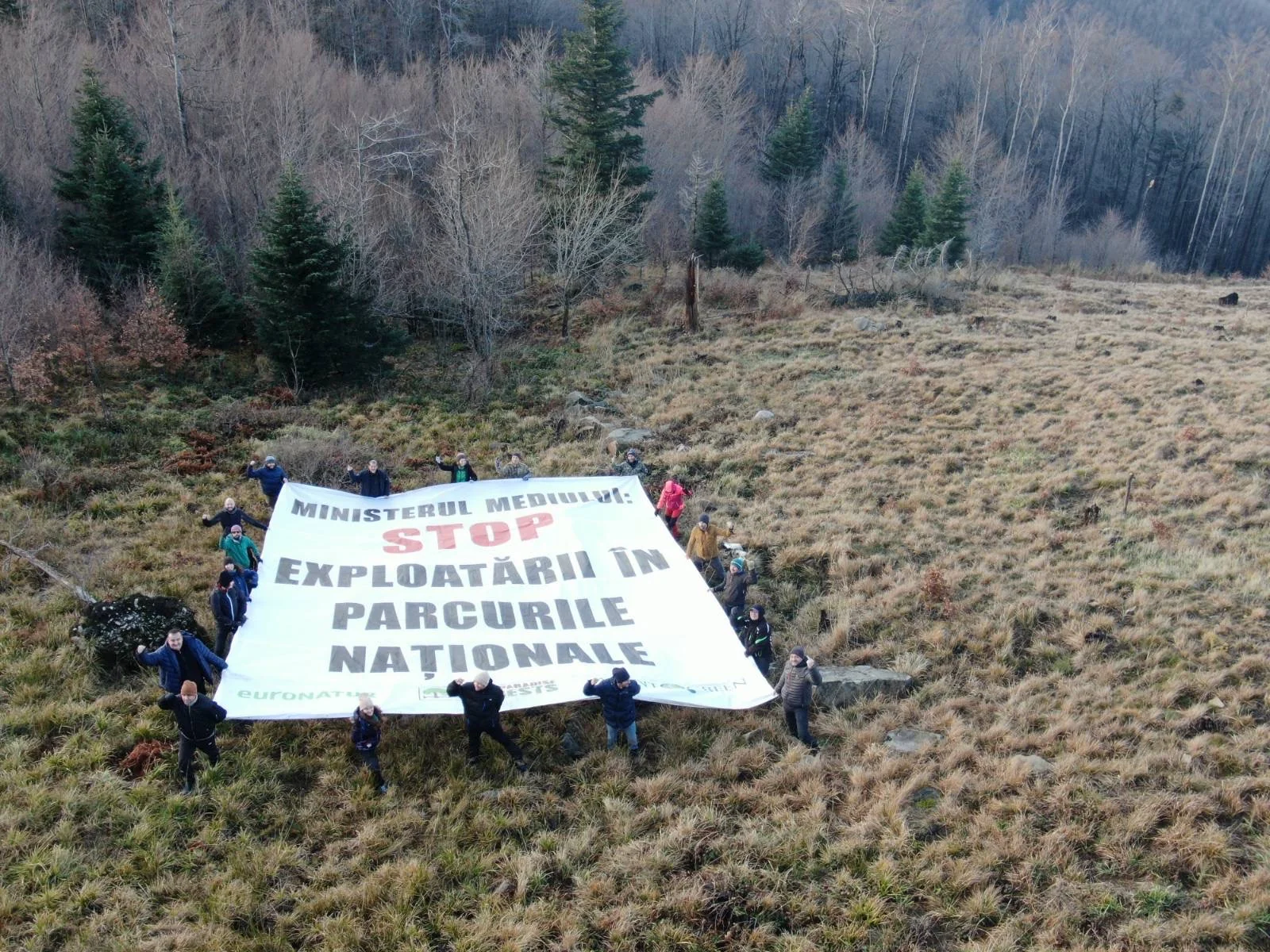
Agent Green reports to the European Commission the sacrifice of Semenic for a ski resort with an unverified climate future