Petition to the European Parliament on the killing of brown bears in Romania
To: European Parliament
President of the European Parliament
Rue Wiertz
B-1047 Brussels
Ref.: Implementation of the Habitats Directive
From: Agent Green Association, Bucharest, 14 June 2023
Dear Ms Roberta Metsola,
We would like to draw your attention to the Romanian Government’s implementation of Council Directive 92/43/EEC of 21 May 1992 on the conservation of natural habitats and of wild fauna and flora (the Habitats Directive), concerning one of the protected species in Annexes II and IV, Ursus arctos.
The species is endangered by legislative acts adopted since 2021, namely Government Emergency Ordinance 81/2021 and the law approving and amending the ordinance, No. 197/2022. Following government propaganda portraying brown bears as very dangerous and cold-blooded killers, the Minister of Environment, Waters and Forests recently proposed an order to kill 486 brown bears.
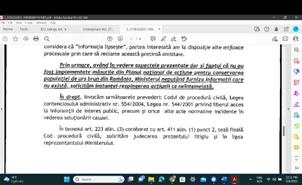
The national action plan for the conservation of the brown bear population in Romania, approved by Environment Minister’s Order No. 625/2018, has never been implemented, as the minister acknowledged before the court, as detailed in the attached report.
Brown bears are being sacrificed in Romania because of the lack of conservation measures and to satisfy hunters’ desire for trophies. The Arthur case in April 2021 is a very good example of illegal hunting parties organised in Romania.
The legislation mentioned allows brown bears to be killed by a team comprising a representative of the hunting ground and a gendarme, a town hall representative and a veterinarian, who have no previous expertise, do not possess equipment or substances for veterinary use, and are not trained to intervene in situations requiring bears to be captured, tranquilised or possibly euthanised. They are allowed to kill if the bear SEEMS dangerous, both within settlements and in its natural environment, regardless of its age. This practice takes place in Natura 2000 sites and violates the Habitats Directive.
The order allowing the killing of 486 bears that are neither dangerous nor causing harm to anyone is based on a study that is only preliminary, as stated on its first page.
The study merely criminalises bears and classifies them as a dangerous species, without analysing prevention and conservation measures. At the same time, the study completely lacks an assessment of the impact of killing the 486 bears, completely lacks a scientific assessment of the bear population, and also lacks an analysis of the causes of human-bear conflicts to identify the most appropriate prevention methods.
As a result, hunting activities, which are illegal under current EU legislation, lead to human-bear conflicts caused by hunters’ interference in bears’ natural habitats. Instead of killing bears, the Romanian authorities should therefore address the root causes of such encounters, namely illegal hunting in protected areas.
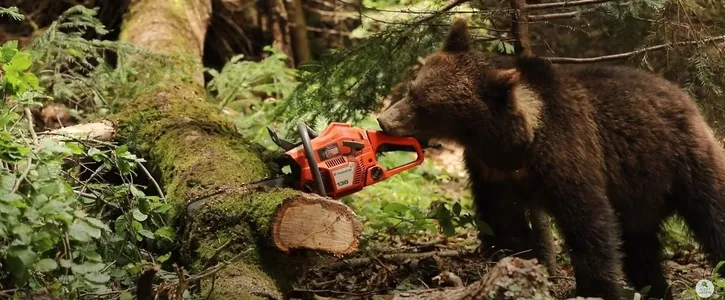
Logging irreparably destroys bear habitat. As a result, bears seek shelter and food and are pushed towards human settlements.
We ask you to address this issue in the Committee on Petitions and thereby help protect bears’ natural habitats in Romania. We sincerely rely on the understanding of Members of the European Parliament and their willingness to address at EU level the serious issue of hunting, as well as the equally serious issue of national authorities voluntarily and knowingly breaching EU nature conservation obligations.
Below is a detailed analysis of the legislative acts mentioned, originally written in Romanian.
Yours sincerely,
Gabriel Paun, president
Analysis of the legislative acts governing the killing and hunting of brown bears in Romania
I. Emergency Ordinance No. 81 of 2021 approving prevention and intervention methods for the brown bear species and supplementing certain legislative acts seriously violates the provisions of Directive 92/43/EEC OF THE EUROPEAN COUNCIL of 21 May 1992 on the conservation of natural habitats and of wild fauna and flora (the Habitats Directive)
In July 2021, the Romanian Government adopted, through an emergency procedure, an emergency ordinance approving an illegal procedure for driving away, capturing, tranquilising, relocating and shooting individuals of the species Ursus arctos within the built-up areas of settlements. It did so on the basis of Decision No. 1/2019 of the National Committee for Special Emergency Situations on the measures adopted at the extraordinary meeting of 01.08.2019, which approved the initiation of steps to amend and supplement Annex No. 2 to Government Decision No. 94/2014 on the organisation, functioning and membership of the National Committee for Special Emergency Situations, as subsequently amended and supplemented, by introducing a new type of risk: “attacks by large carnivores on the population”.
The brown bear (Ursus arctos) is a strictly protected species under the Habitats Directive 92/43/EEC:
Annex II – ANIMAL AND PLANT SPECIES OF COMMUNITY INTEREST WHOSE CONSERVATION REQUIRES THE DESIGNATION OF SPECIAL AREAS OF CONSERVATION, and
Annex IV – ANIMAL AND PLANT SPECIES OF COMMUNITY INTEREST IN NEED OF STRICT PROTECTION
At national level, the Habitats Directive was transposed in Romania through Emergency Ordinance 57/2007, which incorporated Annexes II and IV of the Habitats Directive. These annexes apply directly in national law and are therefore binding.
This species therefore requires the designation of special areas of conservation and the establishment of a legal regime of strict protection.
As an initial observation, the following aspects concerning the principles of application of this act stand out:
- The emergency ordinance does not propose means of resolving conflicts between local residents and bears in the long term, but merely provides an illegal route for transferring responsibilities from the competent authority (the Environment Ministry) to local authorities (town halls). Previously, the decision-making process for shooting a bear involved issuing the derogations provided for by Directive 92/43/EEC OF THE EUROPEAN COUNCIL of 21 May 1992, with several institutions involved, including the Environment Ministry and the Romanian Academy.
- Moreover, responsibility for resolving serious problems (animal attacks) is transferred from the ministry to so-called local intervention teams, comprising a representative of the hunting ground and a gendarme, a town hall representative and a veterinarian, who have no previous expertise, do not possess equipment or substances for veterinary use, and are not trained to intervene in situations requiring bears to be captured, tranquilised or possibly euthanised.
- The legislative act is not based on solid, indisputable data about Romania’s brown bear population, but on subjective assessments issued by certain interest groups seeking to resume bear hunting. At present, the authorities do not know how many bears there are in Romania or the structure of this population (numbers of males, females, cubs, etc.).
- Without complying with Decision C-88/2019 https://curia.europa.eu/juris/liste.jsf?num=C-88/19, delivered by the Court of Justice of the European Union (CJEU) concerning derogations from the strict protection of large carnivore species, the possibility is created for bears entering built-up areas, as well as areas outside settlements under the law approving Emergency Ordinance 81/2001 analysed below, to be shot on the basis of consensus among those participating in the intervention. This rests on discretionary decisions that may be taken without effective methods of identifying problem bears, even if the individual is within its natural range.
The procedure approved by Emergency Ordinance No. 81 of 2021 violates EEC Directive 92/43 (the Habitats Directive) because it allows bears to be shot or relocated, exceptional solutions requiring derogations from the species’ strict protection, solely on the basis of an ad hoc committee and, above all, while completely ignoring alternatives to killing. The Habitats Directive clearly establishes that such solutions resulting in the death of an individual of a strictly protected species are exceptional and may be applied only if, taking into account the best relevant scientific and technical knowledge, no other alternative can satisfactorily achieve the intended objective.
There is no doubt that the competent authorities should first implement alternatives to killing/relocation to limit human-bear conflicts (limiting habitat disturbance, ensuring responsible waste management, prohibiting and penalising bear feeding in or on the outskirts of settlements, monitoring and identifying bears, passive aversive measures such as electric fences, aversive measures using effective repellents, rubber bullets and specialised dogs, effective and rapid compensation for damage, etc.). These are provided for in the national action plan for the conservation of the brown bear population in Romania, approved by Environment Minister’s Order No. 625/2018, but are not applied.
In this regard, the ministry officially informed us before the court that this plan had never been implemented, in litigation concerning access to public information: case No. 27283/3/2021, statement of defence:
Article 12 of the Habitats Directive prohibits the deliberate capture or killing of individuals of the species listed in Annex IV(a). However, Member States may derogate from this article provided the conditions in Article 16 are met. It states that “Member States may derogate from the provisions of Articles 12, 13, 14 and 15(a) and (b), provided that the derogation is not detrimental to the maintenance of the populations of the species concerned at a favourable conservation status in their natural range and insofar as there is no satisfactory alternative to the derogation”.
Reasons permitting such a derogation include public health and public safety, and preventing serious damage to crops, livestock or other property. However, these derogations fall within the competence of Romania’s national environmental authorities, not mayors accompanied by a veterinarian, a hunter and a gendarme! The ordinance does not explain how discretionary decisions to shoot a bear that has endangered nobody can be prevented or what control mechanisms the ministry has to prevent abusive decisions!
We note that the provisions of the Habitats Directive were transposed into national legislation through Government Emergency Ordinance No. 57/2007 on protected natural areas and the conservation of natural habitats and wild flora and fauna, approved with amendments and supplements. Large carnivore species are included in Annex II of the Habitats Directive, corresponding to Annex 3 of Emergency Ordinance No. 57/2007, which includes wildlife species of Community interest whose conservation requires the designation of special areas of conservation – SACs – forming the Natura 2000 ecological network. These species are also listed in Annex IV of the Habitats Directive, corresponding to Annex 4A of Emergency Ordinance No. 57/2007, as species of Community interest requiring strict protection. The capture or killing of individuals in their natural environment, deliberate disturbance during breeding, rearing and hibernation, and the possession, transport, sale or exchange of individuals taken from the wild are prohibited.
In accordance with Article 16 of the Habitats Directive, countries may grant certain derogations from the above provisions under particular conditions and only for specific purposes (preventing significant damage, especially to domestic animals, in the interests of public health and safety, for research and education, and for restocking and reintroducing these species).
Under national legislation, only the central public authority for environmental protection may grant derogations, by order of the head of that authority, with the Romanian Academy’s prior opinion, provided there is no acceptable alternative and the derogating measures do not harm the maintenance of the species’ populations at a favourable conservation status in their natural range, and only in particular circumstances. Derogations are not granted if there is a risk that they will have a significant negative qualitative or quantitative impact on the population of the species subject to the derogation.
II. Law 197/2022 approving Emergency Ordinance 81 of 2021 on approving immediate intervention methods to prevent and combat attacks by brown bears on people and their property within the built-up areas of settlements, and amending and supplementing certain legislative acts.
We consider that this law flagrantly contravenes European law by unlawfully allowing bears to be killed by shooting/euthanasia even outside built-up areas, meaning in their natural environment (the Habitats Directive, whose provisions are also transposed into national law through Emergency Ordinance 57/2007).
A simple reading of this law shows that it is liable to favour trophy hunting, allowing bears to be shot or euthanised on subjective or unclear and open-to-interpretation criteria, without the authorisation or involvement of any environmental authority at any stage of the established procedure.
The law amended the original ordinance by adding the possibility of discretionarily killing bears outside built-up areas, regardless of their stage of biological development, including cubs, in breach of the Habitats Directive.
Thus, in Articles 4(1), 5(1), (2), (5), Article 6(1) and (4), Article 7(1), Article 9(c) and Article 10(a), the phrase “within built-up areas” in the emergency ordinance was removed. The regulated interventions can therefore also take place outside built-up areas, meaning in bears’ natural habitat.
This legal provision flagrantly violates the Habitats Directive, which in Article 12(a) prohibits “all forms of deliberate capture or killing of specimens of these species in the wild”. Areas outside built-up settlements include protected natural areas and forests, meaning the wild.
The approving law has therefore introduced another violation of European law, namely the Habitats Directive. This is transposed in Romania through Emergency Ordinance 57/2007.
Under Article 5(2) of Emergency Ordinance 81/2021, approved by Law 197/2022, (2) where the individual driven away returns and may threaten people’s lives or bodily integrity or the integrity of their property, the intervention team proceeds to tranquilise and relocate it.
Tranquilisation is carried out by the authorised veterinarian, with the support of the Manager’s specialist technical staff.
Paragraph (2) establishes that where the individual removed returns and may threaten life or bodily integrity…, the intervention team proceeds to tranquilise and relocate it. Although this paragraph establishes a criterion for taking this measure, namely that the individual returns and may threaten (not necessarily that it threatens or that danger is imminent), the ordinance does not define these terms, leaving it to the intervention team to assess the nature of the relocation measure or the degree of danger*.*
Moreover, the question arises of identifying the individual bear to establish that it repeatedly returns to the place from which it was driven away. How does the intervention team establish whether the bear initially removed is the same bear that “returns” to the place from which it was driven away? We consider this criterion subjective and insufficiently detailed, potentially leaving interventions on bears to arbitrary choice.
Intervention by removal, as defined in Article 1(3)(c), means “intervention by driving away – immediate, specialised human action to drive away, by various means, one or more brown bears, regardless of their stage of biological development or sex”.
We note that removal of the bear is not accompanied by fitting a tracking device or taking biological samples to compare with samples from the individual that might “return” to the place from which it was driven away, in order to establish repetition. Nor is it known when a bear shows signs that it MAY become dangerous. The wording would suggest that a bear’s mere presence, even outside built-up areas, meaning in its natural environment, may threaten people’s lives or bodily integrity or the integrity of their property. We therefore consider this criterion lacking in objectivity.
The following paragraph (3) of the same article states that “Tranquilised and relocated individuals shall be marked and monitored by fitting GPS collars. Collars shall be fitted within the budget and stocks provided for this purpose at the Ministry of Environment, Waters and Forests.”
This paragraph indicates an objective criterion for marking and monitoring tranquilised and relocated individuals, thus after the measure under Article 5(2) has been applied: fitting GPS collars within the stocks provided for this purpose at the Ministry of Environment, Waters and Forests. We consider this measure lacking in transparency because it identifies no subsequent act specifying the budget and stock limits or methodological rules for implementation. We consider that the Ministry of Environment, Waters and Forests does not possess the financial resources that need to be allocated to such equipment.
Point b, 2nd sentence, of the same article indicates a disproportionate solution, namely euthanising or shooting the bear where property of any kind belonging to citizens is endangered.
We consider killing a bear (a species strictly protected at Community level by the Habitats Directive and nationally by Emergency Ordinance 57/2007) when “property of any kind” is endangered disproportionate. The measure is not even established for a concrete, tangible outcome, but merely for creating a state of danger. It seriously violates European rules permitting protected species (brown bears) to be killed only under very strict conditions, as we detail throughout this paper.
Points d and e give the intervention team the right to euthanise/shoot the bear on subjective criteria that cannot be verified later. Point d provides that a bear may be killed if injured during the intervention and no other solutions under the aforementioned ordinance are identified. Therefore, there is no real possibility of identifying other solutions (the possibilities offered by the ordinance are driving away, intervention for relocation, and killing).
Moreover, point e provides that a bear may be killed if caught in an unauthorised trap and no other solutions are identified. This provision is liable to encourage illegal bear hunting, particularly given the local composition of the intervention team. In some cases, the person who placed an unauthorised trap could also be part of the intervention team, while the ordinance identifies no solutions or specialists.
Article 7(1) provides that this emergency ordinance establishes the monitoring system for rapid interventions on bears carried out both within and outside built-up areas, in the version approved by law by Romania’s Parliament, through capture/relocation or removal by shooting or euthanasia. Paragraph 2 of the same article establishes that “The monitoring system under paragraph 1 shall be established on the basis of the national register of captures/relocations/removals by shooting or euthanasia, whose template is provided in Annex No. 4 to this emergency ordinance.” Article 9 then states that “County and regional environmental protection agencies have the following responsibilities and duties: a) designate a contact person for accidental captures and killings;”.
Our examination of the ordinance and its annexes revealed no mention of recording accidental captures and killings of bears in the rapid intervention monitoring system. The only mention is in Article 9, among the duties of county and regional environmental protection agencies, designating a contact person for accidental captures and killings. This raises the questions: what happens to accidentally killed individuals? Who will be accountable, how, and where will these data be recorded? (The ordinance does not specify.) All this creates serious uncertainty about the legality of possible “accidental” killings and their transparent recording.
Emergency Ordinance 57/2007 contains, in Article 36, a provision under which the competent environmental protection authority organises a system for monitoring the accidental capture and killing of all bird species and the species listed in Annexes 4 A and 4 B. Paragraph (2) of the same article provides that:
“On the basis of the information obtained through the monitoring system under paragraph (1), the central public authority for environmental protection and forests shall take additional research or conservation measures to ensure that accidental killings or captures do not have a very significant negative impact on the species concerned.”
Thus, the provisions of the emergency ordinance do not provide additional research or conservation measures to ensure that accidental killings or captures do not have a very significant negative impact on the species concerned. In its current approved form, we consider that the ordinance will decimate the bear population, encouraging trophy hunting and the bear meat market.
Moreover, Article 6(3) of the criticised ordinance allows female bears with cubs to be shot, with the cubs then to be relocated urgently.
Article 12(3) provides that “The carcass of an individual removed by shooting shall belong to the Manager that carried out the removal and may be used under the rules in force laid down by the National Sanitary Veterinary and Food Safety Authority, or shall be destroyed by incineration if the intervention was carried out by the Forest Guard or the individual was removed by euthanasia”.
We consider that such a provision is liable to encourage hunting, as it allows the manager to retain the carcass of the individual killed by shooting.
Under Article 2(3)(a), the intervention team also comprises:
- a) the mayor/deputy mayor of the administrative-territorial unit in which the event occurred, designated to the local emergency committee under Article 12(2) of Government Emergency Ordinance No. 21/2004 on the National Emergency Management System;
- b) staff of the territorially competent specialised gendarmerie units and/or subunits on duty in the area where the bear’s presence was reported;
- c) specialist technical staff employed by the Manager, which has concluded an on-call contract with the administrative-territorial unit to provide the specialist services under this emergency ordinance;
- d) the authorised veterinarian.
We have serious doubts about the competence of the mayor/deputy mayor of the administrative unit where the event occurred to lead a specialist bear intervention team.
The ordinance provides for a series of necessary investments to be made available to the intervention team:
Rifles, tranquilisers, vehicles, cages and microchipping systems, which it states will be provided within the budget. However, it does not specify whether state budget resources exist or where the funds will come from. This implies that killing the animal will be resorted to directly because of a lack of financial resources, an unconstitutional way of adopting a legislative act that also derogates from fundamental rights guaranteed by Romania’s Constitution.
The bear is a strictly protected species under the Habitats Directive. The EU Habitats Directive lists the bear among strictly protected species whose conservation requires the designation of special areas of conservation (Annex IV), and Article 12 prohibits killing these individuals.
The Court of Justice of the European Union has established in its case law that a directive has direct effect if its provisions are unconditional and sufficiently clear and precise (judgment of 4 December 1974, Van Duyn). In this case, the provisions of Article 12 of the Habitats Directive, transposed through Emergency Ordinance 57/2007, are violated as follows:
First, the criticised ordinance disregards Emergency Ordinance 57/2007 as well as the Habitats Directive, establishing conditions for intervention on bears outside those permitted by Emergency Ordinance 57/2007.
We also note that paragraphs (2), (2^1) and (2^2) provide that derogations are established by order of the head of the central public authority for environmental protection and forests, with the Romanian Academy’s opinion and the binding opinion of the central public authority for environmental protection and forests. Paragraph (2^2) provides that the procedure for establishing derogations is approved by order of the central public authority for environmental protection and forests. These provisions have no counterpart in the ordinance on approving intervention methods for the brown bear species and amending and supplementing certain legislative acts.
The Habitats Directive also clearly provides that derogations from special conservation measures may be approved only if other alternatives have been implemented unsuccessfully.
Under Annex 3 to the same legislative act, the bear is also a species whose conservation requires the designation of special areas of conservation. Article 31 of Emergency Ordinance 57/2007 provides that:
“(1) The protection and conservation of natural habitats and wild species of Community interest, except birds, present in Romania and listed in Annexes No. 2 and 3 shall be ensured by declaring sites of Community importance and special areas of conservation, selected and designated in accordance with the criteria in Annex No. 7 and the provisions of Article 8(1)(b) and (c) and paragraph (4).
[…]
(4) To protect and conserve species, national/regional action plans shall be drawn up for each species, documents containing action and conservation measures in accordance with species action plans agreed at international/European level.”
Such measures are absent from the ordinance on immediate intervention methods to prevent and combat attacks by brown bears.
Likewise, Article 33 of Emergency Ordinance No. 57/2007 establishes that, for terrestrial, aquatic and underground wild plant and animal species listed in Annexes 4 A (thus including brown bears) and 4 B, except bird species, living both within and outside protected natural areas, the following are prohibited:
- a) any form of taking, capture, killing, destruction or injury of individuals in their natural environment, at any stage of their biological cycle;
- b) deliberate disturbance during breeding, rearing, hibernation and migration;
- c) deliberate damage, destruction and/or collection of nests and/or eggs from the wild;
- d) damage and/or destruction of breeding or resting sites;
- e) harvesting flowers and fruit, picking, cutting, uprooting or deliberately destroying these plants in their natural habitats, at any stage of their biological cycle;
- f) possession, transport, sale or exchange for any purpose, and offering for exchange or sale, of individuals taken from the wild at any stage of their biological cycle.”
Regarding possible derogations, Article 15 of the Habitats Directive, also reflected in Emergency Ordinance 57/2007, establishes that:
“In respect of the capture or killing of wild fauna species listed in Annex V(a), and in cases where derogations are applied under Article 16 for the taking, capture or killing of species listed in Annex IV(a), Member States shall prohibit the use of any non-selective means liable to cause local disappearance or serious disturbance of populations of such species, in particular:
(a)
use of the means of capture and killing listed in Annex VI(a),
(b)
any form of capture and killing from the modes of transport listed in Annex VI(b)”.
Annex VI(a), “PROHIBITED METHODS AND MEANS OF TRANSPORT, CAPTURE AND KILLING”, establishes the following:
(a) Non-selective means
MAMMALS
-
Blind or mutilated animals used as live decoys
-
Tape recorders
-
Electrical and electronic devices capable of killing or stunning
-
Artificial light sources
-
Mirrors and other dazzling devices
-
Devices for illuminating targets
-
Sighting devices for night shooting comprising an electronic image magnifier or image converter
-
Explosives
-
Nets which are non-selective in their construction or conditions of use
-
Traps which are non-selective in their construction or conditions of use
-
Crossbows
-
Poison and poisoned or anaesthetic bait
-
Gassing or smoking out
-
Automatic or semi-automatic weapons with magazines capable of holding more than two rounds
Although the ordinance on approving intervention methods for the brown bear species and amending and supplementing certain legislative acts does not provide that shooting will use automatic or semi-automatic weapons with magazines capable of holding more than two rounds, or that capture and killing will take place from the modes of transport listed in Annex VI(b), neither does it prohibit such practices. It provides no protection/conservation measures for bears, thus leaving the way open to violations of the European Directive. We make the same criticisms concerning forms of capture and killing from the modes of transport listed in Annex VI(b), namely aircraft and moving motor vehicles.
These provisions have their counterpart in Emergency Ordinance 57/2007, Article 52(1)(g).
III. Granting a derogation by ministerial order for the killing of 486 bears
On 20 April 2023, a public consultation was announced on a draft order of the Ministry of Environment, Waters and Forests approving the prevention and intervention levels to prevent damage and accidents caused by bears (Ursus arctos). The draft grants a derogation to kill 486 brown bears (Ursus arctos). It has not yet been published in the Official Gazette.
This draft was promoted without the Romanian Academy’s opinion and also on the basis of a Partial Study that merely criminalises bears and classifies them as a dangerous species without analysing prevention and conservation measures. At the same time, the study completely lacks an assessment of the impact of killing the 486 bears, completely lacks a scientific assessment of the bear population, and also lacks an analysis of the causes of human-bear conflicts to identify the most appropriate prevention methods. Killing bears thus becomes the first and only method, applied discretionarily by a group of non-specialists without any environmental assessment, allowing bears to be pursued and killed even in their natural environment.
The study presents only methods for calculating a maximum level of bear removal, without a risk analysis or impact analysis.
Thus, regarding the calculation of the bear population, point 2.5.3 states: “Using the average growth percentage of bear populations worldwide (1.136), applied to the figure 7200, yielded a minimum number of 7703 individuals for 2023.”
We consider this calculation wrong. Multiplying N2018 = 7200 by λ = 1.136 does not produce the authors’ figure of 7703. Calculating growth for 2018-2022 instead yields a growth rate of 1.07 (that is, 7%), which appears nowhere in the methodology presented. Given the 4-year interval and this rate, it seems implausible that the rate remained constant for four years, while the authors do not state whether they calculated other annual growth rates for this period. We can therefore consider the figure of 7703 unrelated to science and instead a matter of arbitrary choice. The fate of a keystone species must not be jeopardised by poor calculations.
Point 2.5.4 states: “The maximum number of individuals was calculated for 2022, starting from hunting-ground estimates centralised by the county environmental protection agencies and applying a negative correction of 0.5. The resulting maximum number was 8093 individuals, which was used for all subsequent calculations. This correction followed field checks, applying the ‘COY’ index for the reproductive-unit method (Krkovic et.al., 2001).”
This approach marks the demise of science because the minimum and maximum bear population were estimated using two different methods, one for the minimum and another for the maximum, according to what best suited the authors and beneficiaries. For the minimum, they opted to estimate growth against a value established in 2018 (at bioregion level and using sampled data). For the maximum, they opted for values calculated from the number of bears reported by managers at hunting-ground level, applying a 50% correction with no scientific foundation, because the cited article contains no methods or results suggesting that 0.5 can be used as a population correction value.
Regarding the calculation of bear density, the order states: “The densities calculated for each hunting ground were obtained using the average between the habitat favourable to the brown bear species extracted from Corine Land Cover and the hunting-ground area, expressed relative to 100km2 (10,000 ha), Fig. 7-8.” This approach to establishing the reference area for calculating bear density by averaging suitable habitat with fictitious administrative boundaries is scientifically invalid according to the current specialist literature on this species.
Point 2.6 of the Order states: “Identification, analysis and presentation of acceptable alternatives; where a derogation is proposed for a number of individuals of the bear, lynx and wildcat species, this shall be correlated with the incidence of significant damage and cases of these species endangering human health and integrity in 2015 – 2022; scientific substantiation of the proposed derogations and establishment of the relationship between favourable conservation status and the removal of a certain number of brown bears (Ursus arctos), lynx (Lynx lynx) and wildcats (Felis silvestris), under Council Directive 92/43/EEC on the Conservation of Natural Habitats and of Wild Fauna and Flora (the Habitats Directive); estimation of the number of derogations that may be granted for 2023 at manager and county level.” It states: “Data on the presence of brown bear individuals at hunting-ground level consisted of the maximum resulting from the analysis in point 5 (8093 individuals nationally), considering that this point proposes the maximum population intervention number (the maximum number of individuals resulting from the study), but also because this value resulted from the correction of nationally centralised data verified by the county environmental protection agencies. Moreover, the proposed intervention in the brown bear population is maximal, without affecting current conservation status, while its full implementation is not mandatory. Given that this study proposes the maximum level of preventive intervention for the bear species, the following calculation formula resulting from the analysis was used: N=(N1+N2)/2, where N is the maximum number of individuals proposed for prevention at hunting-ground level;”
The meaning of “presence data” at hunting-ground level is vague, and its association with a maximum number established nationally is a mystery, considering that Romania’s specialist literature shows that an individual bear occupies a range covering several hunting grounds. Also, given that bears are a protected species, the prevention principle requires any possible lethal intervention to relate to the minimum estimated population and the minimum quota capable of having a population impact. Under the logic of the prevention principle, setting a quota based on the estimated maximum population (incorrectly calculated) and maximum intervention (calculated using a formula with no scientific foundation) is therefore wrong and dangerous. The absence of an obligation to achieve the maximum level does not justify the maximum intervention decision. To respect the prevention principle, the maximum level should be the minimum level at which an impact can be assessed against a population estimated using a clear, scientifically validated method.
The authors then write: “The very high bear density in Romania causes numerous cub losses through killing by males, the reaction of females with cubs to protect them; – leaving natural habitat and taking refuge in agricultural crops, small patches of forest vegetation, near settlements, where the risk of conflict with local people increases and cubs grow up practically habituated.”
Natural population regulation systems represented by males killing cubs are thus identified, yet the final paragraph expressly states the desire to remove males from the population to “allow females to return to natural habitat”. In practice, the recommendation is precisely to reduce an important element of the population’s natural regulation mechanism. This indicates an interest in trophies and incompetence.
In fact, it does not even explain to what extent the population reduction objective can be achieved by removing dominant males that ensure natural population regulation. Nor does it justify this recommendation in the context of an objective of population reduction. We consider this study recommendation, alongside the draft order’s proposal to establish a maximum threshold of 500 CIC points, concerning and intended to support killing adults with valuable trophies. This measure cannot contribute to short-term population reduction but will further disrupt the population’s structure, cause long-term growth by broadening the base of the bear population pyramid, and create a risk of inbreeding. This recommendation thus contradicts the study’s objectives and the spirit of the prevention quota.
“For Romania’s bear population, intervention can take place without problems affecting its dynamics and favourable conservation status within a limit of 10% of the minimum population level. This number will include both intervention and prevention derogations. While intervention derogations will mainly target individuals with deviant behaviour regardless of sex or age, preventive harvesting will seek to reduce the proportion of males so that females with cubs can return to natural habitat. Scientific studies show that dominant males put constant pressure on young individuals and especially females with cubs, causing them to leave favourable living areas and move increasingly close to inhabited areas to avoid predation (Steyer et. all 2013).”
The study provides no impact analysis establishing this 10% threshold as having no population impact. The bear action plan proposes an 8% threshold, while the ministry’s attempted study proposes 5.94%. This assertion therefore contradicts the rest of the study.
In conclusion, the brown bear species Ursus arctos is endangered in Romania, with the legal framework favouring the killing of the most valuable male individuals to obtain hunting trophies.