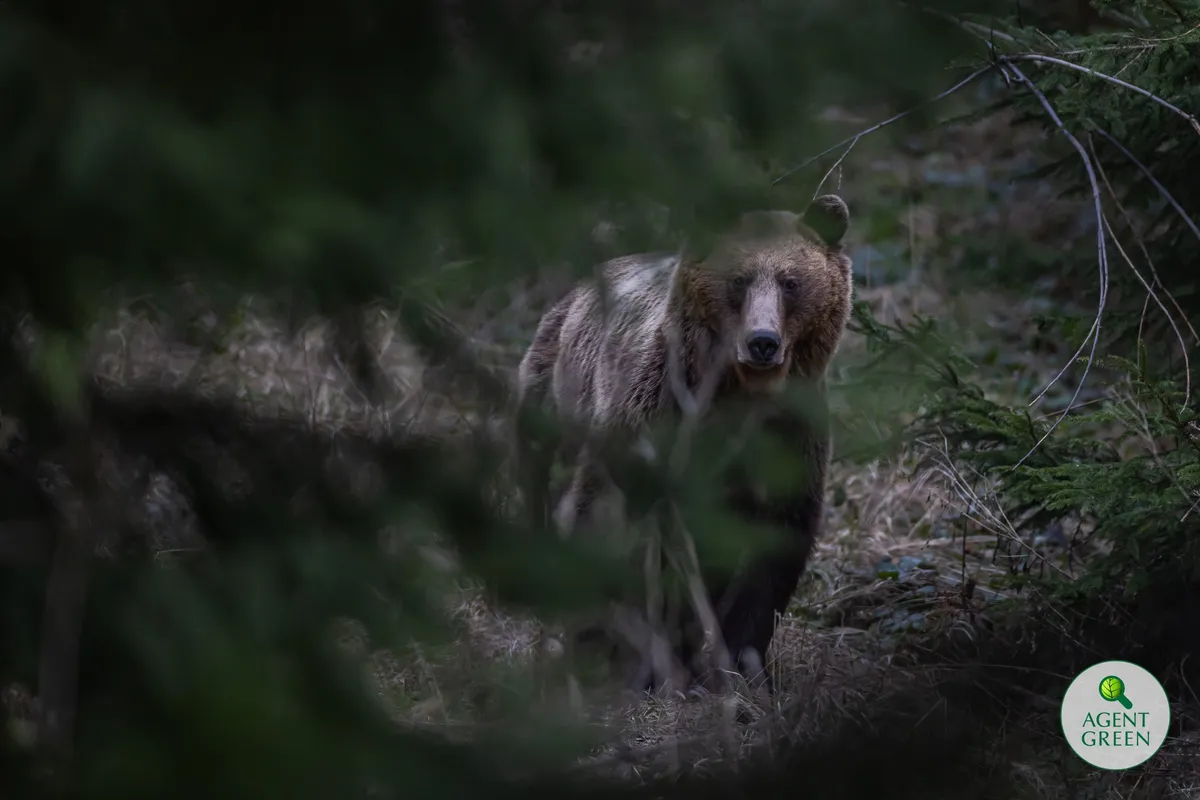
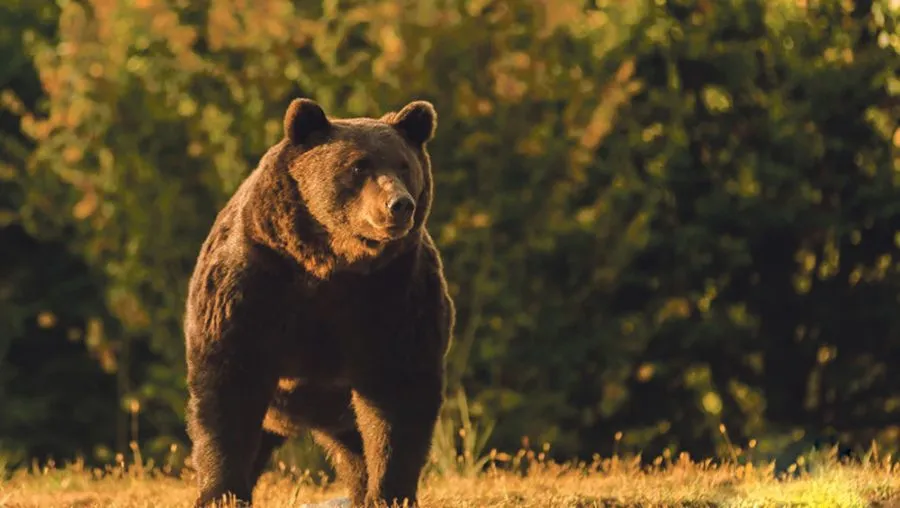
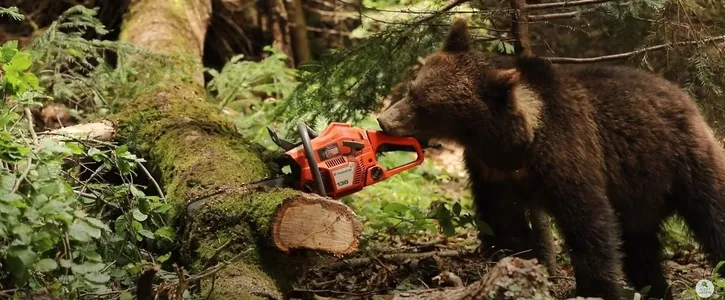
A bear felt ashamed today on hearing Mr Barna Tánczos, Romania’s environment minister, state that there is no direct cause-and-effect relationship between illegal logging and bears appearing sometimes even in urban schoolyards. We recall that bears appearing near human settlements are an acute problem in many mountain areas, especially in Harghita and Brașov counties. The minister’s statement was recorded by Rador, citing the Hungarian news agency MTI.
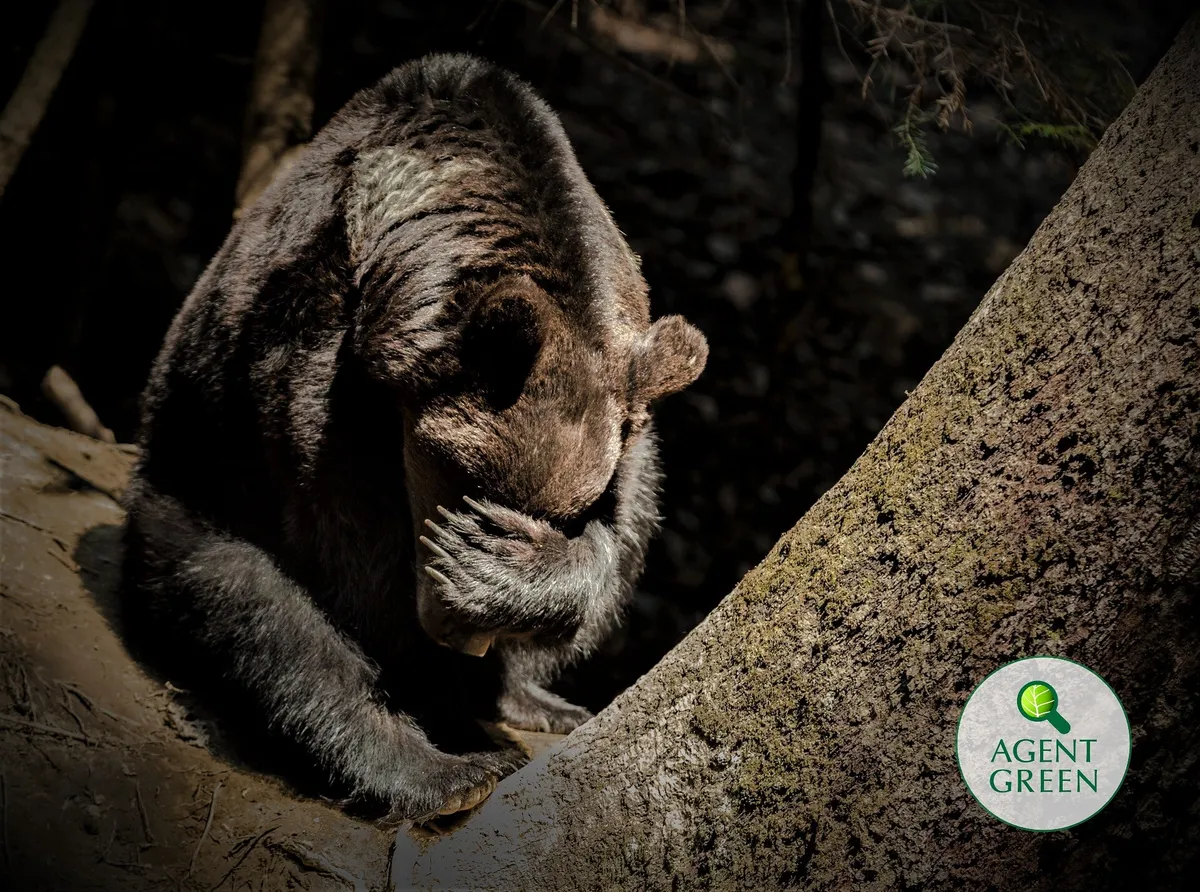
In this context, Agent Green makes the following points, grounded in scientific literature showing that habitat degradation (legal and illegal logging), climate change and human persecution threaten the bear species’ existence:
Any consideration of population control by lethal means or the use of other methods that could adversely affect bear survival must be treated with the utmost caution, given the variety of threats brown bears face. Brown bears need safe habitats and to avoid human persecution (Weaver et al., 1996, Estes et al., 2011, Ripple et al., 2014, Darimont et al., 2015). A brown bear needs a large habitat free of human conflict in which to seek food, a mate, shelter and den sites. An ideal brown bear habitat must have an adequate distribution and abundance of food for bears to develop well. Another critical threat to bears is the incursion of motorised machinery into their habitats (Craighead 2002).
Furthermore, many researchers have argued that climate change will harm bears by further altering the availability of food sources in their habitats. Their conclusions demonstrate that the Romanian government must take the impact of climate change on brown bears with the utmost seriousness. For example, Bojarska and Selva (2012) conducted a global review of bear food selection in relation to geographical location (latitude, longitude, altitude) and a multitude of environmental variables, such as the duration and thickness of snow cover.
They found that some of the “most important factors affecting brown bear feeding ecology” were “temperature and snow conditions” (Bojarska & Selva 2012). They determined that climate change can be expected to greatly influence brown bear feeding habits through changes in food availability, hibernation patterns, nutritional and energy requirements and feeding behaviour. Rising global temperatures produce shorter winters with less snow, especially at northern latitudes and higher elevations (Sagarin & Micheli 2001, Wilmers & Post 2006). Early snowmelt substantially reduces the amount of food in late winter and spring, which is vital for bears after hibernation and until other food resources become available (Wilmers & Post 2006).
Climate change can affect brown bear feeding habits through changes in plant distribution and phenology. In response to higher temperatures, Rodriguez et al. (2007) demonstrated a long-term decline in the contribution of boreal and temperate food to brown bear diets during the hyperphagic season, when brown bears normally consume large amounts of fruit to build up fat for hibernation and successful reproduction. Changes in fruit timing and abundance, the gathering of fruit and acorns, and reduced availability of higher-quality fruit can have important consequences for brown bear population dynamics (Rodriguez et al., 2007).
If brown bears’ main food resources disappear without a corresponding change in the timing of alternative food resources, a serious dietary shortage could arise. (Bojarska and Silva 2012, p. 133-4). The currently available scientific studies make clear that climate change threatens and will continue to threaten brown bears by adversely altering their habitat.
Dorresteijn et al. (2014) studied brown bear coexistence with humans in Transylvania, Romania. The researchers found that “bears and humans coexisted relatively peacefully, despite occasional conflicts”. The keys to this coexistence were: 1) the availability of forested areas connected to bear populations in the Carpathian Mountains; 2) the use of traditional livestock management to minimise damage caused by bears; and 3) a certain tolerance among shepherds for occasional conflicts with bears.
Dorresteijn et al. found that bear activity was not associated with human settlements, and compensation for livestock losses does not influence people’s attitudes towards bears.
These studies indicate that the conflictual relationship between humans and bears is low in regions of Romania where hunting quotas and, probably, bear populations are highest. Clearly, claims that hunting is needed to address human–bear conflict in this region are false.
Co-adaptation and coexistence with Romania’s brown bears are essential for the safety of the human population, animals and agriculture.
Agent Green recommends that the environment ministry’s action plan firmly require co-adaptation and coexistence with Romania’s brown bears. Co-adaptation and coexistence must happen if we want bears to continue to exist, meaning that people must be willing to share habitat and tolerate the low level of risk bears pose (Dubois et al., 2017, Carter and Linnell, 2016, Chapron, Guillaume et al., 2016). People must counter their own tendency to act as “hyperpredators” of other species and their habitats (Darimont et al., 2015, Chapron and López-Bao, 2016).
In 2015, a group of academics, industry representatives and nongovernmental organisations from five continents met at a 2-day workshop to develop the first international principles for ethical decision-making in wildlife control. This group’s conclusions were published and are summarised as follows:
“They determined that wildlife control efforts should begin wherever possible by modifying human practices that cause human–wildlife conflict and developing a culture of coexistence; that significant harm to people, property, livelihoods, ecosystems and/or other animals should be substantiated by evidence; that measurable, outcome-based objectives should be clear, achievable, monitored and adaptable; that predictable reductions in animal welfare should affect the smallest number of animals; that community values as well as scientific, technical and practical information should inform them; that they should be integrated into systematic long-term management plans; and that they should be based on the specifics of the situation rather than negative labels (harmful, too numerous) applied to target species. We recommend that these principles guide the development of standards and decisions and the implementation of international, national and local standards” (Dubois et al., 2017).
We are aware that living with bears can be difficult in rural areas. When property is damaged (including homes, crops, livestock, commercial forestry, etc.), compensation should be delivered promptly with the help of local authorities. In this way, people’s tolerance towards bears will improve, reducing the risk and frequency of retaliatory poaching.
In extreme situations where bears genuinely pose a risk to the human population and/or its property, the Ministry of the Environment should have an emergency plan (at national or administrative level) enabling it to intervene case by case to eliminate dangerous situations. This emergency plan should be definitively separate from any harvest quotas that might be allocated to managers and should clearly state that its specific and sole scope is to address extreme cases. Trophies from approved interventions should not be traded commercially, thus preventing fraudulent bear killings disguised as emergencies.
Agent Green therefore considers it necessary for state authorities to establish specific conservation objectives based on environmental, social and economic objectives — the basis for up-to-date and timely information about species. To facilitate collaboration among stakeholders, decision-making transparency and predictability are necessary when setting the proposed objectives, measures and actions. Only in this way can we facilitate not only a balanced social climate but also an ethical and non-discretionary framework in the management system for Romania’s brown bear population.
Furthermore, we support proposals for studies on the impact of mushroom and berry gathering on the brown bear population and on determining the impact of brown bears on prey species (red deer, roe deer, wild boar), with implications for hunting and the agricultural and forestry sectors. However, we would recommend that such studies be conducted by independent agencies to ensure that the results are not biased to serve private interests.