Disaster in UNESCO forests
SEMENIC DISASTER VIDEO
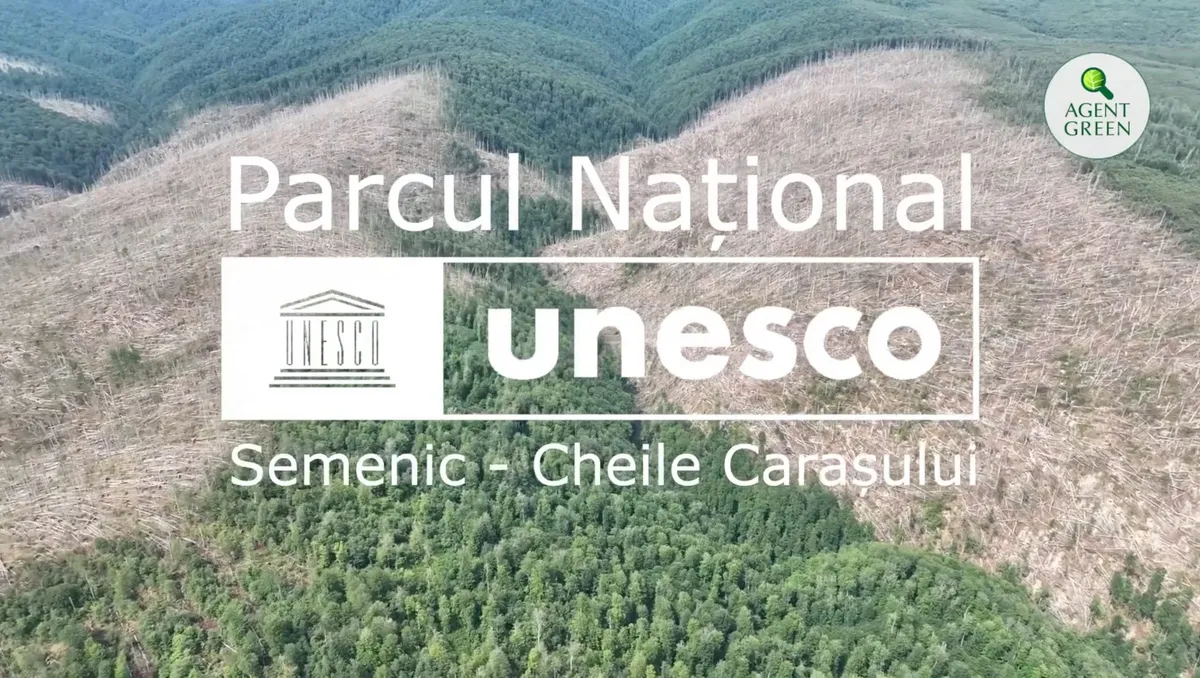
Climate change has struck Romania’s forest in an unprecedented way. Hundreds of hectares of UNESCO World Heritage virgin forest in Semenic – Cheile Carașului National Park were blown down on the night of 13-14 July. The nearest weather station, at Bozovici, recorded wind of only 60 km/h, whereas such windthrow requires winds exceeding 160 km/h. This indicates a locally amplified phenomenon.
Agent Green representatives visited the disaster in Semenic and spoke with local representatives of the forestry administration and the national park, and with the meteorologist on duty.
Virgin forests are the most resilient to severe weather. Such effects have never before been recorded in virgin forests in Europe. Disasters are, however, common in human-planted forests, especially coniferous ones, which lack the resilience of native forests. This is the strongest warning for politicians, scientists, forestry administrators and citizens that the current Forest Code does not take climate change into account.
The disaster in Semenic also shows that all strictly protected forests (approximately 2% of Romania’s forest) are vulnerable to climate change as long as logging that destabilises the forest takes place around them.
Agent Green proposes that Romania’s President, Parliament and Government update the Forest Code in line with the following vision:
Agent Green’s vision for Romania’s forest (PDF in Romanian)
In the context of the current debates on a new Forest Code, the organisation also has the following comments on the bill:
Agent Green’s observations on the bill for a new Forest Code
Last but not least, the organisation asks the Ministry of Environment and Romsilva to:
– refrain from intervening in any way in the disaster in Semenic (both within the UNESCO site and outside it), to ensure carbon storage in the fallen trees and the forest’s natural regeneration
– enlarge the UNESCO site’s buffer zone so that it forms a strip at least 1 km wide
– strictly protect 10% of Romania’s forest and, in the remaining forest, cease clear-cutting and shelterwood cutting and use only selective cutting to ensure continuous forest cover throughout the country