Press release: Record number of nature defenders murdered worldwide in the past year
Record number of nature defenders murdered worldwide in the past year
Romania on a par with Burkina Faso, Congo and Kazakhstan
The highest number of nature defenders murdered in a single year was recorded by Global Witness in 2019, showing that activism to combat climate change remains the riskiest, while destructive logging led to the largest rise in attacks.
Bucharest, Wednesday, 29 July 2020 — Global Witness today publishes its annual report presenting the highest number of environmental activists and nature defenders murdered in a year, reporting 212 people who lost their lives because they defended their land and opposed the destruction of nature.
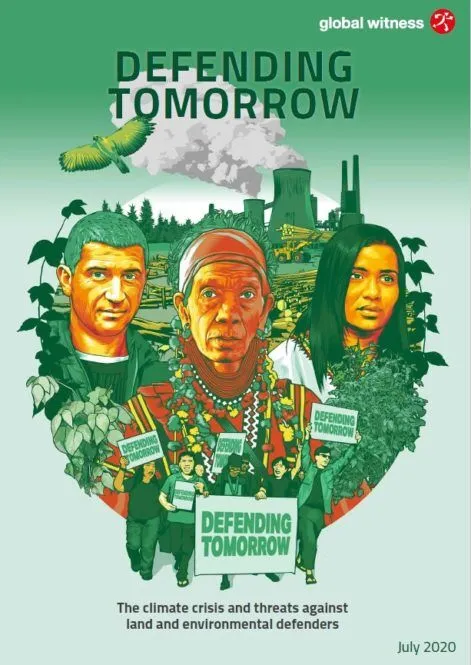
Read the “Defending Tomorrow” report (in English)
The Global Witness report highlights the especially important role nature defenders play in the struggle against climate change and destructive industries causing massive greenhouse gas emissions that accelerate global warming and environmental destruction. It makes very clear how, learning from the restrictions and oversight during the COVID-19 pandemic, protecting these activists becomes even more important for rebuilding a safer, greener planet.
On average, four nature defenders have been killed every week since the creation of the Paris Climate Agreement in December 2015. Yet most are silenced through violent attacks, arrests, death threats or lawsuits.
Shockingly, more than half the murders reported last year happened in just two countries: Colombia (64) and the Philippines (up from 30 in 2018 to 43 in 2019). Globally, however, the number is most likely much higher, because many cases are never recorded.
Among the activists killed in 2019 was Datu Kaylo Bontolan from the Philippines, after opposing illegal mining in the area. A leader of the Manobo tribe, he was one of the Indigenous people killed in 2019 while defending their ancestral lands against newcomers seeking to exploit their natural resources.
Mining was the sector with the most murders recorded globally, with 50 cases in 2019, followed by the agrochemical industry, particularly in Asia, where 80% of the attacks in that sector occurred.
Romania is also present in the tragic report, which mentions forest rangers Liviu Pop, killed in Maramureș, and Răducu Gorcioaia, killed in Iași. Gabriel Păun, founder of Agent Green, is presented as the activist who has survived several attacks and has still not been silenced, continuing alongside Agent Green the efforts to protect the last primary and old-growth forests, which are the most important reservoirs for biodiversity and tools for combating climate change.
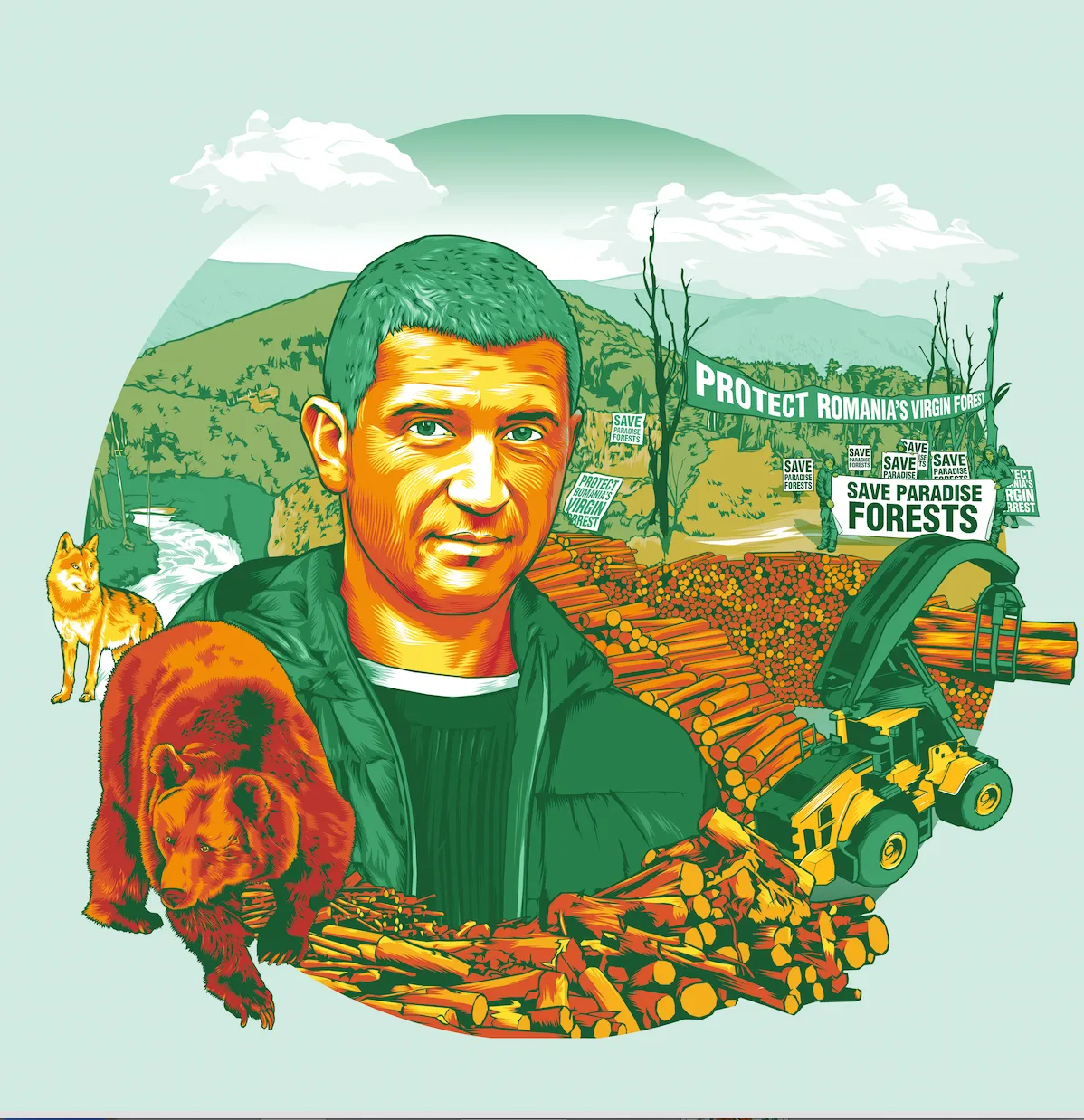
“Unfortunately, we live in a country where the state is consistently the environment’s number 1 enemy. The Romanian state has still not punished those who harmed me, although the perpetrators are known. On the contrary, it is trying to silence both me and anyone who dares to defend nature and causes enough of a disturbance. For the poor forest rangers who were killed, there are not even any suspects. I have chosen to continue this fight and take the State to court. Together with Agent Green, I am pursuing more than 70 lawsuits against the Romanian authorities, while complaints to the European Commission have already turned into infringement proceedings, with the Romanian authorities now just one step away from the European Court of Justice,” said Gabriel Păun, founder of Agent Green.
Among the activists still working under threat is Angelica Ortiz, one of the prominent Wayuu women from La Guajira. Under threat, Angelica has for years opposed Latin America’s largest coal mine, striving to protect the right to water of communities living in Colombia’s poorest regions.
Rachel Cox, Campaigner at Global Witness, says: “Agriculture and the fossil fuel industry have consistently been those attracting the most attacks against nature defenders. These are also the industries that aggravate climate change through deforestation and increased carbon emissions.
Many environmental murders and human rights abuses around the world are driven by the exploitation of natural resources, corruption in global politics and in the economic system. Environmental activists and nature defenders are the people taking a stand on this.
If we really want to make plans for a greener, healthier return to normal that truly brings people well-being, we must address the causes of the attacks and follow the direction set by those who want to protect nature and confront climate change.”
Global Witness also shows the pattern that has formed over time of Indigenous communities being attacked disproportionately for defending their rights and territories — despite studies showing that Indigenous peoples and local communities manage forests containing the equivalent of at least 33 times our annual carbon emissions. In 2019, there were 33 murders in the Amazon alone, representing 90% of the murders in Brazil.
The figures for 2019 also show that in 1 out of 10 cases in 2019, the victim was a woman. Women defending nature face more specific threats, including smear campaigns focused on family life and sexually explicit or sexist content. Sexual violence is also often used as a tactic to silence women, with most cases going unrecorded.
Despite these violent threats and crime, nature defenders around the world manage to achieve victories in 2019: a testament to the resilience, strength and determination they have shown in protecting their rights, the environment and our global climate.
In Ecuador, the Indigenous Waorani tribe managed to prevent the government from auctioning their territory for oil exploitation. In Indonesia, the Indigenous Dayak Iban community in central Borneo secured legal ownership of 10 000 hectares of land after a struggle lasting several decades.
Also, in a case brought before the Supreme Court of the United Kingdom by communities affected by copper mining in Zambia, the judge decided that the case could be heard in the courts of England, which could have implications for companies failing to honour their public commitments to communities and the environment.
Deforestation has been the sector with the fastest growth in murders globally since 2018, with 85% more attacks recorded against activists who opposed the industry.
Press contact (can facilitate interviews with all survivors mentioned in the report):hiqbl@globalwitness.org
Related articles
Romania promised 10% strict protection. The ministry puts only 2.54% on the map
Dozens of major national and international organizations notify the European Commission about the Romanian Environment Ministry’s unprecedented attack on biodiversity