Open letter to Romania’s president on the law to kill 972 bears
To the Presidential Administration
Cotroceni Palace | Bulevardul Geniului no. 1–3
Sector 6 – Bucharest – Romania,
Postcode 060116
Telephone: (0040-21)410.05.81
For the attention of Mr Klaus Iohannis, President of Romania
Bucharest, 16 July 2024
Open letter re: PL-x no. 719/2023, bill supplementing Article 1 of Hunting and Game Protection Law no. 407/2006, and amending and supplementing Government Emergency Ordinance no. 81/2021 approving immediate intervention methods for preventing and combating attacks by brown bears on people and their property, and amending and supplementing certain legislative acts
Mr Klaus Iohannis, President of Romania,
You have received for promulgation a law to kill 972 bears that embodies the Romanian state’s systematic failure to protect the brown bear species (Ursus arctos). It is a law devoid of any scientific foundation that temporarily favours the trophy hunting industry, which I previously brought to your attention when we investigated and published the case of Arthur, the bear killed by a prince from Liechtenstein. I was then the Prime Minister’s honorary adviser and hoped to draw your attention to this organized crime structure, to which you cannot have access because it includes not only officials, parliamentarians, hunting companies and local authorities, but also members of domestic and foreign intelligence services who ensure you have an emotionally and rationally distorted picture of reality.
The brown bear’s survival was already threatened by habitat degradation and fragmentation, declining social acceptance among citizens and interest groups, and poaching. The bear is legally protected internationally and in Europe, including by the Bern Convention and the EU Biodiversity Strategy. The EU Habitats Directive requires Member States to establish national action plans that, on the basis of recent and accurate information, ensure management and maintenance of favourable long-term conservation status.
We hope you are aware that throughout your presidential terms, the environment ministry had at its disposal the action plan for conserving Romania’s brown bear population, approved by Order no. 625 of 28 June 2018, published in Romania’s Official Gazette, Part I, no. 549 of 2 July 2018. A plan developed and debated with specialists that the last two environment ministers blocked, prompting Agent Green, the organization I lead, to sue the ministry at the Bucharest Court of Appeal. We no longer have full confidence in justice because of political interference, but nevertheless took this legitimate step.
You should know, however, that beyond our borders, promulgating the law will directly trigger infringement proceedings and bring Romania urgently before the European Court of Justice. I am convinced you do not want this and ask you to reflect deeply before deciding.
You can begin by asking why the 2018 action plan was not implemented. Why environment ministers spread hysteria and incitement instead of science. Why the authorities did not temporarily close the Bucegi trail when they learned that a bear had been reported on the path for some time. Why the bears to be killed will not be incinerated, as confiscated ivory is destroyed to save elephants from extinction. Why the law submitted for promulgation talks of bears as something to be harvested rather than someone to be protected.
Do you think bears and other non-human animals are merely biological machines instinctively programmed to respond to environmental stimuli, or do they think? Do they have emotions such as fear, happiness, anger, sadness, contempt, surprise, love, jealousy, shame, sympathy, guilt, pride, admiration, envy and indignation? Are they conscious and intelligent? Can they solve problems? Do they help one another to the point of self-sacrifice? Do they make plans, objectives, tactics and strategies? Do they evaluate and reflect on their actions, in other words, are they moral?
Mr President, where science and ethics are absent there is no consensus on all these questions, but I believe only low-grade philosophy and biology still dispute non-human animals’ emotional, empathetic and moral qualities. Only a primitive approach could have produced a law so shameful for Romania.
The law states: “The skull and hide of harvested bears (like corn or wheat) shall be assessed under the methodology laid down in Order no. 418/2005 of the Minister of Agriculture, Forests and Rural Development approving the methodology for assessing hunting trophies, in accordance with the methodology of the International Council for Game and Wildlife Conservation, hereinafter C.I.C., within 3 working days of harvesting.” In other words, trophy hunting is endorsed.
The initiator’s explanatory memorandum makes the clear motivation for trophy hunting explicit: “The legislative amendment has a positive budgetary impact through payment of the fee according to the CIC score, the manager contributing to the state budget.”
Mr President, have you ever wondered how much money can be made by photographing and filming a bear in an organized way an infinite number of times, compared with a single bullet for the same bear?
The Center for Responsible Tourism in Washington, D.C., showed in its study, which I recommend, that tourism agencies focusing on observing, photographing and filming bears in British Columbia generated 12 times more money than organized hunting trips.
We consider that the bill submitted for promulgation contains glaring legal, scientific and moral errors from the first to the last page, and I ask you to reject it. It disgraces Romania, a country unable to assume responsibility for its natural heritage and act ethically and scientifically correctly. What is presented as a study looks nothing like one. A law cannot be promulgated when it has already been rejected as a draft ministerial order that failed to obtain the Romanian Academy’s endorsement. Promulgating it without that endorsement is an abuse and brings Romania into infringement proceedings.
The bill has no serious calculation methodology for the lives to be taken through your signature, while the data collection period mentioned suggests instead that some people went on a picnic with trophy hunting organizers to negotiate by phone with hunting grounds the price and bribe for each bear execution. It addresses the effect rather than the cause. In the form submitted, it will certainly amplify the problem: more human–bear conflicts, more damage, loss of life and disruption of the bear population. Most seriously, after reading the bill I realized that what it calls a study to justify the planned killing of 972 bears presents no impact whatsoever on the brown bear population.
The intention to favour the trophy hunting industry at the expense of the brown bear population is evident throughout the bill, which reveals contradictions between the objectives of the studies cited and publicly available information. Officially, before the Revolution, Romania had 7880 bears in 1988. Three decades followed in which the population declined, including through poaching, poisoning and proposed and approved killing quotas (1419 bears legally killed between 1990–1996) to reduce damage, as recorded in the bill’s introduction. The recorded bear population fell abruptly within a few years to 5500 in 1996. Acknowledging these official figures invites repeating mistakes made 33 years ago that led to the current situation, and makes the bill a utopia.
Below we will criticize, point by point, several problematic aspects raised by the bill and the bewildering debates during the legislative process. As a principle, Agent Green supports coexistence and coadaptation with bears by addressing causes rather than effects. It does not support lethal measures under any circumstances. Habituated bears that cause problems are the result of poor public policy and bear no blame. Killing them is morally wrong. The state must ensure a dignified life for them in sanctuaries built and maintained by the Romanian state. For non-habituated bears it must guarantee a healthy habitat, progressively expanded. Today that habitat is degraded and confined to a few mountain areas where the species has taken refuge rather than being at ease. The state must urgently repair the bear’s reputation, whose persecution it has encouraged through poor policies and bad-faith alarmist statements. Future policies must account for climate change, which has an increasingly rapid negative impact on the brown bear population.
The bill does not present the population impact of killing the 972 bears, only methods of calculating those bears. Such a law must provide a meticulous risk analysis and impact assessment, given that Romania’s bear numbers are unknown. We only know the bear exists, and that we have no idea how to behave around them, whether there are 10,000, 1,000, 100 or just one. The law and society are heading towards the species’ extinction. Is that really what we want?
The sterile debates insisted that bear damage is distributed throughout the species’ range, with higher numbers in Harghita, Mureș, Covasna, Brașov, Argeș, Sibiu and Prahova counties, directly correlated with high recorded densities. But the damage presented is not actually spread across the entire range. There is no quantification of damage distribution relative to species distribution. “Direct correlation” cannot be used when “correlation” does not implicitly mean “causation”.
It was claimed that the greatest reported damage is in Harghita, Mureș, Covasna, Brașov and Sibiu counties and that the distribution of damage values is directly correlated with the species’ density recorded in the aforementioned areas. This is serious disinformation through deliberate omission, because presenting variations in compensation amounts without indicating when and where the minimum, maximum and intermediate values were recorded, and without a mean value, lacks credibility. The correlation between the number of derogations allocated per hunting ground and the number of damage incidents plus their value must also be presented to quantify the effect of derogations on damage levels.
Reference was made to an analysis of derogations granted under ministerial orders derogating from protection measures, compared with the location of conflicts and damage recorded during 2015–2020. But analysing conflicts from 2015–2020 against derogations from 2019–2022 is wholly inappropriate because the nature of derogations in 2015–2020 differs entirely from 2019–2022. It is like comparing Romanians’ living standards in 1990–2007 with production capacity in 2007–2022. The bill compares requested and granted derogations, without our identifying any quantitative element concerning damage or conflicts.
During the legislative process, a supposed analysis of derogations granted under ministerial orders derogating from protection measures was also discussed, compared with the location of conflicts and damage in 2015–2020 at hunting-ground level, when 356 derogations were requested, 187 granted and 140 carried out. Of those 140, 122 involved killing brown bears and 18 relocating individual bears. It is stated that most derogations were granted in counties with the greatest damage and highest densities. This wording does not reveal which regulatory acts, period or circumstances were considered. Such formulations cannot be called “analyses”. It was argued that derogations up to 2022 were distributed where damage and densities were high, but no account is given of how they reduced damage or densities. In conclusion, allocating a maximum level of killing derogations cannot resolve damage, conflicts or population density.
The debates claimed that the number killed, according to the “Situation of derogations for the brown bear (Ursus arctos), under OM 724/2019, as at 11.10.2022”, “represents less than 1% of the population and has had an insignificant influence on its behaviour and dynamics, while the amount of damage caused by this species maintains its upward trend”. This interpretation is abusive and illogical. In fact, the derogations officially targeted problem bears, not population reduction. Logically, therefore, we could not expect derogations under OM 724/2019 to have changed the population’s behaviour and dynamics.
You should know that the attempted study on which parliamentarians base their decision supposedly involved participation, alongside hunting-ground managers, local environmental protection agency representatives and other interested parties (NGOs, research institutes/universities, museums), in field data collection on 10% of hunting grounds occupied by brown bears (Ursus arctos), by visiting managers in at least 10 counties and identifying reproductive units (females with cubs).
We consulted this supposed study’s data and found that at least in Caraș Severin, Mehedinți, Bihor, Suceava and Maramureș counties, research was conducted but no bears were found. We assume the data are either wrong or incomplete. Dates and locations where NGO observers or other interested entities were present are not specified, nor is the verification method applied. Identifying reproductive units cannot serve as a verification and validation method without knowing other population indicators such as female/male or adult/juvenile ratios. Science does not validate this as a control method.
The official GIS analysis at hunting-ground, county and national level, and the development of GIS density maps for the bear population, show that the minimum national number underlying the law’s killing quota was calculated using the global average bear population growth percentage (1,136).
We consider it possible that Romania’s brown bear population has higher growth rates than others, given widespread supplementary feeding (prohibited by the Council of Europe and ignored by Romania), which could increase survival (Popescu et al. 2016). But the global average population growth percentage of 1.136 is actually the maximum annual population growth rate estimated in 1974–1994 for grizzly bears in the Canadian state of British Columbia, a different subspecies from Europe’s brown bear. The Romanian state incorrectly took this information from the cited article by Popescu et al. in 2016. Feeding bears is no longer permitted by the Council of Europe. Parliamentarians supporting these data must clarify the statement about feeding. Since they believe feeding increases the population while the objective is to reduce it, we ask them to clarify to what extent this practice should be abandoned or continued and how it contributes to damage.
Officials and parliamentarians supporting the law rely on the maximum reference value reported by our country for 2013–2018 (7200 individuals, representing the sum of values given by bioregion), which they use as the 2018 reference population:
https://nature-art17.eionet.europa.eu/article17/species/report
This implies that the minimum was calculated using the maximum reported in 2018 (7200 individuals). That is incorrect because current practice uses mean rather than maximum values to estimate a minimum. Moreover, scientifically it is wrong to compare bioregional values calculated through sampling with those calculated at hunting-ground and county level, regardless of the method used.
Furthermore, parliamentarians rely on the global average bear population growth percentage (1,136), applied to 7200 to produce a minimum of 7703 individuals for 2023.
We consider this calculation wrong. Multiplying N2018 = 7200 by λ = 1.136 does not produce the authors’ figure of 7703. Calculating growth for 2018–2022 instead yields 1.07 (that is, 7%), a rate absent from the methodology underpinning the law. Given the 4-year interval and this rate, it seems implausible that it remained constant for four years, while it is unknown whether officials calculated other annual growth rates for this period. We can therefore consider 7703 unrelated to science and instead a matter of arbitrary choice. The fate of a keystone species must not be jeopardized by poor calculations.
The maximum number was calculated for 2022 from hunting-ground estimates centralized by county environmental protection agencies, applying a negative correction of 0.5. The resulting maximum of 8093 was used in all further calculations. This correction followed field checks using the “COY” index for the reproductive-unit method (Krkovic et al., 2001).
In our view, this approach represents the demise of science, because population minimum and maximum were estimated using two different methods, one for each, according to what best suited the authors and beneficiaries. For the minimum, they chose estimated growth against a 2018 value at bioregional level, with sampled data; for the maximum, values derived from managers’ bear numbers at hunting-ground level, corrected by 50% without any scientific foundation, since the cited article contains no methods or results suggesting that 0.5 can be used as a population correction value.
Furthermore, densities for each hunting ground were calculated using the average of favourable brown bear habitat extracted from Corine Land Cover and the hunting-ground area, expressed per 100 km², that is, 10,000 hectares.
But establishing a reference area for bear density by averaging favourable habitat and fictitious administrative boundaries is scientifically invalid according to the current specialist literature for this species.
Parliamentarians argue that no satisfactory alternative to derogation exists for Romania’s bear population because hundreds of relocations proved ineffective: relocated mature bears returned to their origin or created conflicts in relocation areas and had to be eliminated. Some said there were 18 relocations, others hundreds. Yet no study listing hundreds of relocations and interpreting their results has been published. Parliamentarians cite data claiming very high bear densities in Romania cause numerous cub losses through male infanticide and females’ reactions to protect cubs; departure from natural habitat and refuge in crops, small woodland patches and near settlements, where conflict risk rises and cubs effectively grow up habituated.
What are we to understand? Natural population regulation by males killing cubs is identified, yet the exact desire promoted is to remove males to “allow females to return to the natural habitat”. In practice, reducing an important element of natural population regulation is recommended. This reveals interest in trophies and incompetence.
The law did not consider to what extent reducing the population can be achieved by removing dominant males that ensure natural regulation. Nor does it justify this direction of killing in the context of a population-reduction objective. We find the law alarming: it primarily supports killing adults with valuable trophies, a measure that cannot reduce the population in the short term but will additionally disrupt it, broaden the base of the bear population pyramid and increase inbreeding risk.
Parliamentarians who voted for the law blame the 2016 environment minister who banned trophy hunting, a decision that allegedly led to dozens of people killed or maimed by bears, exponential growth in state compensation spending, altered natural bear behaviour and declining local acceptance/tolerance of bears in communities, crops, orchards and household outbuildings, and serious damage to harvests, livestock and forests. They also argue that for public health and safety, and even to protect wildlife, no viable alternative exists outside the prevention and intervention quota framework.
In reality, no studies or data support these purely populist statements.
Mr President, the law submitted to you for promulgation is divorced from science and will trigger swift and costly infringement proceedings. We propose that you support a law implementing the national action plan for conserving Romania’s brown bear population, approved by Order no. 625 of 28 June 2018, published in Romania’s Official Gazette, Part I, no. 549 of 2 July 2018. We also propose considering the following points.
Any consideration of population control by lethal means, or other methods that could adversely affect bear survival, must be treated with the utmost caution given the variety of threats facing brown bears. They need safe habitats and freedom from human persecution (Weaver et al., 1996, Estes et al., 2011, Ripple et al., 2014, Darimont et al., 2015). A brown bear needs a large habitat free of human conflicts to seek food, a mate, shelter and den sites. An ideal habitat must have an adequate distribution and abundance of food for bears to thrive. Another critical threat is the intrusion of motorized machinery into their habitats (Craighead 2002).
Furthermore, many researchers have argued that climate change will harm bears by further altering food availability in their habitat. Their conclusions show that the Romanian government must treat climate change’s impact on brown bears with the utmost seriousness. For example, Bojarska and Selva (2012) conducted a global review of bear food selection relative to geography (latitude, longitude, altitude) and numerous environmental variables, such as snow-cover duration and depth.
They found that some of “the most important factors affecting brown bear feeding ecology” were “temperature conditions and snow” (Bojarska & Selva 2012). They determined that climate change can be expected to strongly influence brown bear diets through changes in food availability, hibernation patterns, nutritional and energy requirements and feeding behaviour. Rising global temperatures produce shorter winters with less snow, particularly at northern latitudes and high elevations (Sagarin & Micheli 2001, Wilmers & Post 2006). Early snowmelt substantially reduces late-winter and spring food, vital after hibernation until other resources become available (Wilmers & Post 2006).
Climate change can affect brown bear feeding habits through changes in plant distribution and phenology. In response to higher temperatures, Rodriguez et al. (2007) demonstrated a long-term decline in the contribution of boreal and temperate foods to brown bear diets during the hyperphagic season, when bears normally eat large quantities of fruit to store fat for hibernation and successful reproduction. Changes in fruit timing and abundance, fruit and acorn gathering, and declining availability of high-quality fruit can have important consequences for brown bear population dynamics (Rodriguez et al., 2007).
If the main food resources for brown bears disappear without a corresponding change in the timing of alternative food resources, a serious dietary shortage could arise. (Bojarska and Silva 2012, pp. 133-4). The currently available scientific studies make clear that climate change threatens and will continue to threaten brown bears by adversely altering their habitat.
Dorresteijn et al. (2014) studied brown bear coexistence with humans in Transylvania, Romania. The researchers found that “bears and humans coexisted relatively peacefully, despite occasional conflicts”. The keys to this coexistence were: 1) the availability of forested areas connected to bear populations in the Carpathian Mountains; 2) the use of traditional livestock management to minimise damage caused by bears; and 3) a certain tolerance among shepherds for occasional conflicts with bears.
Dorresteijn et al. found that bear activity was not associated with human settlements, and compensation for livestock losses does not influence people’s attitudes towards bears.
These studies show that conflict between humans and bears is low in the regions of Romania where hunting quotas and, probably, bear populations are highest. Clearly, claims that hunting is needed to address human–bear conflict in this region are false.
Co-adaptation and coexistence with Romania’s brown bears are essential for the safety of the human population, animals and agriculture.
Agent Green believes a serious law will firmly require coadaptation and coexistence with Romania’s brown bears. These must happen if bears are to continue existing, meaning that humans must be willing to share habitat and tolerate the low level of risk bears represent (Dubois et al., 2017, Carter and Linnell, 2016, Chapron, Guillaume et al., 2016). Humans must counteract their own “super-predator” tendency towards other species and their habitats (Darimont et al., 2015, Chapron and López-Bao, 2016).
In 2015, a group of academics, industry representatives and nongovernmental organizations from five continents met at a workshop to develop the first international principles for ethical decision-making in wildlife control. Their conclusions were published and are summarized as follows:
“They determined that efforts to control wildlife should begin wherever possible by modifying human practices that cause human–wildlife conflicts and developing a culture of coexistence; significant harm to people, property, livelihoods, ecosystems and/or other animals should be justified by evidence; measurable outcome-based objectives should be clear, achievable, monitored and adaptable; predictable harm to animal welfare should affect the fewest animals; decisions should be informed by community values as well as scientific, technical and practical information; they should be integrated into systematic long-term management plans; and should be based on the specifics of the situation rather than negative labels (harmful, too numerous) applied to target species. We recommend that these principles guide the development of standards and decisions and the implementation of international, national and local standards” (Dubois et al., 2017).
We recognise that living with bears in rural areas can be difficult. When property is damaged (including homes, crops, livestock, commercial forestry, etc.), compensation should be delivered promptly with the help of local authorities. This will improve people’s tolerance towards bears, reducing the risk and frequency of retaliatory poaching.
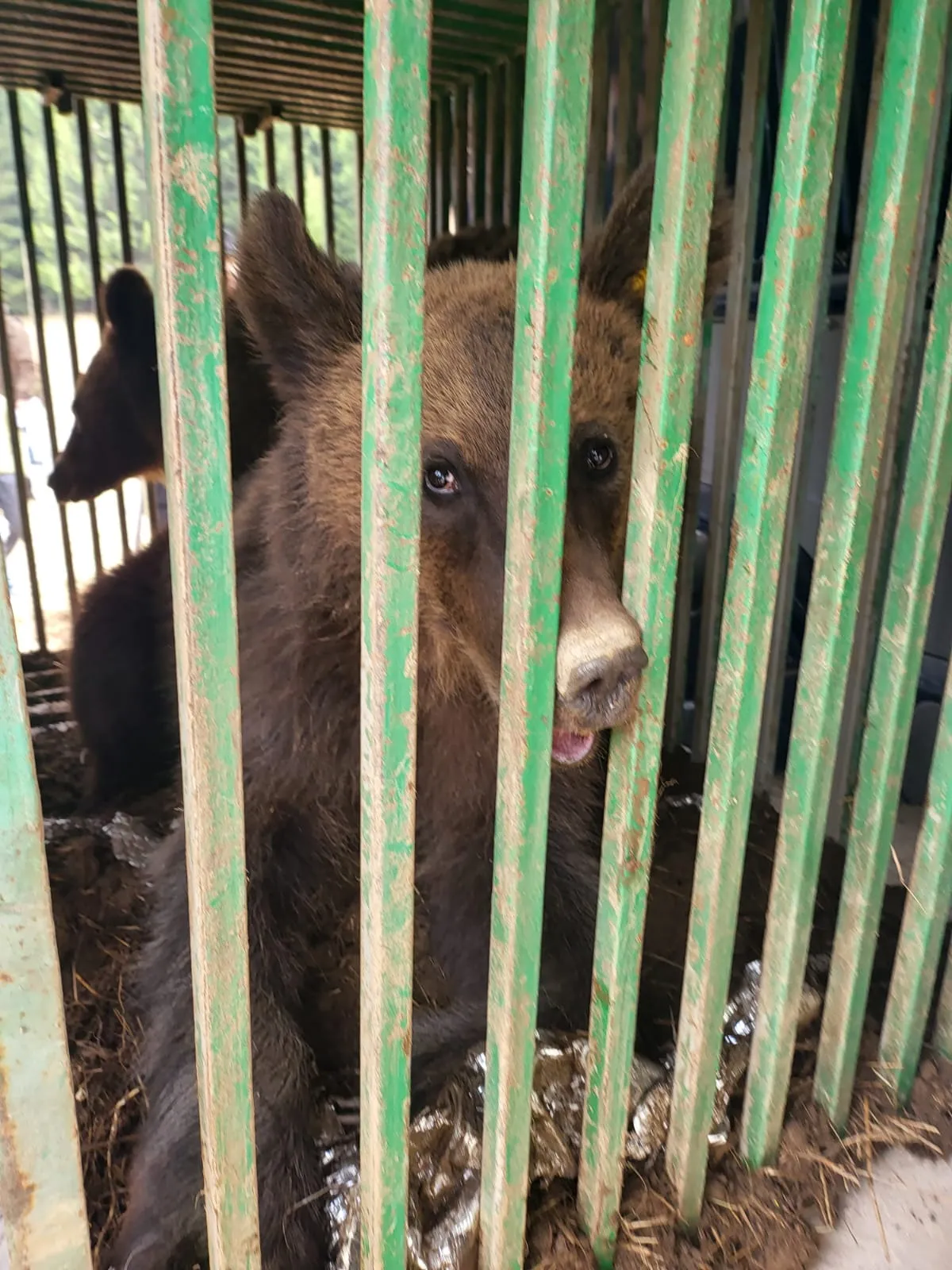
In extreme situations where bears truly pose a risk to people and/or their property, Romania should have an Emergency Plan at national or administrative level to intervene case by case and eliminate dangerous situations. It should be permanently separated from any harvest quotas allocated to managers and clearly state that its specific and sole purpose is to address extreme cases. Trophies from approved interventions must not be traded commercially, thus preventing fraudulent bear killing disguised as an emergency. Carcasses must be completely destroyed. Extreme cases do not include habituated bears that can be safely captured and transferred to a natural sanctuary to live the rest of their lives in dignity. The state must establish sanctuaries to the highest standards, following the example of the private one in Zărnești.
Agent Green therefore considers it necessary for state authorities to establish specific conservation objectives based on environmental, social and economic goals: the basis for up-to-date and timely information about species. Decision-making transparency and predictability in setting the proposed objectives, measures and actions are needed to facilitate stakeholder collaboration. Only in this way is it possible to facilitate not only a balanced social climate, but also an ethical and nondiscretionary framework in Romania’s brown bear population management system.
We also propose studies on the impact of mushroom and wild berry gathering on brown bear populations and on bears’ impact on prey species (red deer, roe deer, wild boar), with implications for hunting and the agricultural and forestry sectors. However, we recommend independent agencies conduct such studies, ensuring results are not biased to serve private interests.
Mr President, I hope the information and considerations I have offered will help you make a scientifically and ethically sound decision.
Yours sincerely,
Gabriel Păun,
President of Agent Green