Open letter to the President on the regime of natural protected areas and the conservation of natural habitats and wild flora and fauna
To: The President of Romania, Klaus Iohannis
Mr President,
We, the undersigned, the Bankwatch Association and the Agent Green Association, based in Bucharest, ask you not to promulgate and to send back for reconsideration PL 132/2002 amending and supplementing Art. 56 index 1 of Government Emergency Ordinance No. 57/2007 on the regime of natural protected areas and the conservation of natural habitats and wild flora and fauna, for the following reasons:
PL No. 132/2022, as amended and submitted for adoption by the Chamber of Deputies, provides that Article 561 of Government Emergency Ordinance No.57/2007 on the regime of natural protected areas and the conservation of natural habitats and wild flora and fauna, published in the Official Gazette of Romania, Part I, No.442 of 29 June 2007, approved with amendments and supplements by Law No.49/2011, as subsequently amended and supplemented, shall be amended and supplemented as follows:
Paragraph (3) shall be amended to read as follows:
(3) Changes to the boundaries of natural protected areas to achieve more precise delineation shall be made at the initiative of the National Agency for Natural Protected Areas or the management structure of the natural protected area, on the basis of a scientific study, with the opinion of the scientific council and the approval of the central public authority for environmental protection.
2. After paragraph (7), two new paragraphs, paragraphs (8) and (9), shall be inserted, reading as follows: “(8) Investment projects for the construction of hydropower developments that are under construction and more than 60% complete on 1 May 2022 shall be considered projects of overriding public interest and national safety and security within the meaning of this emergency ordinance, and shall be commissioned by 31 December 2025.
(9) The investment projects referred to in paragraph (8) that overlap with natural protected areas may be completed provided that the Ministry of Environment, Waters and Forests proposes, as compensation for the areas occupied, an area equivalent in biodiversity to the area occupied by the project, before it is commissioned but no later than 31 December 2025.
Art. II. Investment projects for the construction of hydropower developments that are under construction and more than 60% complete on the date this law enters into force shall be considered exceptional situations within the meaning of Art. 5 paragraph (2) of Law No. 292/2018 on the assessment of the effects of certain public and private projects on the environment.
Art. III. Investment projects for the construction of hydropower developments that are under construction and more than 60% complete on the date this law enters into force shall be considered projects of national importance/security within the meaning of Law No. 46/2008 – the Forest Code, republished, as subsequently amended and supplemented.
According to the explanatory memorandum, this legislative intervention sought to “facilitate the swift implementation of investment projects at an advanced stage of execution, with the desired effect of increasing production capacity”, with the stated aim of “accelerating the pace of investment in the energy sector”. The outcome of discussions on how this objective could be achieved was “the completion of investment projects which, although at an advanced stage of execution, are currently blocked for procedural reasons or as a result of a result of legislative gaps”.
In reality, the investment projects referred to by the initiators of this law are blocked not for procedural reasons or legislative gaps, but because they are located in territories designated as protected areas under Government Emergency Ordinance No. 57/2007 and are incompatible with the objective of overriding public interest and a fundamental component of the national sustainable development strategy, namely the conservation and sustainable use of natural heritage.
It must therefore be examined whether the destruction of Natura 2000 sites and protected species and habitats to develop the energy system is necessary in a democratic society, and whether the destruction of Natura 2000 sites is proportionate to the need to generate the amount of energy that the proposed hydropower plants would produce.
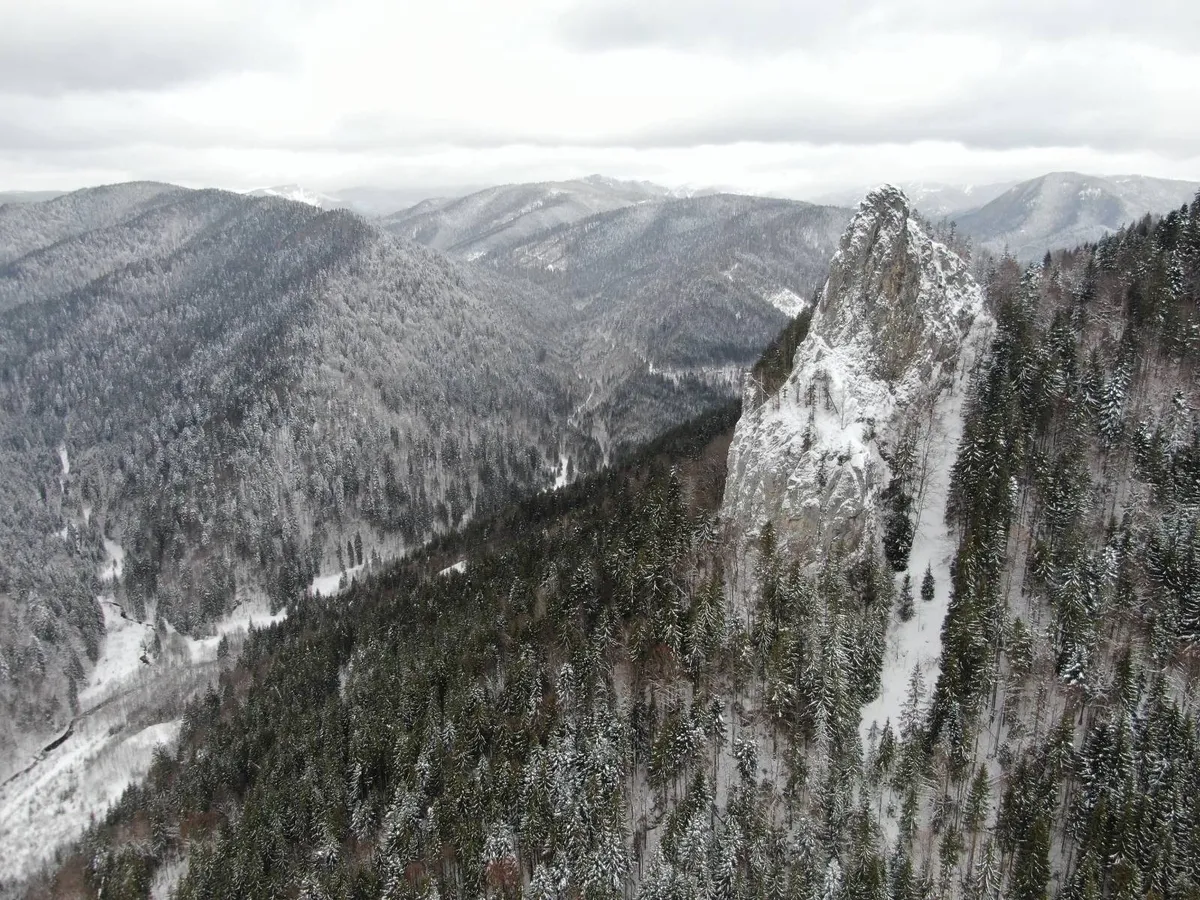
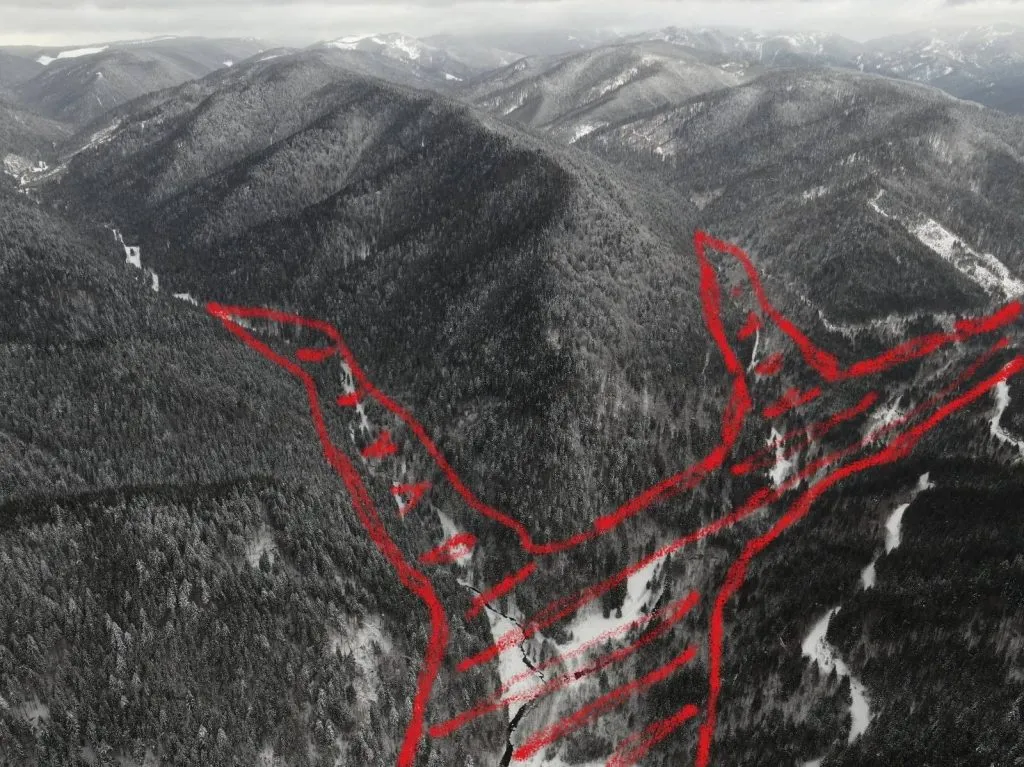
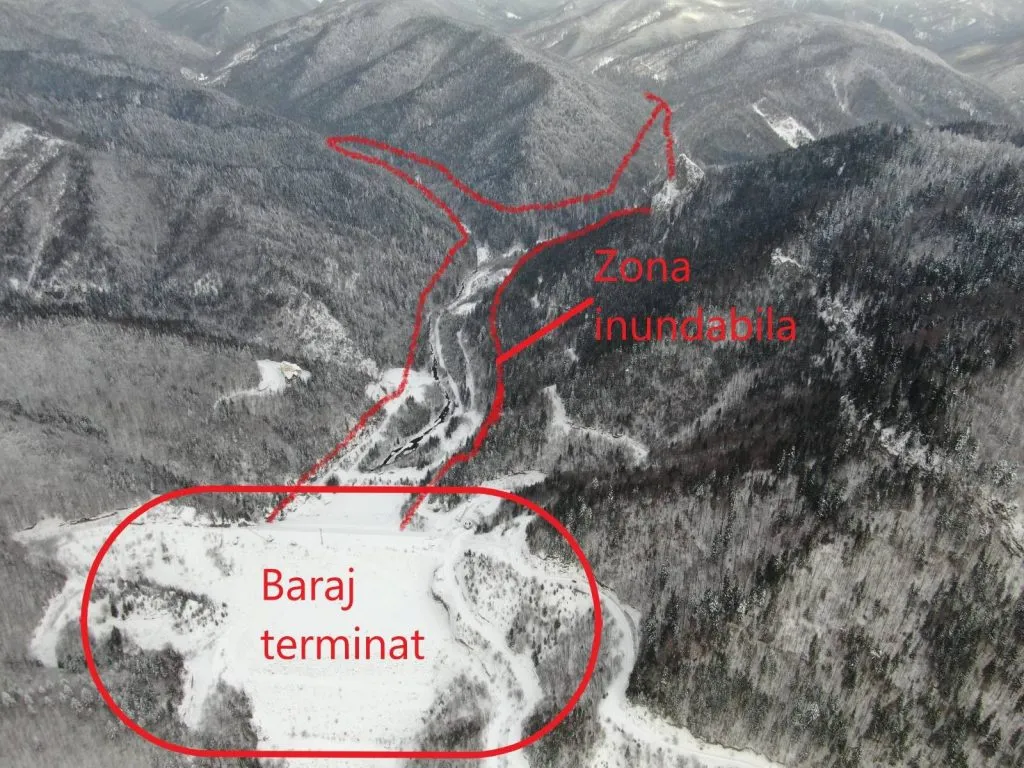
First, we must observe that the law does not specify how many Natura 2000 sites would be altered and destroyed, at least in part, to facilitate the construction of hydropower plants, nor how many hydropower plants are involved. It is therefore understood that all protected areas could be in this situation. From the annexes to this request, you will be able to see that, in the case of at least two hydropower plants, four Natura 2000 sites would be directly affected:
- – Jiului Gorge, Natura 2000 under the name ROSCI 0063 Defileul Jiului, bordered by three other protected areas: ROSCI 0129 Nordul Gorjului de Vest to the west, ROSCI 0128 Nordul Gorjului de Est to the east and ROSCI 0188 Parâng to the northeast.
- – Răstolița – Călimani – Gurghiu (SiteCode: ROSCI0019), Defileul Mureșului Superior (SiteCode: ROSPA0030 Munții Călimani (SiteCode: ROSPA0133)
But the number of such hydropower construction projects begun during communism, abandoned and then illegally resumed after 2007 without environmental assessment is much greater. This law would therefore result in the destruction of the Natura 2000 network of natural protected areas and irreparable damage to the European Union’s conservation objectives for protected species and habitats. Many bodies of water would also be affected by the water intakes and dams built, and many thousands of ha of forest would be cleared to complete them.
Therefore, in a democratic society, the principle of sustainable development must prevail, as provided for in:
Art. 3 paragraph 3 of the Treaty on European Union1:
“The Union shall establish an internal market. It shall work for the sustainable development of Europe based on balanced economic growth and price stability, a highly competitive social market economy aiming at full employment and social progress, and a high level of protection and improvement of the quality of the environment. It shall promote scientific and technological progress.”
Art. 21 paragraph 2 point f of the Treaty on European Union:
“The Union shall define and pursue common policies and actions, and shall work for a high degree of cooperation in all fields of international relations, in order to: (…) participate in the development of international measures to preserve and improve the quality of the environment and the sustainable management of global natural resources, in order to ensure sustainable development”;
Art. 11 of the Treaty on the Functioning of the European Union
“Environmental protection requirements must be integrated into the definition and implementation of the Union’s policies and activities, in particular with a view to promoting sustainable development.” Art. 114 paragraph 3 and 191 paragraph 2 of the Treaty on the Functioning of the European Union, which establish the principle of prevention:
“In its proposals envisaged in paragraph (1) concerning health, safety, environmental protection and consumer protection, the Commission shall take as a basis a high level of high protection, taking account in particular of any new development based on scientific facts. Within their respective powers, the European Parliament and the Council shall also seek to achieve this objective.”
Art. 191 (2) Union policy on the environment shall aim at a high level of protection, taking into account the diversity of situations in the various regions of the Union. It shall be based on the precautionary principle and on the principles of preventive action, of remedying environmental damage as a priority at source, and of “the polluter pays”.
There is certainly a need to generate electricity, but is Romania’s situation so urgent, and are there no alternatives other than destroying the Natura 2000 network?
The attached studies clearly show that this is not the case. The proposed hydropower plants are below 100 MW, meaning they are small, producing small amounts of energy that could successfully be generated through the development of renewable energy.
Moreover, hydropower generation in Romania has fallen dramatically because of drought caused by climate change, which has drastically reduced watercourse flows. Consequently, the continued destruction of watercourses, protected areas and forests will intensify climate change and the continued loss of water flows, resulting in many hydropower plants that will not produce the forecast energy.
The analysis below and the attached reports contain the scientific data produced.
We therefore ask you to find that the destruction of the environment is neither necessary nor proportionate, given the relatively small amount of energy generated and the existing alternatives for renewable energy production.
Furthermore, please note that under European legal provisions, which form part of domestic law and are directly applicable, taking precedence over conflicting national provisions, the construction of exceptional projects that would justify urgency must be preceded by assessment procedures and scientific studies demonstrating how important it is to destroy Natura 2000 sites because otherwise we would have no electricity, as well as the environment’s capacity to recover in other areas. However, such studies have never been carried out, which is why construction permits for certain investments have been annulled, as detailed below
Emergency Ordinance No. 57/2007 was adopted in consideration of the commitments Romania undertook upon accession to the European Union through the supplementary position document – Chapter 22, “Environment”, in the field of “nature protection”. This legislation precisely transposed Directive 79/409/EEC on the conservation of wild birds, Directive 92/43/EEC on the conservation of natural habitats and wild flora and fauna, and Directive 83/129/EEC on the importation into Member States of skins of seal pups and products derived from them.
As also stated in its explanatory note, the wealth of Romania’s biological resources and its role as an important corridor for the migration and dispersal of species can be affected by human activities. Pollution, river embankments, the construction of dams and other hydraulic works, mechanised agriculture, the overexploitation of natural resources – principally deforestation and poaching – and other factors have contributed greatly to the decline of biodiversity over time. Highly vulnerable mountain ecosystems can also be threatened by inappropriate forms of tourism development and associated infrastructure. The emergency ordinance establishes a coherent and effective system for managing natural capital, fully consistent with Community provisions in this field, based on the reality that socioeconomic systems can develop only on the basis of natural and semi-natural ecological systems, whose destruction or disruption of their specific functions can have serious consequences locally, regionally and globally.
Thus, this legislative amendment is in fact incompatible with the purpose of the legislation originally adopted and also causes Romania to cease fulfilling the commitments it undertook during accession to the European Union.
I. Breach of the principle of non-retroactivity under Art. 15 paragraph 2 of the Romanian Constitution and of Community law, Art. 148 paragraph 2 of the Romanian Constitution
A prerequisite for examining the principle of non-retroactivity is a genuine conflict of laws over time: there must be two successive legal provisions regulating the subject differently; there must be a legal act, fact or situation arising, occurring or concluded before a new provision entered into force.
In this case, projects for hydropower plants whose construction began in the 80s and which remain unfinished were regulated in 2022 as exceptions to the legislation applicable to them at that time.
Subsequently, protected areas were established on some of the land where they were under construction: National Parks, Natural Parks and Natura 2000 sites.
From the moment it became an EU member and Natura 2000 sites were established, Romania was obliged to comply with the protection regime imposed by Community legislation, including for unfinished projects. This obligation consisted of carrying out environmental impact assessment procedures (arising from the EIA Directive2, 2011/92/EU amended by 2014/52/EU), appropriate assessment (the Habitats Directive3 92/43/EEC and the Birds Directive4 2009/147/EC), and assessment of bodies of water (the Water Framework Directive5 2000/60/EC). To explain how these environmental assessment procedures are carried out, the European Commission adopted Guidance on the requirements for hydropower in relation to EU nature legislation, which describes how to conduct environmental assessment.
The Court of Justice of the European Union has also ruled on the obligation to carry out the assessment procedures mentioned above for projects begun before EU membership, C 399/14 Grüne Liga Sachsen eV and Others v Freistaat Sachsen:
“(1) Article 6 paragraph (2) of Council Directive 92/43/EEC of 21 May 1992 on the conservation of natural habitats and wild fauna and flora must be interpreted as meaning that a plan or project not directly connected with or necessary to the management of a site, and authorised following a study that does not meet the requirements of Article 6 paragraph (3) of that directive before the site concerned was included in the list of sites of Community importance, must be subject to a subsequent review of its effects on that site by the competent authorities if that review constitutes the only necessary measure to prevent implementation of the plan or project from causing deterioration or disturbance that could have a significant effect in relation to the objectives of that directive. It is for the referring court to determine whether these conditions are met.
- Article 6 paragraph (2) of Directive 92/43 must be interpreted as meaning that if, in circumstances such as those in the main proceedings, a subsequent review of the effects on the site concerned of a plan or project whose implementation began after that site was included in the list of sites of Community importance proves necessary, that review must be carried out in accordance with the requirements of Article 6 paragraph (3) of that directive. Such a review must take account of all elements existing at the date of that inclusion, as well as all effects that have occurred or may occur on that site as a result of the full or partial implementation of that plan or project after that date.
(3) Directive 92/43 must be interpreted as meaning that, where a new review of the effects on a site is carried out to remedy errors identified in the prior assessment conducted before the site was included in the list of sites of Community importance or in the subsequent review under Article 6 paragraph (2) of Directive 92/43, although the plan or project has already been implemented, the requirements of a check carried out as part of that review cannot be altered because the decision approving that plan or project was immediately enforceable, an application for interim measures was dismissed and that dismissal was no longer open to appeal. Furthermore, the review must take account of any risks of deterioration or disturbance that could have a significant effect within the meaning of Article 6 paragraph (2) and that may have arisen from the implementation of the plan or project concerned.
Article 6 paragraph (4) of Directive 92/43 must be interpreted as meaning that the requirements of the check carried out when examining alternative solutions cannot be altered because the plan or project has already been implemented.”
Romania, however, did not carry out these assessment procedures, attempting to continue construction of the hydropower plants in breach of European law and CJEU judgments.
In 2017, the Bucharest Court of Appeal annulled two construction permits issued for the construction of hydropower plants in Jiului Gorge National Park, taking account of the legislative provisions mentioned above – Decision No. 5378/14.12.2017 of the Bucharest Court of Appeal. In light of Community law and CJEU judgments (C-399/14 and C-258/11), it established with the authority of res judicata that the permits had been issued unlawfully because environmental assessment procedures were lacking. Illegal constructions in Romania cannot be reauthorised. A law cannot retroactively establish the legality of constructions in breach of court rulings. The proposed bill states that these hydropower plants, including the one subject to civil decision 5378/2017, may be commissioned after being removed from protected areas, without environmental assessment.
In this respect, we note a breach of Art. 148 paragraph 2 of the Romanian Constitution:
(2) “As a result of accession, the provisions of the founding treaties of the European Union and other binding Community rules shall take precedence over conflicting provisions of domestic laws, in compliance with the provisions of the act of accession.”
According to the Habitats Directive, as explained in Guidance on the requirements for hydropower in relation to EU nature legislation6, page 9, environmental assessment procedures are also mandatory for projects near protected areas or affecting certain species and habitats even if they are not located within protected areas.
We are already subject to infringement proceedings on this issue, INFR(2020)2297:
“Nature: Commission calls on ROMANIA to ensure the protection of habitats and species
The Commission calls on Romania to fully transpose into national legislation Directive 92/43/EEC on the conservation of natural habitats and wild fauna and flora. This directive helps protect biodiversity in the European Union. Incorrect transposition of the directive’s provisions may undermine its conservation objectives. In accordance with the European Green Deal and the European biodiversity strategy, it is essential for the EU to halt biodiversity loss by improving and restoring damaged ecosystems to achieve good ecological status. Among other problems, Romania’s legislation does not explicitly state that the conservation measures included in management plans must take account of the ecological requirements of the natural habitat types and species present in those sites. This directly affects the quality of management plans, as they may not contain the measures needed to protect those habitat types and species. National legislation also limits the scope of the directive’s main provisions to activities carried out within Natura 2000 sites. This excludes all other possible causes of deterioration or disturbance originating outside the sites. Given that environmental governance plays an essential role in enabling the various sectoral rules to function properly, the Commission has decided to send Romania a letter of formal notice. Romania has two months to remedy the situation; otherwise, the Commission may decide to send a reasoned opinion”7.
Thus, not only has Romania failed since October 2020 to resolve the issue of environmental assessments for projects outside protected areas that affect protected species and habitats, but through PL 132/2022 it is even legislating for such projects to be carried out without environmental assessment and for Natura 2000 sites to be mutilated to build them.
The breach of Community law and, accordingly, of Art. 148 paragraph 2 of the Romanian Constitution is therefore evident.
The bill provides that:
- – Investment projects for the construction of hydropower developments that are under construction and more than 60% complete on 1 May 2022 shall be considered projects of overriding public interest and national safety and security within the meaning of this emergency ordinance, and shall be commissioned by 31 December 2025
- – Investment projects for the construction of hydropower developments that are under construction and more than 60% complete on the date this law enters into force shall be considered exceptional situations within the meaning of Art. 5 paragraph (2) of Law No. 292/2018 on the assessment of the effects of certain public and private projects on the environment
- – Investment projects for the construction of hydropower developments that are under construction and more than 60% complete on the date this law enters into force shall be considered projects of national importance/security within the meaning of Law No. 46/2008 – the Forest Code, republished, as subsequently amended and supplemented.
Consequently, these projects would no longer be subject to the legislation applicable at the time of their unlawful construction, being established as exceptions to the relevant legislation through the retroactive application of this bill. The bill effectively overturns the court decisions that established the unlawful nature of the constructions, constituting interference by the legislature in the administration of justice.
The bill states that
– the investment projects referred to in paragraph (8) that overlap with natural protected areas may be completed provided that the Ministry of Environment, Waters and Forests proposes, as compensation for the areas occupied, an area equivalent in biodiversity to the area occupied by the project, before it is commissioned but no later than 31 December 2025.
- – Investment projects for the construction of hydropower developments that are under construction and more than 60% complete on the date this law enters into force shall be considered exceptional situations within the meaning of Art. 5 paragraph (2) of Law No. 292/2018 on the assessment of the effects of certain public and private projects on the environment.
- – Art. III. Investment projects for the construction of hydropower developments that are under construction and more than 60% complete on the date this law enters into force shall be considered projects of national importance/security within the meaning of Law No. 46/2008 – the Forest Code, republished, as subsequently amended and supplemented.
This breaches the Community law mentioned above because, by establishing exceptions to Law 292/2018 and the Forest Code, all construction and clearance work would be carried out without environmental assessments and with a reduction in the national forest estate. Centuries-old forests essential to the fight against climate change supported by the President of Romania would be felled. However, the conditions under which such projects may be established as exceptions are clearly set out in that legislation: neither changing the boundaries of protected areas for hydropower plants nor building them without environmental assessment is possible. The provisions of Art. 6 (4) may be applied only within the appropriate assessment procedure and only with authorisation from the European Commission. They may also be applied only before construction takes place8.
In conclusion: PL 132/2022 operates retroactively, nullifying the protection regime established to protect Romania’s natural heritage, as follows: projects begun before EU accession are subject to European legislation from the date of accession, under European law, as the CJEU found in its judgments c-399/14 and C-258/11. Their construction continued in breach of legal provisions from 2007, much of it from 2015 after Hidroelectrica emerged from insolvency (a fact also established by court rulings, Decision 5378/2017 of the Bucharest Court of Appeal). Through PL 132/2022, previous unlawful acts are retroactively given legal status in 2022, in breach of final court rulings that established the unlawful nature of certain constructions. Thus, legal provisions under which constructions would become lawful in the present are applied retroactively to acts and facts begun and found to be unlawful before the bill was adopted.
Furthermore, these measures conflict with European law, which became binding upon Romania’s accession to the European Union, as we have demonstrated above, because both the destruction of Natura 2000 sites to accommodate hydropower plants and the retroactive creation of an exception to environmental assessment procedures after construction has been carried out unlawfully to a level of 90% are illegal.
In conclusion, under the Romanian Constitution, the principle of non-retroactivity and the principle of the supremacy of European law are breached.
Regarding the urgency invoked by the law’s initiators concerning Romania’s energy security, we attach analyses and studies by civil society and scientists on the impact of small hydropower plants and their actual electricity production capacity. We note here that the technical and economic indicators were adopted in the 80s, when river flows were entirely different. Today, large hydropower plants on rivers and even on the Danube face major difficulties due to a lack of water. All the more so, small hydropower plants (below 100 MW) on mountain rivers with extremely low flows due to drought will be unable, for much of the year, to deliver energy at the installed capacity considered feasible in the 80s.
II. Law No. 132/2022 was adopted in breach of Art. 1 paragraph 5 of the Constitution in relation to the provisions of Law No. 24/2000 on legislative drafting rules, which were disregarded in its preparation:
Under Art. 6 of Law No. 24/2000
(1) Draft legislation must establish necessary, sufficient and feasible rules leading to the greatest possible legislative stability and effectiveness. Its solutions must be thoroughly substantiated, taking account of the social interest, the Romanian state’s legislative policy and the requirements of coordination with the body of domestic regulations and harmonisation of national legislation with Community legislation and the international treaties to which Romania is a party, as well as with the case law of the European Court of Human Rights.
(2) The new regulation shall be substantiated on the basis of present and future social aspirations and the shortcomings of the legislation in force.
(3) Draft legislation shall be submitted for adoption accompanied by an explanatory memorandum, an explanatory note or an approval report, and an impact study, as appropriate.
(4) Legislation affecting social, economic and environmental fields, the general consolidated budget or existing legislation shall be prepared on the basis of public policy documents approved by Parliament or the Government. The Government shall define the types and structure of public policy documents.
Through the amendment it introduces, this legislation is not substantiated in accordance with the rigour required for lawmaking. Rather, as the proposal’s authors themselves maintain, it is a quick solution to accelerate investment in the energy sector: in other words, to satisfy specific economic interests completely distinct from the purpose and subject matter of Emergency Ordinance 57/2007.
The proposed amendment was also required to be accompanied by an impact study, which is not among the documents accompanying this legislative initiative.
Another important observation is that the energy sector is not the subject regulated by the law that this legislative initiative amends. The law being amended regulates environmental protection in its broad sense. Environmental protection forms part of a wide range of public policies undertaken by Romania in alignment with European policies, which were completely overlooked in the preliminary assessment. That assessment incorrectly concluded that no such documents or strategies had been identified, thereby also breaching Art. 7 of Law No. 24/2000, under which (…) preliminary impact assessment involves identifying and analysing the economic, social, environmental, legislative and budgetary effects produced by the proposed regulations (…).
Art. 13 of Law No. 24/2000 is also disregarded. It requires legislation to be integrated organically into the legislative system, for which purpose:
a) draft legislation must be coordinated with the provisions of higher-ranking legislation or legislation of the same rank with which it is connected;
b) draft legislation prepared on the basis of higher-ranking legislation may neither exceed the limits of the powers established by that legislation nor contradict its principles and provisions;
c) draft legislation must be coordinated with Community regulations and the international treaties to which Romania is a party.
d) draft legislation must be coordinated with the provisions of the European Convention on Human Rights and its additional protocols ratified by Romania, and with the case law of the European Court of Human Rights.
As noted earlier, this bill actually contradicts the provisions of the legislation it amends. Its effects automatically entail irreparable environmental damage rather than the conservation of natural habitats and wild flora and fauna.
This bill is not coordinated with Community regulations or the international treaties to which Romania is a party. Those Community provisions primarily emphasise investment in environmentally friendly energy projects as an integral part of strategies to prevent climate change, and the conservation and protection of natural habitats and biodiversity.
This bill is not coordinated with the provisions of the European Convention on Human Rights and its additional protocols as developed in the case law of the European Court of Human Rights, which has held that economic imperatives and even certain fundamental rights, such as the right to property, must not take precedence over environmental requirements
III. Law No. 132/2022 was adopted in breach of Art. 11 paragraph (1) of the Constitution
(1) The Romanian state undertakes to fulfil precisely and in good faith its obligations under the treaties to which it is a party.
Under the Treaty on European Union, the Romanian state, together with all other Member States, is obliged to implement public policies developed internationally to preserve and improve the quality of the environment and sustainably manage global natural resources, in order to ensure sustainable development.
European environmental rules require Member States not only to adopt national transposition provisions, but also to achieve a concrete result in preventing, eliminating or reducing environmental harm and, implicitly, to refrain from producing legislation contrary to this objective.
The European Green Deal establishes that it is essential to place greater value on protecting and restoring natural ecosystems, using resources sustainably and improving human health, and expressly states that the EU and its global partners must halt biodiversity loss.
The 2019 Global Assessment Report of the Intergovernmental Science-Policy Platform on Biodiversity and Ecosystem Services showed a global erosion of biodiversity, caused primarily by changes in land and water use and the direct exploitation of natural resources
IV. Law No. 132/2022 was adopted in breach of Art. 35 paragraphs (1) and (2) of the Constitution
[(1) The state recognises everyone’s right to a healthy and ecologically balanced environment. (2) The state provides the legislative framework for exercising this right.], and in breach of Art. 135 paragraph (2) point e of the Constitution [(2) The state must ensure: e) the restoration and protection of the environment and the maintenance of ecological balance]
These constitutional texts complement one another: the provisions of Art. 135 paragraph (2) point e) effectively add to those of Art. 35 because, in the field of human rights, a duty of the state has as its correlative reflection a fundamental right to the environment. In other words, the right to a healthy environment also entails a duty to protect it.
Thus, ensuring a quality environment and its constituent elements, and taking appropriate action to conserve environmental factors, is a task of the state which, when acting through legislation, must give expression to this fundamental right and its corresponding obligation.
The Constitutional Court itself held in Decision No. 80 of 16.02.2014 on the legislative proposal to revise the Constitution that, regarding the right to a healthy environment, the state has both negative and positive obligations. Its positive obligations involve creating a legislative and administrative framework aimed at effectively preventing damage to the environment and human health (judgment of the European Court of Human Rights of 27 January 2009 in Tătar v Romania, paragraph 88). Thus, the measures concerned must aim to prevent environmental degradation, establish the necessary remedies and regulate the sustainable use of natural resources.
Promoting a law that completely contradicts the state’s fundamental duty towards the environment and its quality, without any consideration or assessment of its impact and without even a minimal balancing of risks and benefits, manifestly breaches the constitutional texts.
V. Law No. 132/2022 was adopted in breach of Art. 20 of the Constitution
(1) Constitutional provisions concerning citizens’ rights and freedoms shall be interpreted and applied in accordance with the Universal Declaration of Human Rights, the covenants and the other treaties to which Romania is a party. (2) Where there are inconsistencies between covenants and treaties on fundamental human rights to which Romania is a party and domestic laws, international regulations shall take precedence, unless the Constitution or domestic laws contain more favourable provisions.
In this respect, the law adopted by the Romanian Parliament, which, according to its own explanatory memorandum, reflects only an economic interest considered by the initiators, effectively breaches the obligation incumbent on the Romanian legislature as a result of the ECtHR case law developed concerning the right to and protection of the environment.
In paragraph 79 of the judgment in Hamer v Belgium, the Strasbourg court expressly stated that economic interests and even certain fundamental rights, such as the right to property, must not take precedence over environmental protection objectives, particularly when the state legislates in this respect.
However, the purpose and outcome of this legislation, as well as public statements by its initiator, plainly indicate that economic interests take precedence, even at the cost of irreversibly damaging the last entirely wild river ecosystems remaining in the country and of the disappearance of protected species living in these habitats.
Thus, the adopted legislation breaches the constitutional text establishing the priority of international regulations and even reflects the failure of the bill’s initiators to embrace the European and international principles and values of the treaties to which Romania is a party.
In conclusion, for all these reasons, we ask you to send this bill back for reconsideration, given its unconstitutional and anti-European nature.
Attached to this letter:
- Report prepared by the Bankwatch Romania Association, WWF, the Agent Green Association and Greenpeace
- Report prepared by the Agent Green Association on the situation of the Răstolița hydropower plant
- European Commission response concerning the possibility of changing Natura 2000 sites
- Civil Decision 5378/14.12.2017 of the Bucharest Court of Appeal
- Assessment of the fish fauna of site ROSCI0019 Călimani – Gurghiu – Milvus Association, Nagy András Attila, Imecs István
- PL 132/2002
- CJEU judgment 399/14
Notes
1. https://eur-lex.europa.eu/legal-content/RO/TXT/HTML/?uri=CELEX:12012E/TXT;
2. https://eur-lex.europa.eu/legal-content/RO/TXT/HTML/?uri=CELEX:52009DC0378&from=DE; https://eur-lex.europa.eu/legal-content/ro/TXT/?uri=CELEX:32014L0052;
3. https://eur-lex.europa.eu/legal-content/RO/TXT/?uri=celex:31992L0043;
4. https://eur-lex.europa.eu/legal-content/RO/TXT/?uri=celex%3A32009L0147;
5. https://eur-lex.europa.eu/legal-content/RO/ALL/?uri=celex:32000L0060;
6. Guidance on the requirements for hydropower in relation to EU nature legislation (PDF, in Romanian)
7. https://ec.europa.eu/commission/presscorner/detail/RO/INF_20_1687
8. The European Commission’s response concerning Romania’s intention to abolish protected areas – Agent Green
Related articles
The rule of law under assault
Parliament adopts the anti-nature law. Environmental NGOs notify the Ombudsman and Romania’s President of its unconstitutionality