
Green Justice on the Romanian Government’s agenda
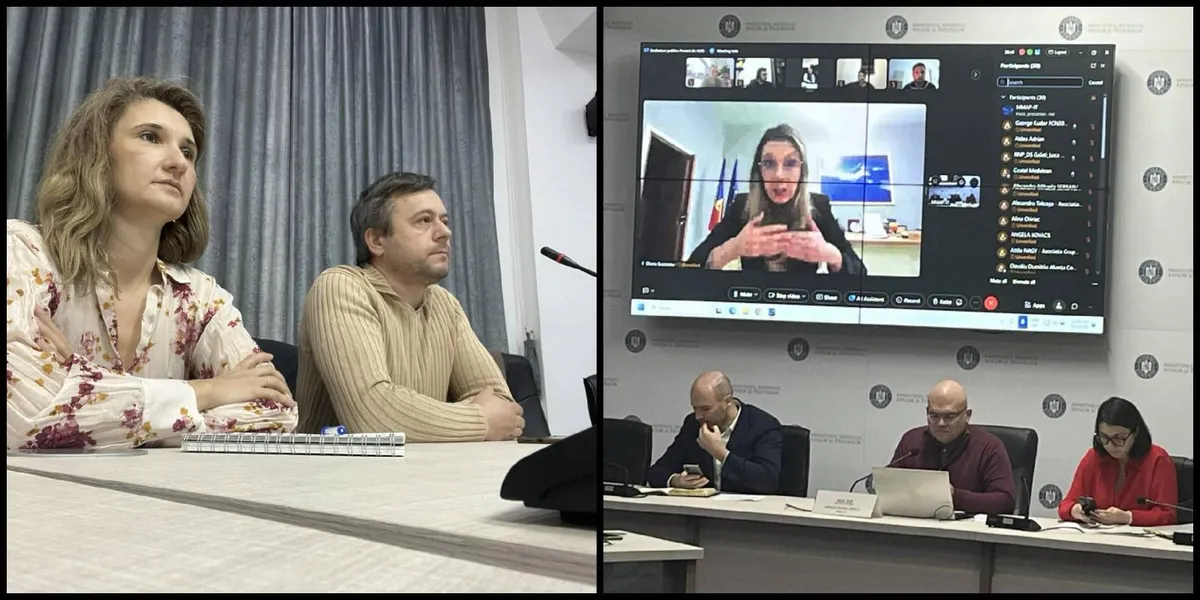
A meeting took place today at the Ministry of Justice on regulating environmental crime and specialising the judicial system so that criminal investigations in this field can be handled effectively. Representatives of the institutions involved attended, including DNA, MI, CSM and DIICOT, along with civil society representatives: colleagues from WWF România, Greenpeace România, Fundația Carpathia and others joined Agent Green.
The discussion revealed agreement among all participants on the need to establish an environmental protection system, starting with a better definition of environmental offences in criminal law, possibly codifying environmental legislation, determining criminal investigation powers according to the seriousness and consequences of the acts, and allocating financial and human resources to support these efforts. It was agreed to set up a working group for this purpose.
Agent Green’s proposals to the Ministry of Justice are:
- Environmental legislation is extremely complex, with environmental law now constituting an important, highly developed branch of law that has implications across all areas of public policy. Nevertheless, law faculties teach environmental law at most as an optional course, covering only general, introductory chapters. Students and professionals need access to in-depth, modern environmental law courses so that they can easily and correctly resolve the cases arising in practice.
- Defining or codifying environmental legislation is a practice found in Europe (France) and would make this legislation easier to study.
- Codifying the penalties applicable to environmental matters and redefining or clarifying certain acts that constitute criminal or administrative offences is essential. This must take account of the quantification of damage, not only in material terms and not only its economic value, but above all environmental harm, which most often has no such dimension. For example, the degradation of habitats, the disappearance of a species or a reduction in the number of individuals of a particular species, and the destruction of natural assets have no economic value but represent losses to national and/or international heritage that must be penalised. The seriousness of these acts must therefore also be assessed according to the environmental classifications of this natural heritage (IUCN).
- Reform of the judicial system must not stop at prosecutors and police officers. They represent a very important part of this system, but their investigations cannot be conducted without a clearly defined body of technical experts capable of providing multidisciplinary scientific research, since environmental harm most often touches on various scientific disciplines. At the same time, these experts must know the procedures for carrying out environmental assessments as set out in EU guidelines (environmental impact assessment, appropriate assessment, strategic environmental assessment).
- These investigations eventually reach the courts, where judges trained to handle such cases are needed. It is almost impossible for a judge encountering environmental legislation for the first time to learn it immediately in order to apply it: doing so requires effort and time that these judges generally do not have available. There is also the possibility of creating specialised courts/panels once there are judges specialising in environmental law.
- The remedies ordered must also include restoration of the environment by the person responsible and penalties proportionate to the harm caused (in accordance with the polluter-pays principle).
Last but not least, we propose that the Minister of Justice include civil society in drawing up these environmental policies, given that the only environmental specialists are found within civil society, which has been working on these issues for more than 20 years. They can offer their expertise towards adopting the most coherent possible legal framework, leading to effective environmental protection rather than the creation of new forms without substance.
Related articles
Civil society does not threaten justice. A lack of accountability does.
Comments on the draft emergency ordinance on protected natural areas, natural habitats and wild flora and fauna