Gene-Edited Organisms: A new unregulated threat to biodiversity and national security
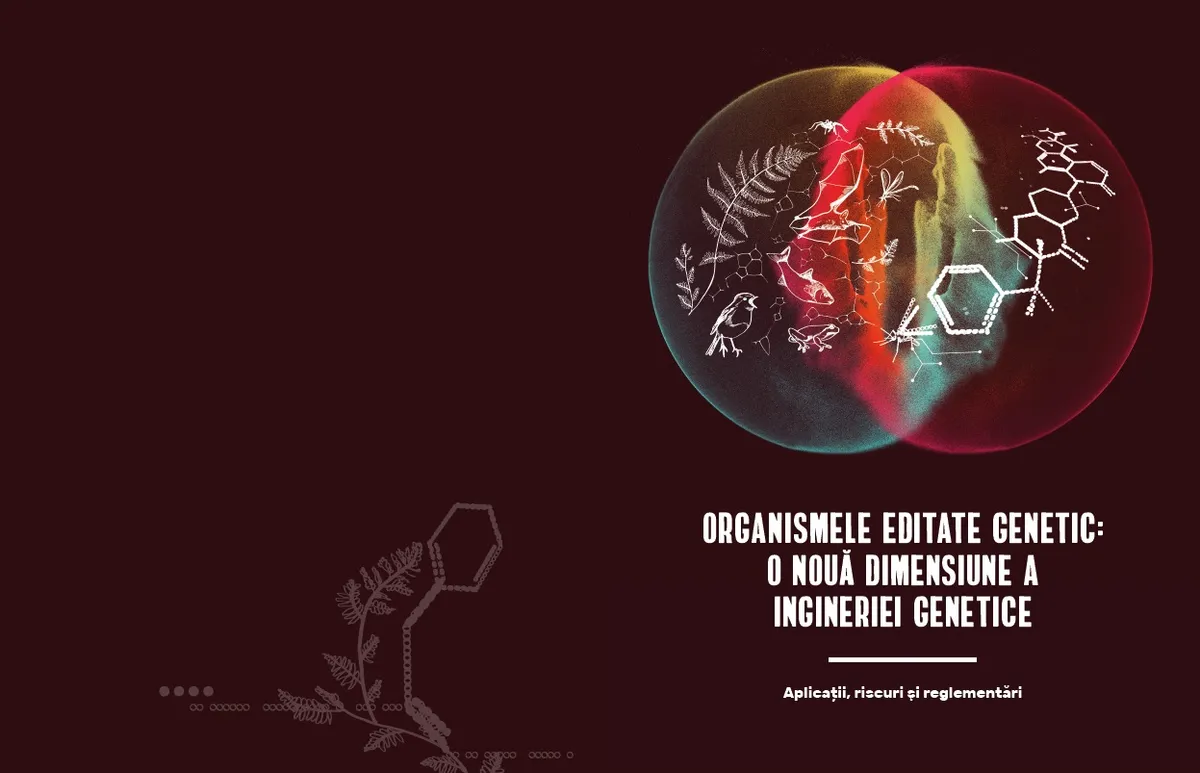
Bucharest, 7 June 2022 – Agent Green and Save Our Seeds today publish the report (PDF in Romanian) on gene-edited organisms (GEOs), a new form of genetically modified organisms (GMOs), but with much greater risks because of their potential use as biological weapons and their irreversibility.
Gabriel Păun, president of Agent Green: “According to the current state of science, the outcome of the experiment will no longer be controllable by humans. All manipulations of this kind involving animals, plants and entire ecosystems will be irreversible.”
Through gene editing, people can alter the genetic makeup of any living being and spread new characteristics that serve only human purposes. Until now, GMOs were not expected to produce viable offspring or survive for long in the wild, or their mating with wild individuals was not prevented. Thus, to this extent, the spread of GMOs outside their point of origin in the laboratory remained limited in space and time. The gene-editing approach radically breaks with these considerations. Unlike GMOs, GEOs aim to spread genes synthesised in the laboratory into wild populations or eliminate natural genes. This will happen even if species are harmed or gain no survival advantage, which is why these genes would not prevail through natural selection.
VIDEO (for free distribution).
GEO REPORT (PDF in Romanian) (for free distribution)
Gene editing moves the site of genetic modification from the genetic-engineering laboratory directly into the wild. In the case of restriction gene editing based on CRISPR/Cas9 methods, the genetic-engineering mechanism (CRISPR/Cas9) copies itself into the genome of wild offspring every time a GEO reproduces — across generations. The “forced” inheritance of harmful genes, triggered by gene editing, establishes a “mutagenic chain reaction” that theoretically cannot be stopped.
Thus, through gene editing, human-induced genetic modifications can spread through wild populations much faster than first-generation GMOs, through natural-selection mechanisms. Unlike GMOs, GEOs aim to spread genes synthesised in the laboratory into wild populations or eliminate natural genes. This will happen even if species are harmed or gain no survival advantage, which is why these genes would not prevail through natural selection.
USE
Gene editing can be applied in many fields. Research currently focuses on three areas: controlling disease vectors, eliminating invasive species from sensitive ecosystems and controlling so-called agricultural pests.
GENE-EDITED ORGANISMS AS BIOLOGICAL WEAPONS
A release of GEOs could theoretically have large-scale, long-term negative effects on ecosystems and societies. Releasing gene-edited organisms for civilian purposes could therefore cause conflicts or lead to misuse. The targeted development of gene-edited organisms for hostile purposes can also be envisaged using GEOs. A simple but very possible example of using GEOs as biological weapons would be their use to eradicate beneficial insects imported for agriculture into a particular region.
The US military’s Defense Advanced Research Projects Agency (DARPA) is one of the largest funders of gene-editing research and is financially involved in almost every gene-editing research project. DARPA’s research programme, called Safe Genes, aims to control, limit or retrieve GEOs from the environment. Many grey areas exist across the spectrum between the unforeseen negative effects of gene-edited organisms in nature, their misuse and the deliberate development of gene editing for hostile purposes.
While a GEO’s effect may be considered positive in one region, its consequences may be deemed undesirable or negative in other affected regions, leading to insurgency or conflict. Conflict arising from the use of gene-editing technology in the environment may also be triggered by a lack of public or international consensus on releasing GEOs in one’s own or a neighbouring country. Resulting damage, such as crop losses, biodiversity loss or unintended health, social or economic effects, can lead to conflict without adequate compensation. Even the unintended presence of a GEO in a country that did not agree to its release can cause interstate conflict or diplomatic crises.
ECOLOGICAL RISKS
Every living creature, even if it appears dangerous or harmful to humans, performs important tasks in its habitat. The disappearance or even manipulation of a species will therefore cause a chain reaction and consequences for the entire ecosystem. Mosquito larvae living in water, for example, are a food source for water beetles, beetles, flies, spiders, flatworms, tadpoles, fish and crustaceans. It is assumed that 95 percent of the larvae of anopheles gambia mosquitoes, which transmit malaria in Africa, are eaten before adulthood. Adult mosquitoes are also an important food source, consumed by dragonflies, spiders, bats and birds, among others. An important role in pollination cannot be ruled out either, as adult mosquitoes feed on nectar, among other things. The idea of eradicating mosquitoes from the ecosystem is therefore more of a risk than a benefit.
THE RISK OF IRREVERSIBILITY AND CROSSING SPECIES BOUNDARIES
The vast diversity of affected natural habitats and ecosystems will make potential risks harder to predict and control. Once released into nature, a gene-edited organism actively propagates through wild populations and can spread rapidly over long distances.
Gene editing causes a permanent genetic change to genetic material, passed on to all subsequent generations. According to current knowledge, any release involving gene editing carries the risk of irreversibility and uncontrollable modification of a natural population’s genetic material.
Gene editing is tailored to the genome of a single species, but crossing species boundaries may be inevitable in many cases.
REGULATION
In the EU, Directive 2001/18 regulates the conditions under which GMOs may be released into the environment. There is no doubt that GEOs are forms of GMOs. Directive 2001/18 requires Member States to take all necessary measures to avoid adverse effects on the environment and human health that could arise from releasing GMOs into the environment. Both protective aims are equally important: benefits to human health therefore cannot be weighed at the expense of possible disadvantages to the environment. The precautionary principle requires competent authorities to take measures to prevent negative effects, even without full scientific knowledge or technical certainty.
Directive 2001/18 was designed and enacted to regulate the release of genetically modified crops. It assumes that GMOs’ effect and spread in nature can be limited in space and time. However, according to the current state of research, this assumption does not apply to GEOs.
Conclusion: Releasing GEOs is not permissible under current EU legislation.
GEOs aim to spread independently in the environment, reproduce with wild individuals and pass modified genes to as many offspring as possible to spread them throughout a species’ population. Since this clearly contradicts the current environmental-protection provisions of Directive 2001/18, a GEO’s release into the environment cannot be authorised under European legislation.
“Romania has a dark history of GMO transparency and traceability. In 2003, we exposed their presence across vast areas of the environment without regulation. In 2005, after they were regulated, we exposed both secret illegal experiments with genetically modified plum trees and potatoes and extensive illegal genetically modified soybean crops. Given this dark GMO history and the incomparably greater potential risks posed by GEOs, I believe the Environment Ministry must regulate them promptly,” Păun concluded.
POLICY RECOMMENDATIONS
There is currently no specific binding international agreement on gene editing to regulate research and the release of gene-edited organisms. Nor are there specific national or supranational laws.
Agent Green and Save Our Seeds recommend a moratorium on releasing GEOs.
Over 295,000 citizens have already signed the petition to this effect.
The following requirements are essential prerequisites for reaching an agreement to lift the moratorium, to be considered case by case:
- Banning the development of GEOs with potential military uses
- Requirements for retrieving and controlling GEOs
- A comprehensive decision-making process for GEO releases
- An integrated system to assess and manage GEO risks to the environment and health
- Concepts for international, participatory technology assessments for GEOs
- Specific, binding global rules on liability and redress for damage caused by GEOs
- Mandatory global reporting of GEO research in contained systems and uniform safety standards for gene-editing research
Contacts:
office@agentgreen.org
info@saveourseeds.org
Related articles
Why the EU must stop subsidies for burning trees: a policy mistake that needs correcting
Agent Green complaint to the European Court of Auditors on Natura 2000 and EU funds in Romania