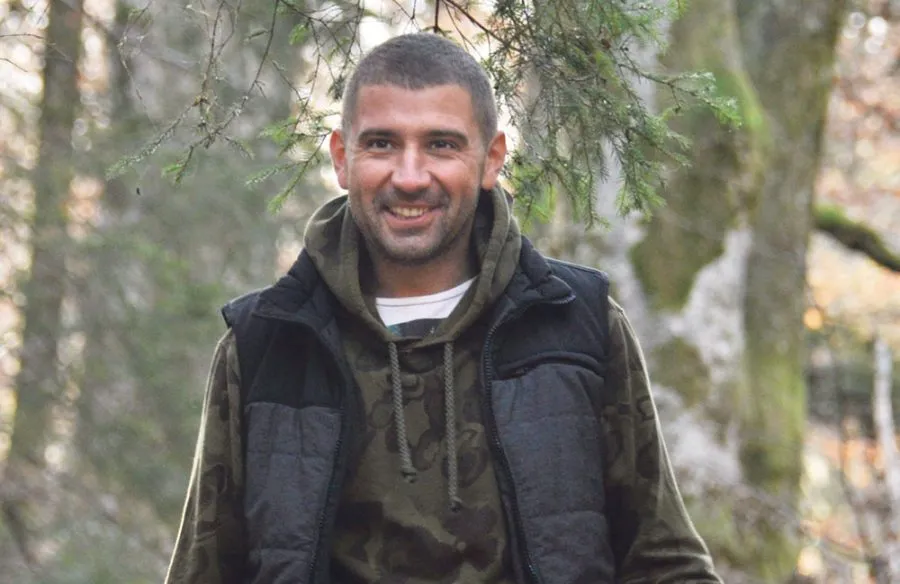
GABRIEL PĂUN (Non-political adviser to the Prime Minister / Agent Green): “The last remnants of Codrii Vlăsiei are being cut down as we speak”
“Only 5% of the forests remain in southern Romania”
– Agent Green recently launched a signature campaign to save forests around cities. Its focus is Codrii Vlăsiei, southern Romania’s famous historic forests. What prompted you to launch this action?
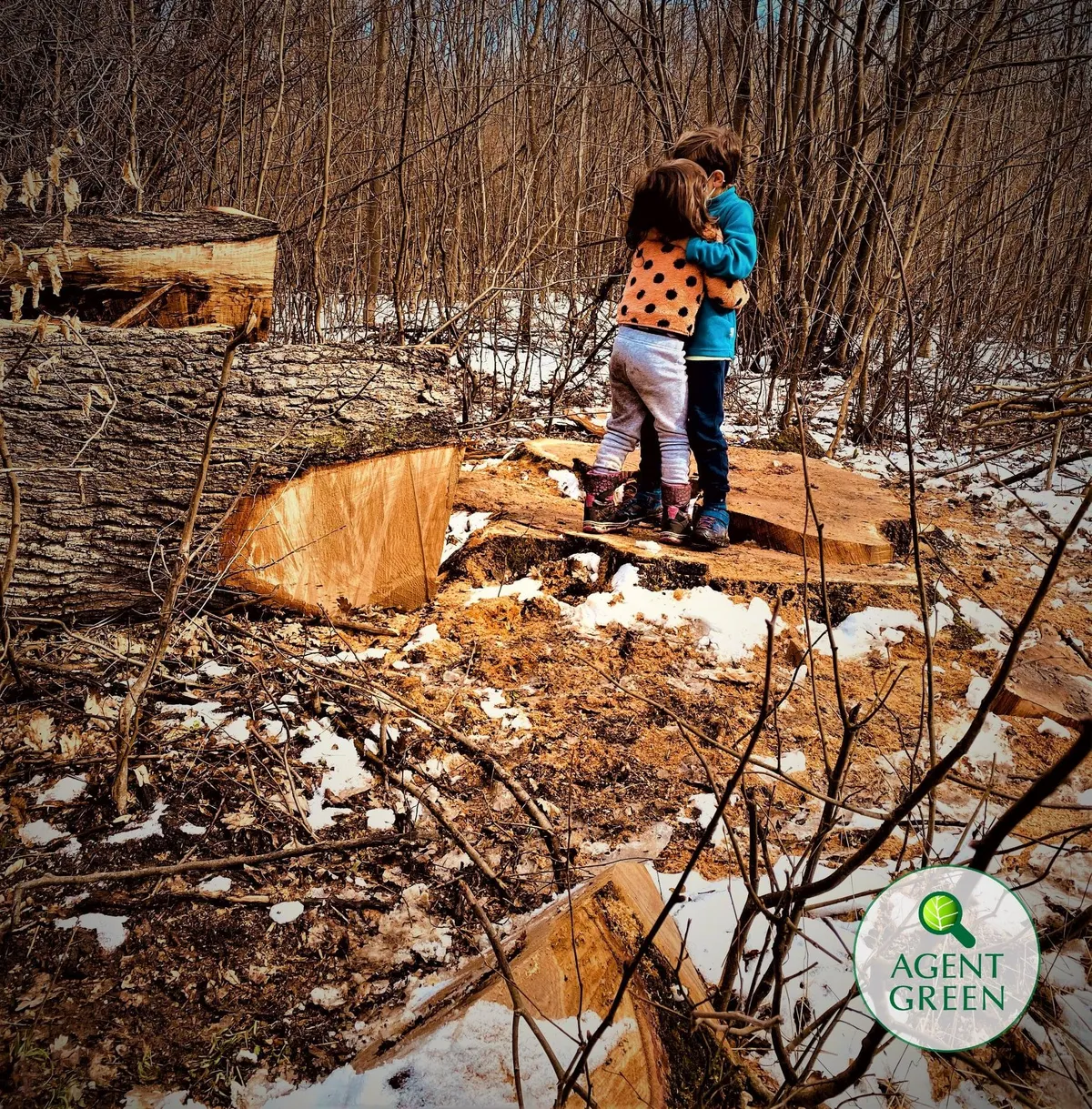
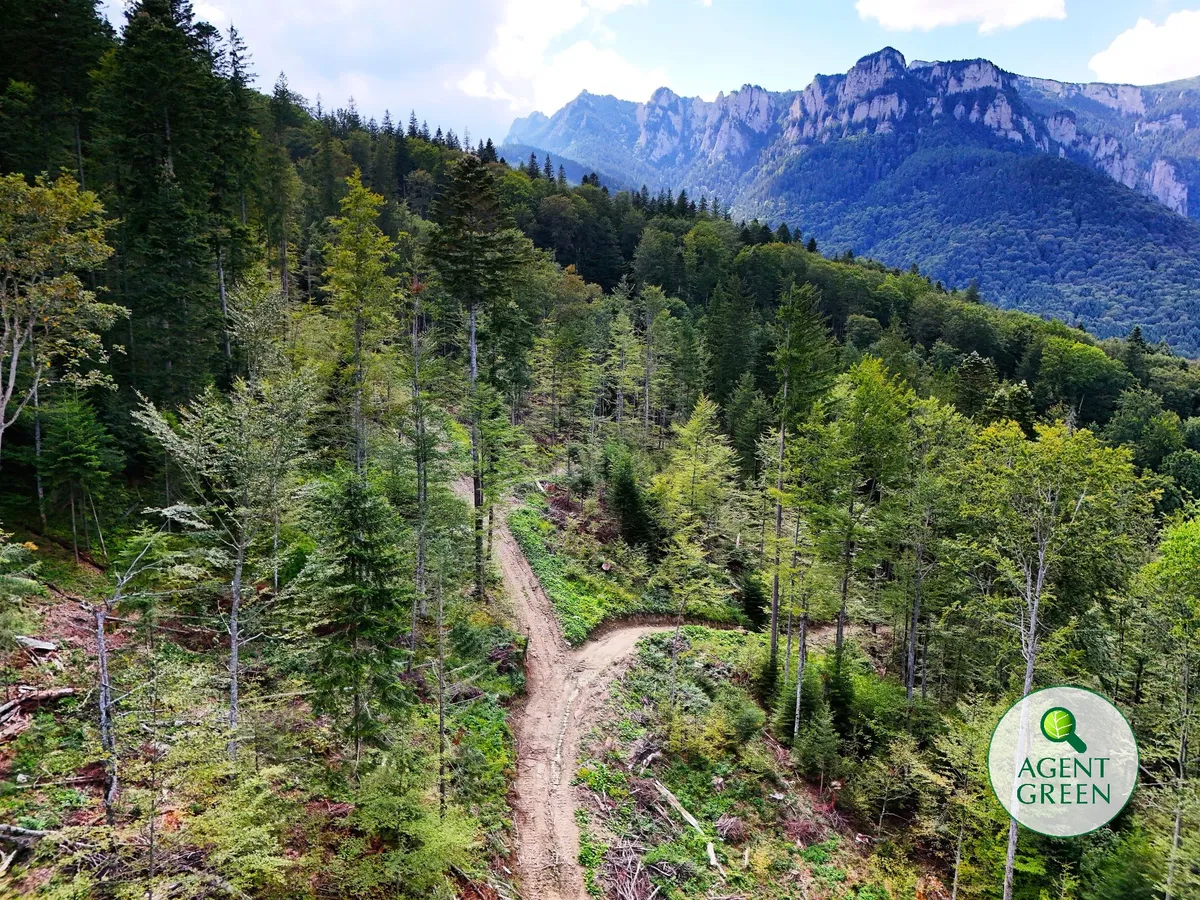
– Centuries ago, Codrii Vlăsiei stretched from the Carpathians to the Danube like an Amazonian jungle. A paradise with 500-year-old trees. Now we are talking about desertification, caused not so much by climate change as by forest clearance. In the southern counties of Călărași and Ialomița, where desertification is becoming increasingly acute, only 5% of the forested areas remain. Snagov Forest, a somewhat better-preserved part of Codrii Vlăsiei, is under siege these days. They have entered the last plots with monumental 200-year-old trees, cutting hectare after hectare. Where there was a reserve of 1100 hectares, its status was changed with a stroke of a pen, leaving only 110 hectares protected. Andronache Forest, which holds so many childhood memories for me, is unrecognisable. There is a huge hunger for timber, and it does not matter that these are the last remnants of a symbol of Romania’s history; biodiversity and public health do not matter, only the “pieces”, as Romsilva calls trees. In Bucharest, when the wind does not blow, we have extreme pollution. When it blows, pollution disperses somewhat, but what does that wind bring? Waves of dust from areas undergoing desertification, no longer fresh air, because the old forests are being cut to the bone.
“Forests around major cities are being decimated for timber and to make way for residential developments”
– Stephen the Great’s forests were just as famous as Codrii Vlăsiei. Is their fate any better?
– Another city with a tiny proportion of green space is Iași, subject to a European infringement procedure because of pollution. Its residents depend on oxygen from Bârnova–Repedea Forest, which, despite being a Natura 2000 reserve, continues to be systematically mutilated as chainsaws advance in search of the most important trees. All those old beech and oak forests, those broadleaf forests, are being cut at a rapid pace. We are talking about a tragedy. Every week when residents go walking, they find the forest increasingly hacked apart, while County Council president Costel Alexe, the former Environment Minister under investigation for bribery, laughs in their faces. I will give a positive example of what a forest can mean for a city just an hour’s flight from us: Vienna. Austrians understood that air enters the city from the north, and nobody touches a branch in those forests; by law, they have maximum protection. Industry, refineries and incinerators were moved south; no smell from there ever reaches the city, and in summer, when temperatures reach 30-40 degrees, clean forest air circulates through it. In Romania, forests around major cities are being decimated for timber and to make way for residential developments.
“Romsilva considers only cubic metres and money”
– Is there no protection for these forests?
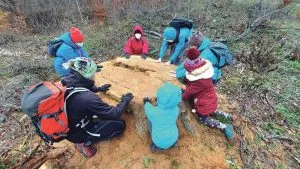
Once there was a tree…
– There is none, although they should be protected by law and treated like temples: they are the lungs of the big cities, where our air comes from. But Romsilva considers neither this nor the legal technical rules, only cubic metres and money. It boasts of rejuvenating the forest, trying to impose the idea that old trees are sick and must quickly be removed. Completely false! Forests do not need chainsaws to rejuvenate them; they have regenerated themselves for thousands of years, and trees can live for 4-500 years. These old trees are the essence of forest life: they preserve biodiversity, produce the most oxygen and retain the most carbon of all trees in a forest. Without them, life disappears because so many species, from plants to insects and birds, depend exclusively on them. Yet they are precisely the trees Romsilva pursues most because of their economic value. Even when fallen, such a tree must remain in the forest: it means humus, food for future generations. The technical rules say that 70% of the dominant species in a forest must be retained. I went with a forestry engineer to Snagov Forest, where monumental oaks are being cut, and only 10% of what is planted in their place is oak. The rest consists of other species, so the future forest will have no connection with today’s. Romsilva must comply with an international certification requiring it to retain at least 5 biodiversity trees per hectare, yet this is not respected even in protected areas. Romsilva clears everything, hectare after hectare, and the oversight institution, the Forest Guard, turns a blind eye. This is why Romania also faces an infringement procedure over its forests.
“We want a ministerial order to protect these lungs of the cities”
– What is the aim of your “Forests for Romania’s Cities” campaign?
– Romanians live six years less than the EU average. We want to improve quality of life, and protecting forests around cities plays an important part in that equation. Stopping logging is urgent. We want a ministerial order strictly protecting forests within a 10-kilometre circle around major cities and implementing the concept of selection-system forestry, a perpetual forest, for another 20 kilometres. Then we appeal to all mayors in Romania to find land for afforestation. Thousands of abandoned and degraded agricultural plots surround cities. Once turned into forest shelterbelts, they will halt advancing desertification, attract birds and animals and bring clean air. We want zoos established by abusively concreting over green spaces to keep suffering animals in terrible conditions to be closed and returned to the natural cycle. More than a century has passed since Romania had visionary mayors who left a beneficial legacy for future generations. A historical example is Craiova’s famous mayor Romanescu, who left the city a superb park that puts Oltenia’s capital second after Brașov for green space per inhabitant. Such mayors are greatly needed today too.
– Do you think our society has reached the point where it can become seriously involved and put pressure on authorities to create a healthier living environment?
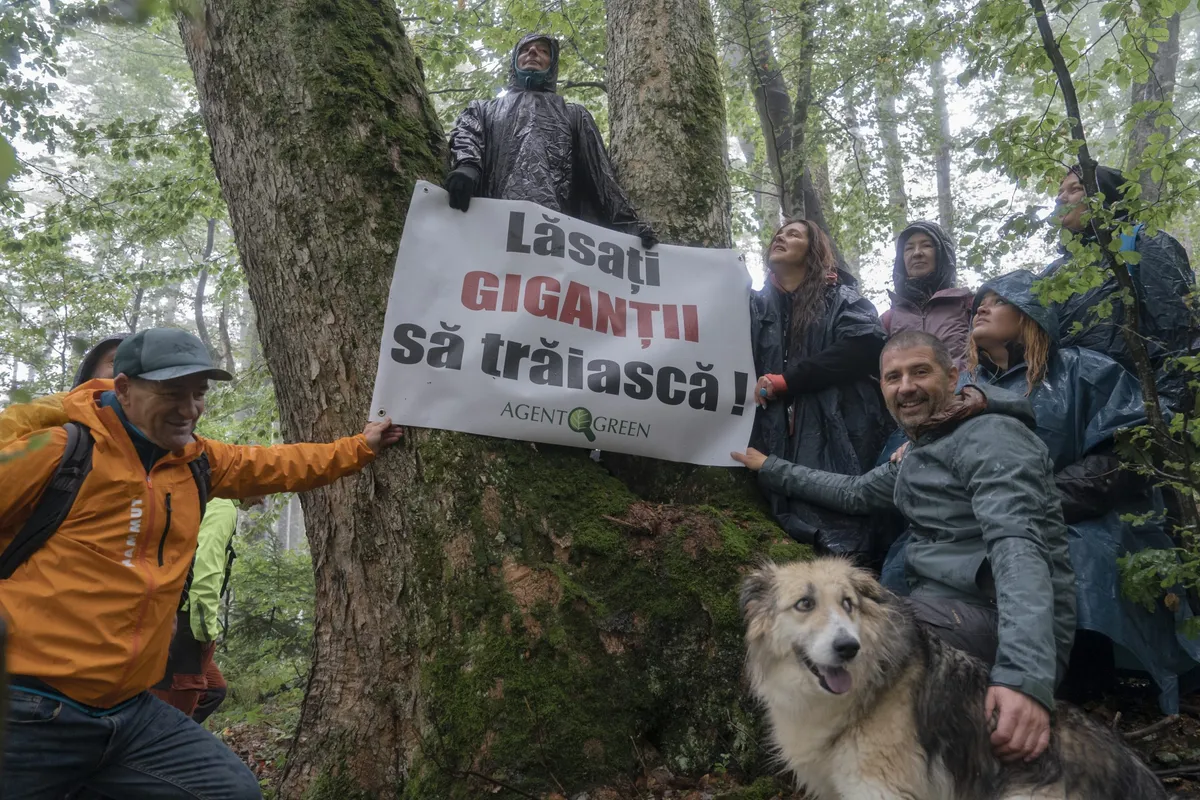
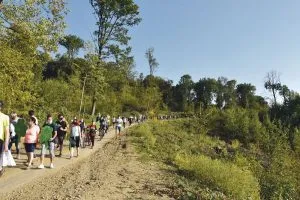
– The fact that education has not been a priority for decades, and that even now we rank last in the EU for the budget allocated to it, results in low awareness of environmental problems. Most people simply do not connect abusive logging, environmental loss or deterioration, and health. Communism also taught us to be obedient, not to fight for freedom of expression if we wanted to avoid the consequences. Even now, some participants in our protests, including teachers and biologists, face intimidation at work. If we find the courage, we have a chance. Agent Green tries to educate people by showing the destruction of nature as it happens. We want to inspire other local organisations across the country to act, to defend even a small piece of forest on a city’s edge. There are three ways to act. Protests are difficult to organise during a pandemic, but last autumn we found a solution: the people who came out to defend the forest lined up for a kilometre along its paths. The second way to attract attention is through the media, and the third is through court action. Any citizen or NGO can do it. We sued Romsilva and the Environmental Protection Agency. Of course these cases take time, and logging continues meanwhile, but even so, this is how we have managed to save highly important forests.
The Prime Minister is a serious discussion partner
– Still, there are signs that environmental problems are beginning to be resolved in Romania too…
– I appreciate that abusive forest clearance has become a sensitive media issue. I believe Sumal 2.0, despite all its current shortcomings concerning the promised transparency, can combat this illegal logging. I believe this political will exists at government level, which is why I accepted the role of honorary, non-political adviser to the prime minister on environmental issues. Although Florin Cîțu is a finance specialist, I can discuss nature with him in the deepest sense. He is my first serious discussion partner in government in 20 years as an environmental activist. Another piece of good news is that one and a half billion euros from the Reconstruction Plan have been allocated to afforestation and restoring degraded forests. What remains is for the will of those leading the way to reach the administrative machinery. A major change of mindset is needed in the Environment Ministry and oversight institutions. ANPM, the Forest Guard and Romsilva must all adapt their thinking to the challenges of the twenty-first century. At present, however, old habits refuse to go away.
by IULIAN IGNAT
Originally published in “Formula AS” – ISSUE 1463