Formula AS in Bucovina: “The Moldovița case”
Cătălin Manole’s report “Formula AS in Bucovina: The Moldovița case”, published on 10 February 2020, follows local residents, journalists and environmental organisations mobilising against illegal logging. The overview below summarises the themes and accounts in the original Formula AS article.
An initiative from within the community

Tiberiu Boșutar — original caption.
The story begins with Tiberiu Boșutar’s daughters wanting to leave Moldovița. The author links that choice to a lack of prospects, corruption and the feeling that Bucovina’s beauty is not enough to keep young people at home.
In his account of 2016, Boșutar explains his decision to monitor timber transports leaving the village. For three months, in October, November and December, he recorded the trucks and checked them in the Inspectorul Pădurilor application. The friends who helped him later formed Asociația Moldovița. The report describes a tally of more than one hundred illegal transports identified.
Video cameras and transport checks

Tiberiu and his car marked 112 — original caption.
After the authorities’ initially unconvincing reactions, a police officer recommended filmed evidence. Five cameras installed at his home enabled continuous checks of registration numbers and loads, and transport operators were informed about the monitoring. Boșutar describes real-time reports, roadside stops, confiscations and inspections of depots.
The report also explains the comparison between declared volumes and observed loads, and the association’s claim that illegal transports had been reduced to almost zero within six months. Marking the car with 112 is presented as an encouragement for residents to stay alert.
Changing theft methods and pressure on activists

Ciprian Gălușcă — original caption.
In the article, the initial success is followed by changes in methods: healthy trees felled under permits for deadwood, repeated transports using the same documents, the use of firewood vouchers and ink that could be erased with heat. Boșutar also recounts intimidation through fines, amid a struggle of attrition.
His account contrasts the forest resource surrounding the village with the few local benefits. It discusses sales of unprocessed timber, the concentration of earnings, auctions and economic incentives that he associates with illegal logging.
The Recorder investigation and observed changes

Alex Nedea, reporting in Moldovița — original caption.
The author then follows the impact of Alex Nedea’s documentary for Recorder: public visibility, organisations’ involvement and pressure on authorities. The report recalls the reactions captured in the investigation and returns to Moldovița almost six months after the film appeared.
Nedea describes the temporary halt to plundering in the district’s forest, the replacement of its head and his estimate that 90–95 % of timber leaving was legal. He warns, however, that logging might move elsewhere. According to the conversation, the promised cameras at forest exits and journalists’ proposed solutions — GPS, a different marking system and official depots — had not yet been implemented. He stresses change driven by citizens and explains the film’s impact through the scale of the devastation uncovered.
Bucovina’s landscape and organisations’ role

Mihăilescu, Romsilva director, at the meeting with Greenpeace — original caption.
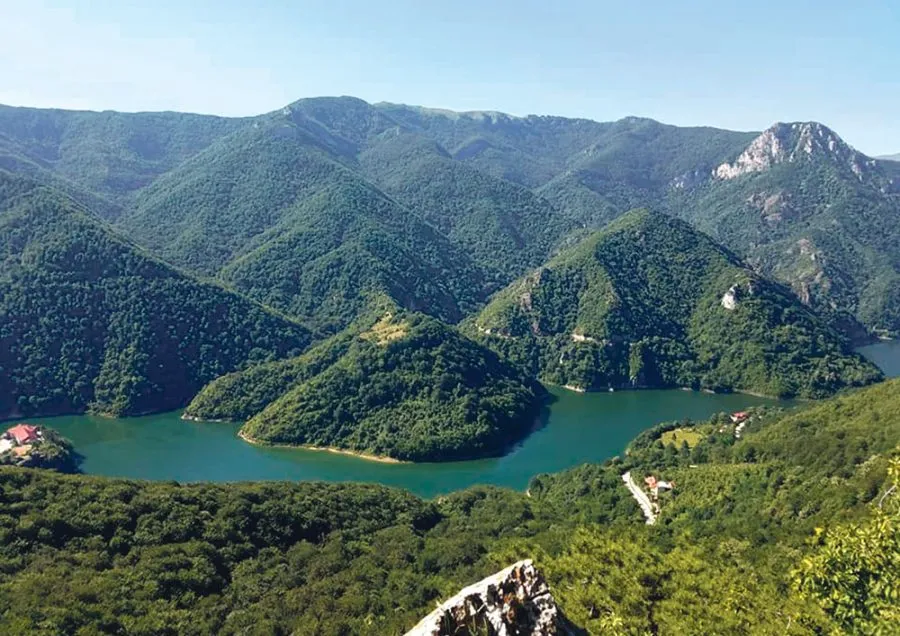
The report alternates its investigation with Bucovina’s landscapes and the image of Moldovița Monastery, set against social problems, young people’s departure and ageing households.
Greenpeace activist Ciprian Gălușcă presents Moldovița as an example of problems found across the country, but also of the difference residents’ participation makes. He discusses public anger, calls for a total halt to logging and authorities’ responsibility for public forests.
Vigilance and involvement

Greenpeace, Romsilva representatives and the press during the field visit where non-compliant logging was reported — original caption.
The closing section describes the search for volunteers for video monitoring and the hope that Boșutar’s example will be followed in other communities. At the end, the article cites the Ministry of Environment’s figure of 38.6 million cubic metres felled annually, including 18 million legally, as part of the context presented at the time.
Source of the accounts and photographic identifications: Cătălin Manole, Formula AS, issue 1402, 10 February 2020.
Related articles
Gabriel Păun (Agent Green President and Honorary Adviser to Romania’s Prime Minister): “Protection will happen in turn, park by park”
GABRIEL PĂUN (Non-political adviser to the Prime Minister / Agent Green): “The last remnants of Codrii Vlăsiei are being cut down as we speak”