The Arthur case – GABRIEL PĂUN (Agent Green president): “An innocent bear of exceptional beauty, a living treasure of Romania’s forests, was cowardly killed”
“A barbaric custom in Romania: trophy hunting”
– The case of Arthur the bear, killed by a prince from Lichtenstein in Romania’s forests, has been covered by the national and international press and is now before the European Commission. What is this case, and how did you at Agent Green discover it?
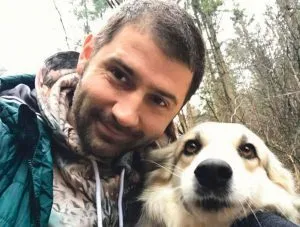
Gabriel Păun and his dog Silva
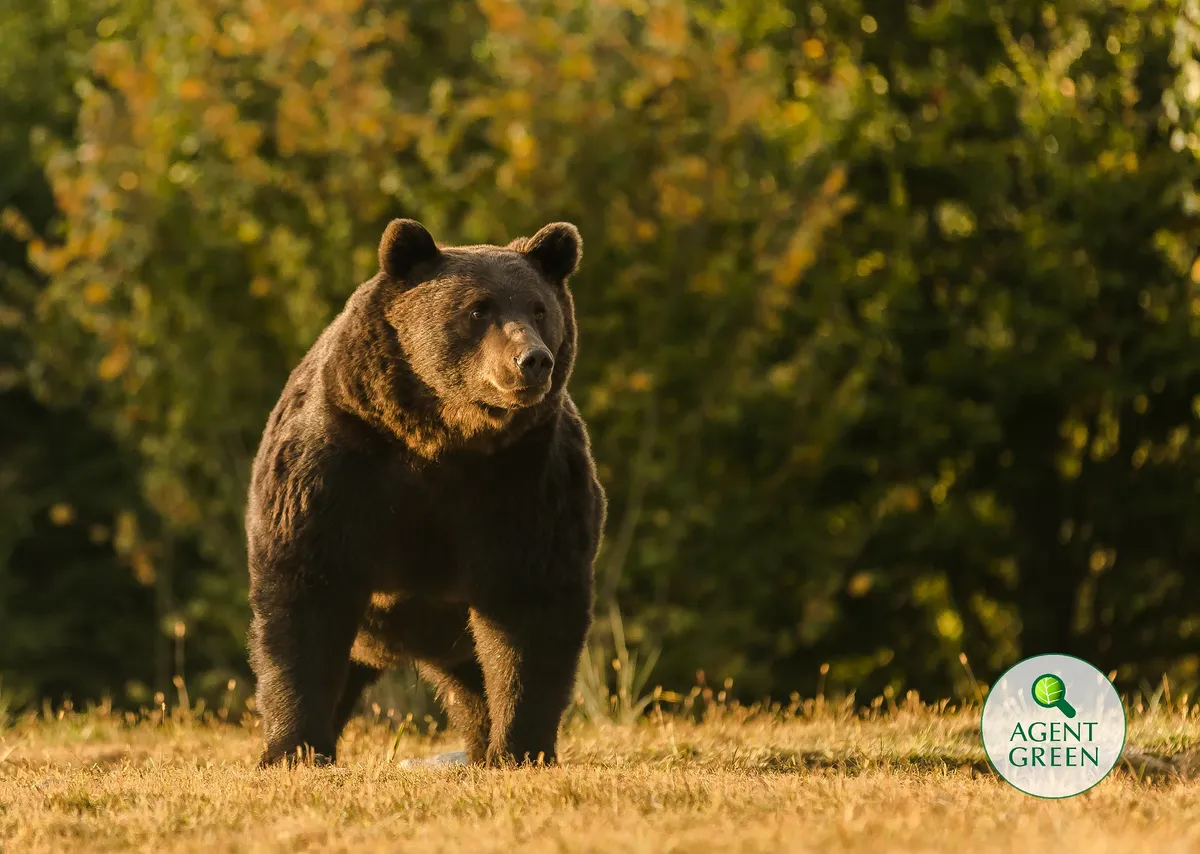
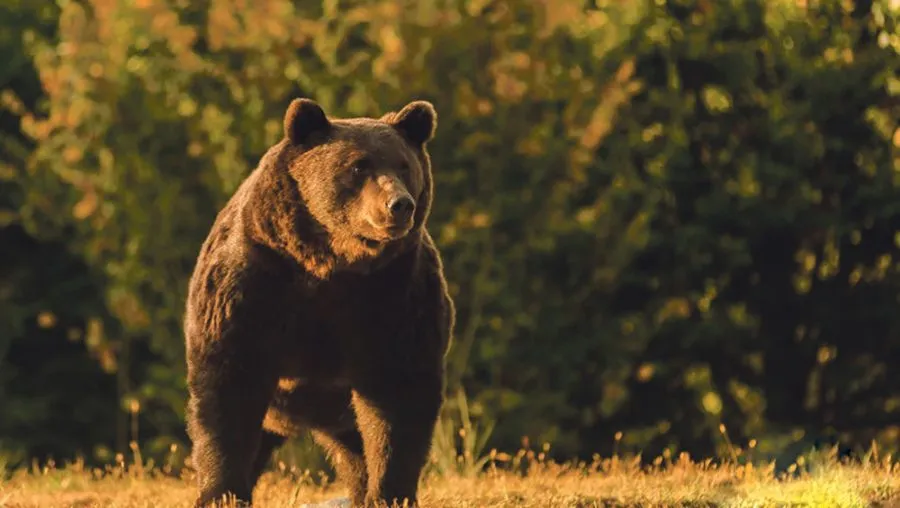
– Arthur’s case is emblematic of trophy hunting in Romania, a barbaric custom that unfortunately continues in our country. Until 2016, it was done openly, with “annual harvest quotas”… as they called them, as if talking about maize rather than magnificent animals with a right to life. Then a brave minister stopped those “quotas”, leaving only “derogation quotas” for dangerous situations. In 2019, a number of 140 bears and 97 wolves was established that could be shot or relocated if necessary. Arthur was among the last on that list. The Environment Ministry’s website only lists the derogations, without saying why they were granted, without records explaining the measures taken, the conflict or the animal that caused it. Zero transparency, although it is information of public interest. We knew this “intervention quota” was running out and requested the list of derogations to see whether human–bear conflict had been taken into account or whether it was merely disguised trophy hunting, as before. That was when we first noticed something wrong: the Covasna “intervention” request listed a female bear, while the elimination record listed a male bear. We knew there were three large bears there, but only one of that size, whom we had named “Arthur”, because he was the king. He was a giant. We had seen him several times deep in the forest and had photographs of him, the ones that went around the world. We took them in October 2019. We last saw him in November 2020, a few months before he was shot. He was a bear unaccustomed to people; he ran away when we appeared, so there was no question of him taking food from households. He was 17 years old. With these suspicions, we went to see the people who had complained about damage caused by a bear. On the ground, we discovered that Arthur was not the “criminal”; local people’s problems involved female bears with cubs. Everyone said so. In any case, it was hard to believe that a trophy-hunting prince from Lichtenstein would come from Austria to solve the problems of farmers in Ojdula… The conclusion is that it was not the “problem bear” that was shot, but the most magnificent bear they could find in the area…
“What happened in Covasna is illegal”
– What is most serious about Arthur’s case?
Alive and happy
– The most serious thing is that an innocent bear of exceptional beauty, a living treasure of Romania’s forests, was cowardly killed. And that this happened under the cover of a so-called derogation. That area is also a Natura 2000 site with no protection or management plan or assessment as required by law! This means that neither logging nor hunting was allowed. What happened there is effectively illegal. Another thing that caught my attention is that this hunting ground has 12 animal feeding points! To a layperson that may sound nice, as if they are caring for animals, but scientifically it is not good at all: the area effectively becomes a huge wild-animal farm, where animals lose their instincts because humans feed them and they become dependent on people. This also happened in South Africa, where such places are used especially for hunting. Strictly protected animals must not be fed and habituated, because that degrades wild species. There is a European directive on this.
– People generally say Romania has a great many bears. Is that true, or are bears a vulnerable species threatened with extinction here?
– At present, although people say we have a great many bears, no scientific census has actually been conducted to tell us exactly how many there are! We do not even know how many females and males we have, how many cubs or in what areas… Our view is that, on the contrary, the bear is a very threatened species in Romania. For three reasons. First, inbreeding due to the lack of males, which are usually shot as trophies. Females are left alone, reproduce within the same family, and the resulting animals are small and have problems. Second, because of the perpetual degradation of habitat: we think of bears as mountain animals, but they only ended up there in exile, in a refuge. Bears once lived as far as Codrii Vlăsiei, right down to the plains. We humans took their home and forced them to live only in the mountains, and then we are upset that they dare leave the minimal area to which they have retreated. In any case, there is no peace even there, while national parks and strictly protected areas represent 1% of Romania’s surface… Climate change is another problem for the bear’s existence. Because winter is no longer winter, there is no hibernation at all, only a short winter sleep. That is why bears wander so much now. As if all this were not enough, there is also the human problem, which has turned the bear from a “national emblem into a national problem”. This is not happening because bears have multiplied greatly, but because of the combination of factors I mentioned earlier. No authority looks at the whole picture or the causes, only the effects. Unfortunately, the current Environment Minister does the same, although we have brought him arguments and explanations.
“Solutions exist; you just have to want to apply them”
– Are there solutions to this conflict between people and bears? Can the problems reported by farmers whose property is damaged or tourists attacked by bears be avoided?
– There are some very simple solutions that we have seen work very successfully in other countries. In September 2018, we took officials from Harghita and Covasna to America, to three states, to see how things are done there. They were delighted and said, of course we can do this at home! Then they came home and nothing happened! For them it remained just a trip to America… The solutions to stop bears entering households or inhabited areas are simple. There are bear-proof bins with a small rod to open them, excellent for households, town outskirts or campsites. People can open them; bears cannot. Campsites also have fridges that only open in a particular way; if a bear cannot open one, it loses interest and stops coming. Then there are electric fences, which are not lethal but just give them a small shock, so they no longer come near. They are used both on farms and around rubbish areas. In practice, all unnatural food sources for bears are removed. Farmers also have special dogs that bears avoid, because their bodily integrity is very important to them. After the trip to America, the authorities did nothing. So once again we began collecting donations ourselves and managed to help 7-8 households install electric fencing. Since then, they have not had a single incident or any more damage. It really works!
“Let us give animals a dignified death”
– How could tragedies like Arthur’s be avoided?
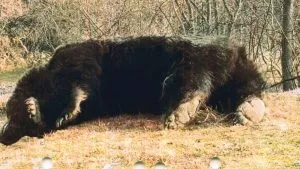
Arthur shot
– If there are “problem animals”, the law says lethal methods are the last resort. But when a lethal method can no longer be avoided, hunters must no longer do the shooting in the case of protected species. The animal should be tranquilised and then euthanised by a veterinarian, in the presence of gendarmes and an Environmental Guard representative, and only with DNA evidence showing it is the animal that had to be killed. Let us give animals a somewhat dignified death rather than treat them with such cruelty! We must end “trophy” hunting! Together with the coexistence measures I mentioned earlier, that would solve the problem very quickly. Sweden has 3000 bears, but people are not attacked there, because they knew how to apply the right solutions and tourists and farmers were taught what to do and how to act. So it can be done!
– What should we learn from this tragedy? Is there anything good in this whole international scandal?
– Yes! Romanian society reacted, and the emotion Romanians felt about this issue showed they condemn acts of pointless cruelty towards animals. Today we have a society that has largely matured in this respect and no longer tolerates such barbarity. The press also reacted promptly, covered the case and succeeded in putting pressure on the authorities. I believe the press and its public, the pressure on those in power, are the only ways to change something. The more we protest, and the more loudly, the less politicians and authorities can ignore us. We have a political class well hardened to such things; they wait for the wave of indignation to pass so they can go back to doing things their way. But if we remain united and oppose such attitudes, at least as we have so far, we have a chance to change something.
Photos: Agent Green
by CATALIN MANOLE
Originally published in “Formula AS” – ISSUE 1468