Stop illegal logging
STOP illegal logging
Bank transfer details
You can make an offline donation by bank transfer using the following details:
Beneficiary
Asociaţia Agent Green
Bank
Banca Comerciala Romana
Swift / BIC
RNCBROBU
LEI account
RO02 RNCB 0072 1569 1603 0001
EURO account
RO72 RNCB 0072 1569 1603 0002
In the bank transfer form’s Reference field, please enter the title of the project you wish to donate to, or “Donație Agent Green” if your donation is for the organisation’s general purposes.
You can write to us at any time at office@agentgreen.org
All contributions are tax-exempt.
Stop illegal logging
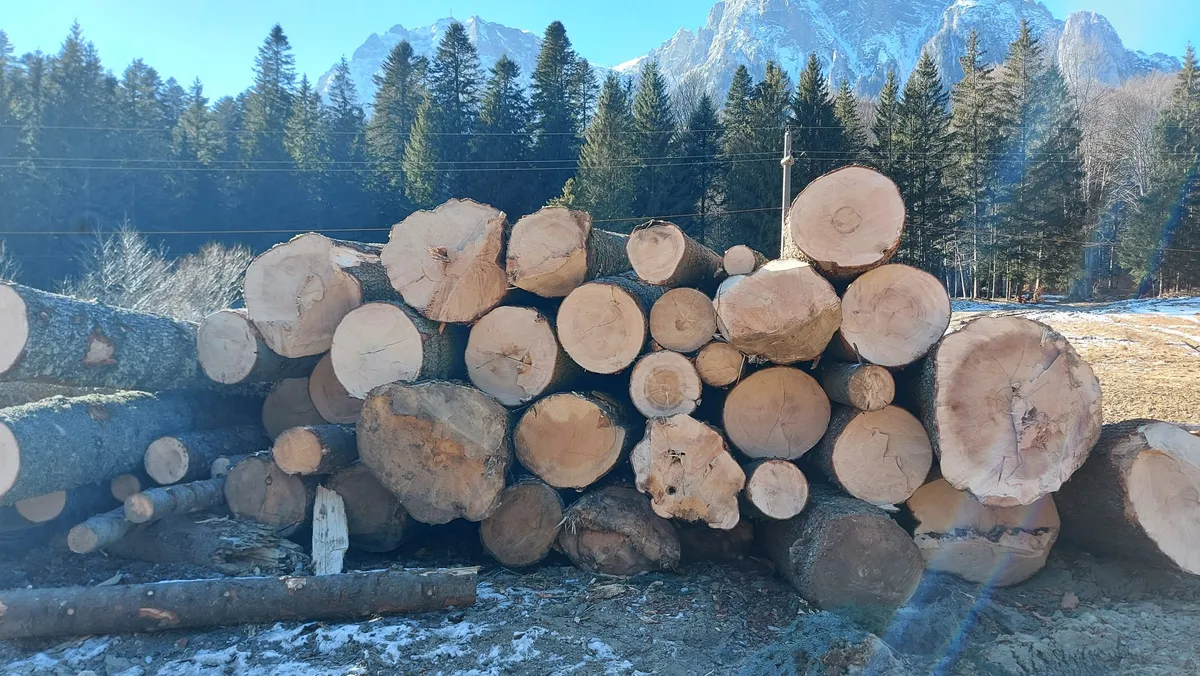
1% of illegal logging is currently detected in Romania. Every year, 19 million cubic metres of timber disappear from forests, in addition to the 19 million that can legally be harvested.
Demand for timber and pressure on forests have increased with industrialisation and the opening of huge new factories, each processing millions of cubic metres annually. Methods of theft have diversified, progressively destroying Romania’s primary and old-growth forests, Europe’s last vast wilderness areas.
Old-growth forests, these natural laboratories of biodiversity, cannot and must not keep pace with the accelerating timber industry. They are our most important weapons in fighting climate change and home to a complete food chain made up of species that disappeared long ago from most European countries.
How do we fight illegal logging?
- We investigate. We monitor areas of national interest, respond to individual reports and work with other nature lovers, expose environmental crimes and demand the necessary measures.
- Court cases and complaints to the European Commission over logging in protected areas. Currently, Nature’s Lawyer has more than 130 lawsuits concerning access to information and illegal logging. Following the two complaints submitted by Agent Green and its partners EuroNatur and ClientEarth, the European Commission opened infringement proceedings.
- We propose laws to improve the system, as well as targeted initiatives and procedures to stop illegal logging.
- We install alarm systems hidden in forests that send notifications when they detect chainsaw sounds, through the Ranger Green project
- We support SUMAL – the timber tracking system – and have been in the working group from the outset. We responded to every postponement, proposed improvements and called for all of these alongside 8000 people at the March for Forests, together with Greenpeace and Declic
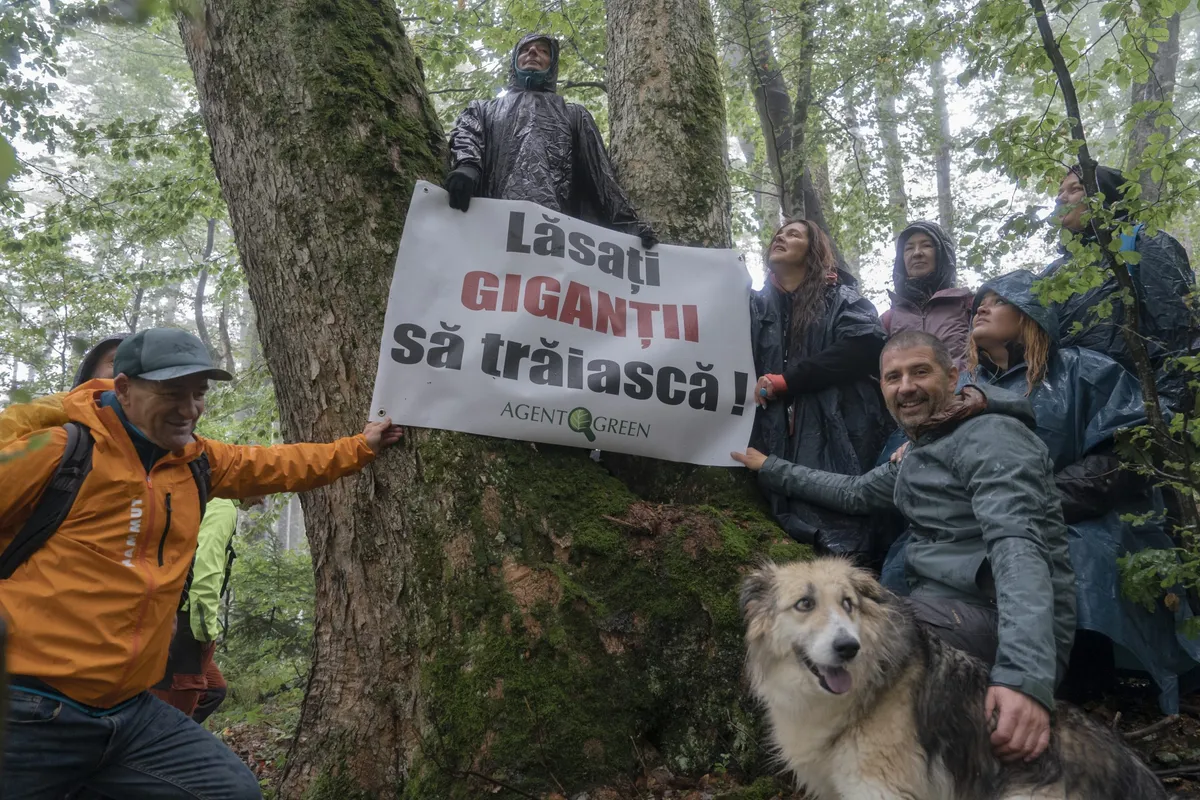
- We mobilise civil society through activities that raise awareness of illegal logging and encourage civic engagement online or offline: reports, petitions, creative protests, planting and other actions.
- Education. Agent Green’s entire approach revolves around the importance of nature in human life, using scientific references and always promoting methods close to nature, as in the Forever Forest project and environmental education in I Am Nature.
Administrative solutions
1. Restore professionalism to and depoliticise forest administration, with recruitment and promotion based on competence, value, performance and meritocracy in leadership positions at every level. The National Forest Administration must be transformed into a State Administration funded by taxes to eliminate its current financial dependence on the volume of timber harvested (following the successful interwar model).
2. Exclude forest-harvesting activities from the responsibilities of the State Forest Administration.
3. Impose financial and criminal penalties on forest management plan authors when they incorrectly assign forests to inappropriate functional categories, resulting in their degradation or impairment and affecting national security. Withdraw / suspend the right to prepare further forest management plans, similarly to suspending certification / authorisation for logging companies.
4. State subsidies for forestry work that is unprofitable for owners but necessary for stand development, setting priorities to maintain and create forests as close as possible to natural forests in biodiversity, structure and species composition.
5. Where private land is logged and not reforested within a maximum of 2 years, charge owners the equivalent value of its social and protective functions as a penalty, since this is social damage borne by everyone. If the cumulative amount of these unpaid penalties over 2 years reaches the market value of the deforested land, it should be possible to nationalise that land on the grounds of undermining national security, the owner being incapable of managing a national asset.
6. State purchase of forests with important social and protective functions, following fair compensation of the previous owners.
7. Entrust the management of forests belonging to communes, churches or other public communities to the state forest administration.
8. Encourage private owners to form strong associations to care for their forests together.
9. Increase the use of timber to produce highly processed goods with high added value, permanently eliminate log exports and limit exports of raw products (sawn timber) to a maximum of 25% of the timber harvested each year.
10. Develop a national programme to increase timber use in construction, urban development / regeneration and public buildings.
11. Reduce the amount of timber used as fuel, increase firewood combustion efficiency and switch to alternative heating sources that do not include fossil fuels. Subsidise firewood for residents of communities that heat with wood and have no other local sources of income.
12. Computerise and modernise the technology of the forest sector – forest administrations, forest guards and the central public authority responsible for forestry.
13. Develop performance requirements / conditions for activities with environmental impacts (logging, forest-road construction, etc.), to be contractually undertaken by the economic operators carrying them out.
14. Develop and implement an effective environmental assessment procedure for forest-sector activities with significant environmental impacts, based on clear conditions / requirements and procedures to be respected from the preparation / design stage of the programmes, plans or projects concerned.
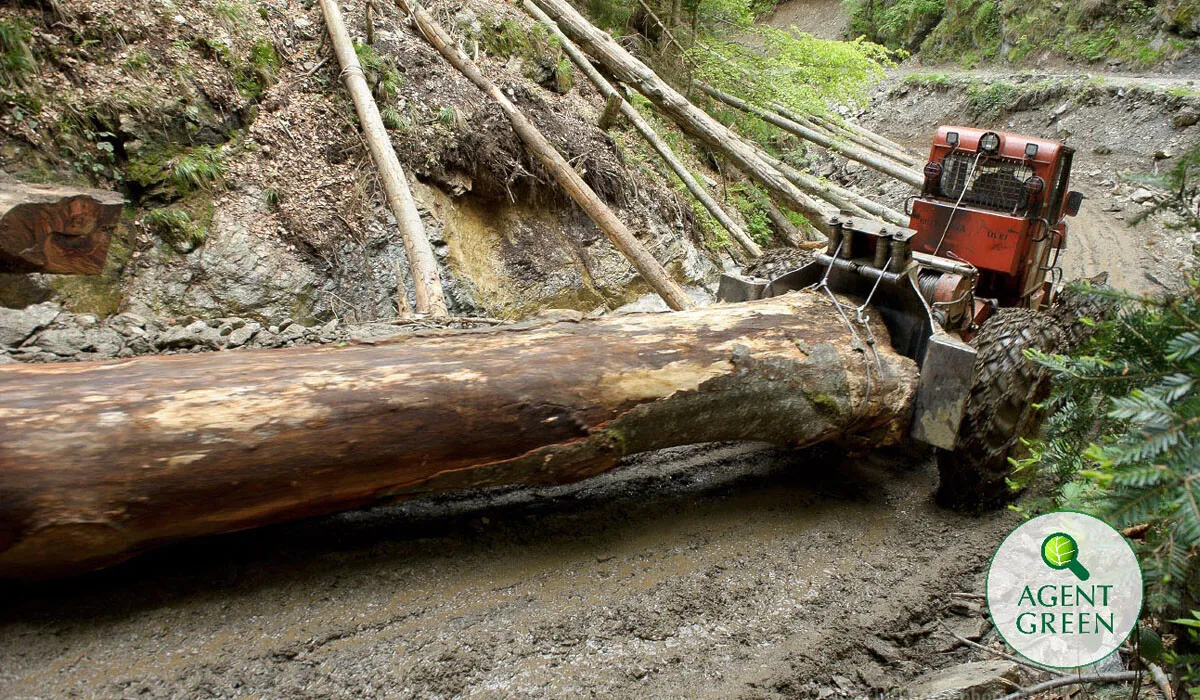
15. Equip harvesting operations with modern machinery that reduces and limits environmental impacts. Any construction in the forest sector (forest roads, signs, barriers) must comply with construction law. Extraction routes must be precisely planned and the soil fully restored, or alternative solutions sought if transporting trees risks degrading soil and rock.
16. Ensure transparency throughout forestry through public consultation on all forestry operations and online publication of all plans, schedules and permits issued. Publish inspection results and the measures ordered.
SOLUTIONS TO STRENGTHEN TRACEABILITY AND COMBAT ILLEGAL LOGGING
1. Implement an objective, transparent and efficient system for assessing the volume of timber placed on the market, authorising timber transport and monitoring timber movements. Consider potentially phasing out timber valuation documents (APVs) and sales based on estimated standing timber volumes, in favour of selling harvested timber sorted and measured at the landing.
2. Make the monitoring and inspection of forestry activities more efficient.
3. Ensure transparency and citizens’ passive participation in monitoring forestry activities and combating illegal logging by developing tools that enable their involvement and making appropriate data, information and tools for assessing and reporting illegalities available to the public.
4. Improve SUMAL through high-resolution satellite maps, video monitoring systems for timber platforms and storage sites, roads and forest access routes, GPS tracking (departure point, route, destination) of all timber transports (including those carrying wood under tarpaulins or in containers, tipper trucks, etc.), and photographs from behind vehicles showing the registration number and load.
5. Establish Green Justice, with environmental prosecutors and judges specialising in compliance with national and European legislation and international treaties and conventions, such as those adopted by the United Nations Conference on Environment and Development (1992), Aarhus (2001), Espoo (1997) and the Ministerial Conferences on the Protection of Forests in Europe (Strasbourg, 1990; Helsinki 1993; Lisbon 1998).
What can you do now?
Send an email to the Ministry of Environment requesting the rapid launch of SUMAL 2.0, postponed 4 times in the past year. Illegal logging will be largely addressed through the correct implementation of SUMAL 2.0 and the mobilisation of civil society.