The future Ciucaș National Park: a biodiversity reservoir and an opportunity to revive ecotourism around Cheia
Press release
The future Ciucaș National Park: a biodiversity reservoir and an opportunity to revive ecotourism around Cheia
Bucharest, 15 April 2020 – On the occasion of the environment minister’s visit today to the Cheia area, Prahova County, Agent Green proposes implementing the scientific substantiation study and Government Decision establishing Ciucaș National Park, drawn up in 2005.
“Raising the Ciucaș Mountains to the prestigious status of a national park is a longstanding dream of scientists that Minister Costel Alexe can soon turn into reality. The project has remained in the minister’s drawer since 2005 and requires only minor improvements and the involvement of surrounding local communities to develop quality ecotourism and agritourism,” said Gabriel Păun, president of Agent Green.
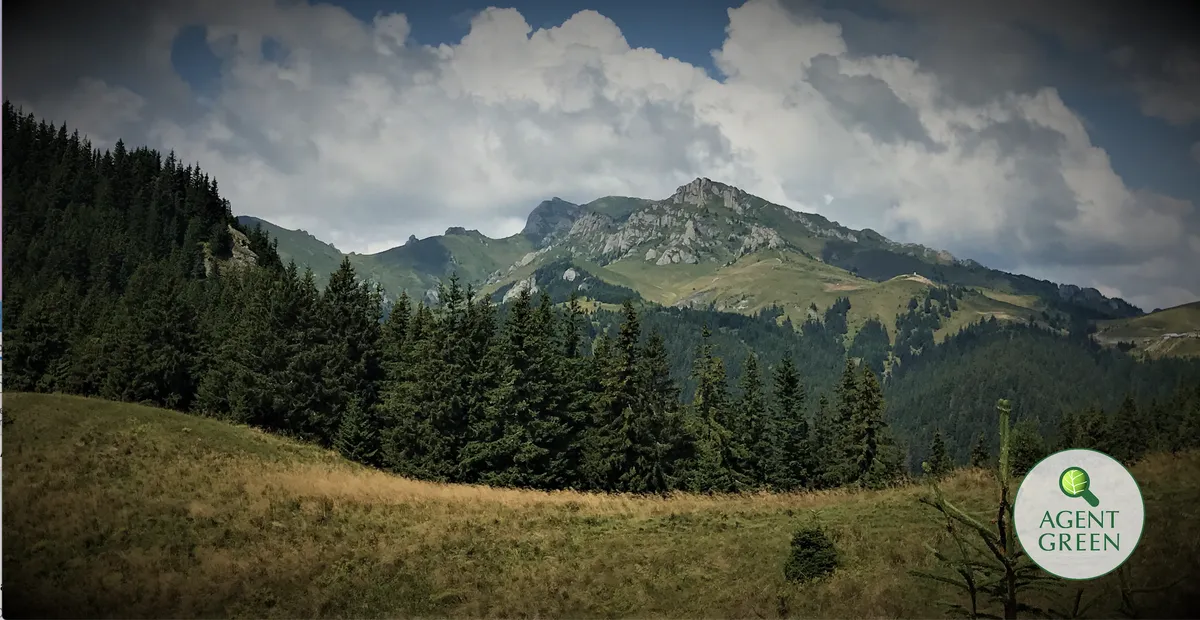
The future Ciucaș National Park covers 22,728 hectares and is located in the unpopulated area of the Curvature Carpathians, in the counties of Brașov (57%) and Ploiești (43%). It is crossed by the meridian 25o58’ E and the parallel 45o30’, with altitudes ranging from 795 to 1,954 m, and by the DN1A Ploiești–Brașov road in its southwestern part.
Forests cover 69.1% of the park (of which 3,602 ha were still virgin 15 years ago); grasslands cover 6,616 ha (29.1%), of which more than a third (2,606 ha) are subalpine; and other land uses (enclaves, glades, unproductive land, existing and proposed areas within settlement boundaries) cover 392 ha (1.8%).
The geology of the Ciucaș Massif is dominated by limestone conglomerates and easily eroded sandstones. Erosional remnants, the bizarre forms of the ruin-like relief, accentuate the romantic character of the landscape and harbour the most valuable natural microhabitats, Arctic species and Romanian endemic species, original products of the national territory.
In the future Ciucaș National Park, 22 protected and priority-protected natural habitats (areas where a particular species occurs) of Community interest have been identified. Species protected by Community and national legislation (bear, wolf, lynx, otter, chamois and capercaillie) can be encountered throughout the park, where 1200 plant species, 123 moss species, 233 vertebrate species, 1508 invertebrate species and 409 fungal species have been identified.
“It is essential to respect all the international IUCN principles for the national park: non-intervention, support for local communities and benefits for all parties. In other words, strict protection that ensures biodiversity conservation must cause no loss to any member of the local communities; on the contrary, it must bring profit through agritourism and ecotourism and related activities. A good strategy to revive the area and financial support programmes will be needed,” Păun concluded.
The study on establishing Ciucaș National Park was prepared in 2005 by ICAS Bucharest, BLWF (Bavarian Institute for Forests and Forestry Economics), Freising, Germany, Lucian Blaga University of Sibiu, the Romanian Academy – CMN, the University of Bucharest, the Bucharest Institute of Biology, Săcele Polyclinic, the Grigore Antipa National Museum of Natural History in Bucharest, Măneciu Forest District, the Ploiești Environmental Protection Agency and the Brașov Environmental Protection Agency, and was funded by the National Forest Administration – ROMSILVA.
Related articles
The Bear Right by Agent Green & Charlie Ottley: an unusual appeal for a new bear sanctuary
The Niculescu Cabinet’s programme: administrative modernisation, but old energy and no guarantees for nature