The Forever Forest model
Support the ForeverForest model
without clear-cutting or hunting
Forever forest
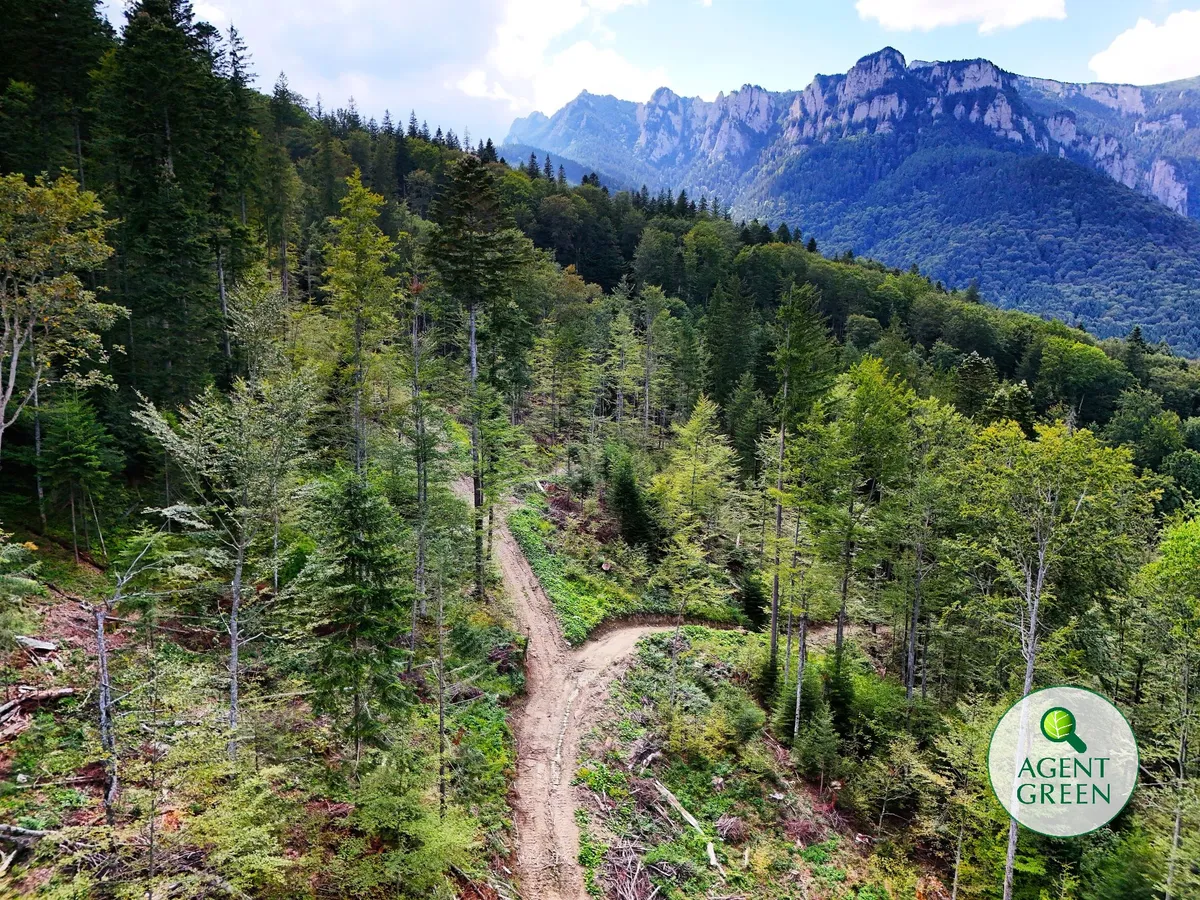
The first Forever Forest is in the Vrancea Mountains, Covasna County, and has covered 458 hectares since 2019; in 2021, another 192 hectares were added, bringing the current total to 650 hectares.
PRINCIPLES
- The forest is never clear-cut – only selective cutting (individual trees) is allowed.
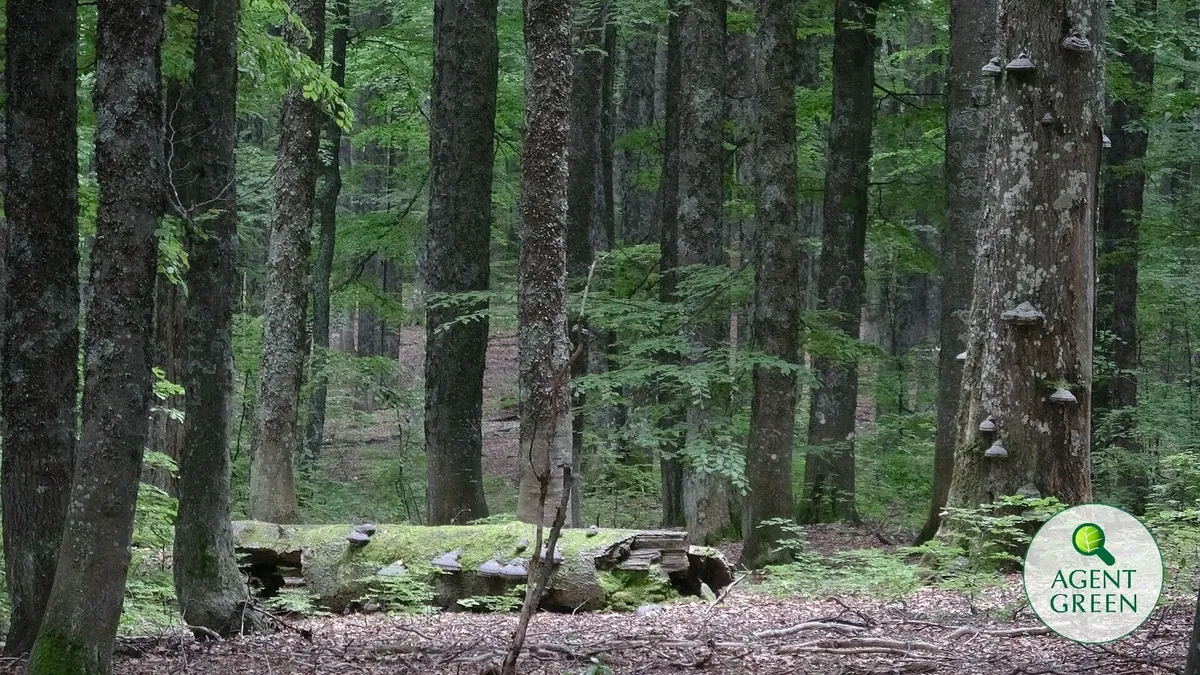
- Nature knows best, and people must follow it. Locally adapted native tree species perform better than exotic species. Follow natural processes (protect / restore native species, encourage natural regeneration and selection).
- Higher profits thanks to lower costs.
- Old-growth forests and deadwood store more carbon.
- No one loses out.
MINIMUM REQUIREMENTS
General requirements
- Forever Forest must enhance biodiversity, combat climate change, improve the well-being of local communities, contribute to the national economy (added value must stay in Romania) and provide recreation for everyone.
- Human intervention in the event of disasters is not allowed, except for fires with the potential to spread and engulf the entire forest. During restoration, the damaged forest must not be artificially planted sooner than 10 years after the disaster, to give natural regeneration a chance.
- Virgin and quasi-virgin forests, UNESCO World Heritage forests and non-intervention zones in national parks, nature parks and other protected areas cannot receive Forever Forest certification, because logging in these areas is strictly prohibited anyway. They can only serve as reference areas for other ForeverForest forests in the immediate vicinity.
- Harvesting is not allowed if the old forest management plan has expired and the new one has not yet been approved. Timber harvesting to compensate for the period without an approved forest management plan is not allowed.
Requirements during conversion from conventional forestry to Forever Forest forestry
- Human-planted forests composed of non-local species must gradually be guided towards functional ecosystems formed by forests with natural structure, composition, dynamics and functions. Forests must gradually reach their native level of naturalness, adapted to the site.
- In forests approaching the ideal natural composition, a maximum of 5 thinnings is allowed to reach the final “Forever Forest” stage. Thinnings must remove both exotic species and poor-quality growth competing with good-quality growth. But thinnings must not eliminate competition between vigorous, good-quality native species.
- Any forested or non-forested area can become “Forever Forest”. Newly established forests on difficult sites (for example, sandy areas) must contain at least two species.
- Conversion to “Forever Forest” must not exceed 80 years for newly established forests, 60 years for forests mainly composed of exotic species and 40 years for forests mainly composed of native species but managed using conventional forestry techniques.
- Harvesting a maximum timber volume of 2/3 of the annual increment established by the approved forest management plan is allowed.
- Pre-existing drainage must be removed to allow wetlands to be restored.
- Conversion is considered complete when standing timber volume has reached 70% of the total potential volume specific to the composition of that forest.
Harvesting and regeneration requirements in forests that have attained “Forever Forest” status
1. Only selective removal of trees is allowed.
2. The removal of trees considered the main harvest after the final thinning is defined according to trunk diameter measured at a height of 1.3 m on the downhill side. Depending on specific soil and climate conditions, the minimum diameter at the age of the main harvest for the most common species is:
55 cm for maple (Acer spp.)
65 cm for beech (Fagus sylvatica)
75 cm for oak (Quercus spp.)
45 cm for fir and spruce (Abies and Picea spp.)
70 cm for pine and larch (Pinus silvestris and Larix spp.) 60 cm for ash (Fraxinus excelsior)
50 cm for birch (Betula pendula)
60 cm for elm (Ulmus spp.)
60 cm for lime (Tilia spp.).
- The maximum artificial opening in the canopy must not exceed 0.3 hectares.
- Natural regeneration is the main source of forest renewal. Planting must be an exception, and if used, it must involve only native species with the appropriate functions (pioneer, intermediate or final species).
- Allowable harvest must not exceed the growth of the natural forest that has reached the “Forever Forest” stage.
- Standing volume must never fall below 70% of the potential volume of the tree association forming the forest, according to the forest management plan.
- The removal of flora and fauna is prohibited, except for berries and mushrooms collected for personal, non-commercial use.
Requirements in strictly protected reference areas
1. To enable adaptive management and learning from nature, at least 10% of the forest (representative of the existing forest and the site’s soil, climate and biogeographical conditions) will remain untouched and serve as “strictly protected reference areas”. Each certified forest must include several reference areas to ensure that as many areas and conditions within the forest as possible are represented.
- The forest manager must collect scientific and technical data from the reference area and produce annual reports. Detailed reports must be produced every ten years to inform the next forest management plan. All forestry operations in strictly protected reference areas are prohibited.
- Reference areas inform future forest management plans even if, at the time of certification, they too consist of exotic species of the same age (monocultures). Once certification is granted, interventions in such reference areas are no longer allowed.
- Tourists and researchers may visit reference areas but must not leave existing paths and roads.
- The removal of flora and fauna is strictly prohibited.
WATER, SOIL AND BIODIVERSITY
-
At least 10% of the standing tree volume in harvestable areas must never be cut and will remain as stumps, bird-nesting trees, habitat trees and trees with other habitat functions for different species.
-
Trees obtained through genetic engineering (including those created through CRISPR – gene-editing techniques), exotic species, monocultures and the use of pesticides and fertilisers are strictly prohibited.
-
Hunting is prohibited.
-
Soil degradation (through compaction, ploughing, etc.), clear-cutting, burning, wetland drainage and activities that may disturb certain species during sensitive periods of the year (mating, etc.).
-
Forest roads must be planned for the long term, with the utmost care for water and soil. Forest roads, extraction tracks, log landings and other landscape changes must not exceed 10% of the forest.
-
Forestry operations are allowed only when the soil is least vulnerable (dry or deeply frozen).
-
Forestry operations with heavy machinery (skidders, harvesters, caterpillars, etc.) are prohibited, except where written justification shows that other methods or machines would affect the forest ecosystem more.
-
Trees weighing a maximum of 1 tonne may be extracted by a horse, which must not work more than 6 hours a day, provided animal-protection legislation is respected. Animals must have suitable shelter, food and water available at all times, be protected from bad weather and be examined monthly by a veterinarian from CMVRO (the College of Veterinarians). Using any mechanical or electrical means to force animals to work is strictly prohibited. Logs heavier than one tonne are pulled by teams of horses or mechanical means. On inaccessible terrain, cables are used or harvesting is abandoned entirely.
-
Only plant-based oils are used, both for vehicles and chainsaws.
-
Leaving waste during or after forestry operations is strictly prohibited.
THE BENEFITS OF FOREVER FOREST
✓ Standing timber volume and the commercial value of harvested timber increase. Mature trees accumulate more timber than young trees.
✓ Greater economic advantage and profit in the long term
✓ Damage caused by natural disasters (windthrow, droughts, heatwaves, insects) should decrease
✓ Combats climate change, enhances biodiversity and ecosystem functions
✓ Creates opportunities for local communities to organise ecotourism
✓ The ecosystem’s recreational function is permanently ensured
✓ Strictly protected reference areas help us learn about and better understand nature, as well as continually adapt forest management to climate change and other challenges
Read the full Forever Forest concept
Forever Forest concept (PDF in Romanian)
English-language version (PDF)
Donate any amount monthly, and your donation will be used as a resource for Agent Green’s investigations and missions Donate now
Related articles
Agent Green complaint to the European Court of Auditors on Natura 2000 and EU funds in Romania
Agent Green analysis: The new Forest Code – serious gaps and missed opportunities