
Fictitious planting in the country’s least forested area
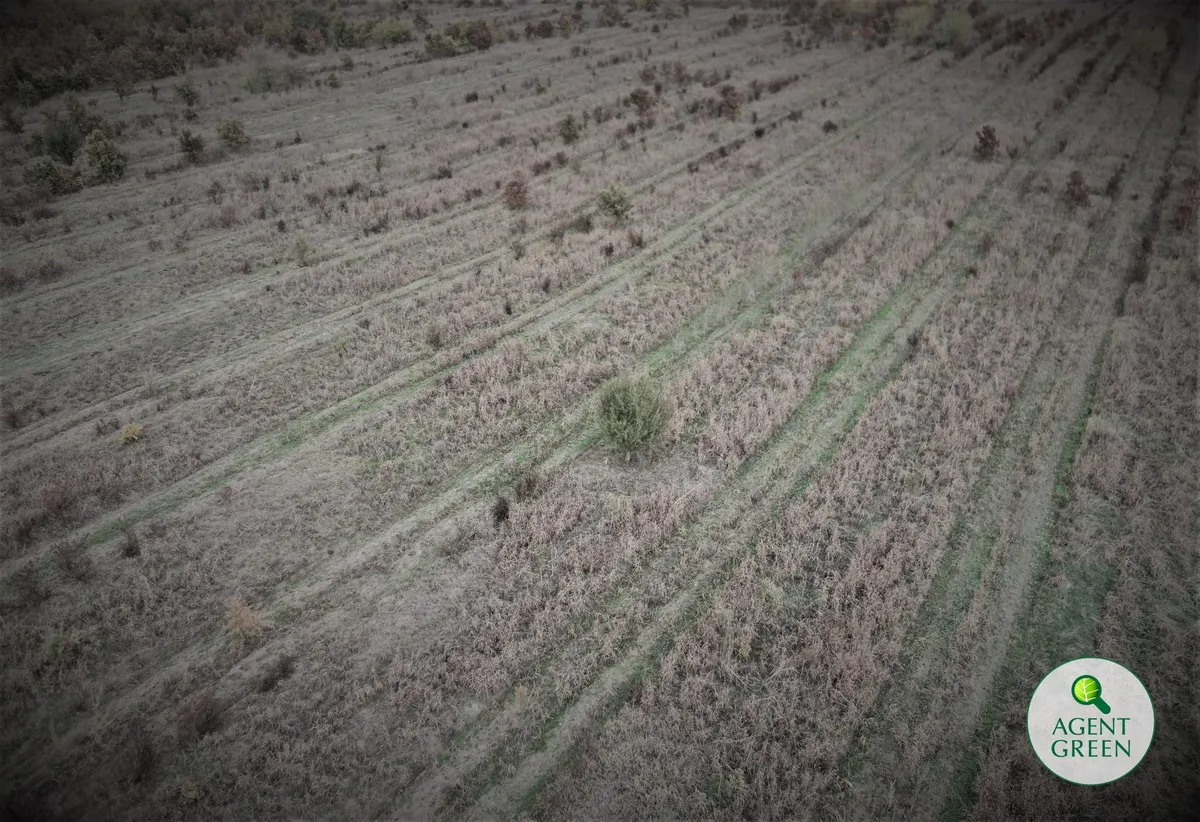
Bucharest, 14 December 2020 – More than 200,000 saplings and more than 800,000 lei disappeared in 2019-2020 from the Ialomița Forestry Directorate, in the county situated in Romania’s least forested area. Only 5.8% of Ialomița County’s area is still officially covered with trees. In reality, even less, because clear-cut areas were not replanted, and the saplings disappeared just like the money from the conservation fund intended for planting. A DNA investigation into this case is ongoing.
Agent Green spoke to those involved in this theft. Each blames the others, while the former forests have turned into reed beds.
Ionescu Constantin, head of the Disciplinary Commission at the Ialomița Forestry Directorate, maintains: “A forester alone could not do this. If the two people above him, namely the district head who drew up the timesheets and the person responsible for regeneration, were serious people, the forester could not have done such a thing. The forester collects all the money and hands it to the day labourers. But the forester said he had not collected the money. We called the cashier, who said that he had in fact given the money to the forester. But the forester insists that he merely signed the cash receipt order and did not actually take the money. I have been in this profession for 30 years and have never seen anything like it. This mockery of the profession bothers me. I do not know where the saplings ended up.”
For his part, Marius Predescu, head of the Sudiți district within the Slobozia Forest District, defends himself by blaming Marius Burcea, the person responsible for regeneration, and the head of the day labourers: “The department head, Marius Burcea, coordinated the whole thing. He went to collect the saplings. I thought about it a great deal. The saplings were collected from the nursery and either sold, thrown away or burned along the way. The money went to Țiganu, the head of the day labourers.”
Marius Burcea, responsible for the afforestation department of the Slobozia Forest District, said in turn: “The forester and the district head signed the acceptance document. The money did not pass through my hands for even a second. I am absolutely not guilty of anything. The work was carried out in accordance with requirements. I performed my regeneration duties in accordance with my job description.”
Auraș Iosif, the forester at the Sudiți forest beat within the Slobozia Forest District, maintains: “I only did the paperwork. The money stayed in the cashier’s office. I signed, the brigade leader signed, we all signed. Mr Burcea put the most pressure on me. I do not know where the saplings ended up. They may have ended up somewhere else.”
“I know nothing about the method by which the day labourers were paid. That is the business of the person who recruits them. We are making the requested documents available to the justice authorities,” concluded Sorin Nicolae Checiu, director of the Ialomița Forestry Directorate. Bogdan Nicolae, head of the Slobozia Forest District, could not be contacted. He is under investigation in several criminal cases, and in one he has already been sent for trial, also for acts committed in office.
“Large sums have been spent here for 10 years. We cannot find saplings. The reeds are over a metre high and we can never again have a continuous forest. The Environment Ministry and Romsilva should order inspections to identify other such cases in which afforestation was only fictitious,” recommended forestry engineer Dan Cătălin Turiga.
Agent Green recommends that the Romanian Government send the Prime Minister’s inspection body to the Ialomița Forestry Directorate and points out that, nationally, the area of forests receiving tending work has fallen to the detriment of forests subjected to aggressive logging and regenerated incompletely or with species unsuited to the natural forest types. The current Forest Code causes degradation of many forests affected by climate change, while ecological restoration of disrupted forests stagnates. The technical standards are designed for a state-owned forestry industry, whereas the state now owns less than half of the country’s forests. Forests cover only 29% of the country, a major discrepancy from the optimal percentage of forest cover. The country’s least forested counties are Ialomița, Călăraș, Ilfov and Teleorman. Afforestation outside the forest estate is now at its lowest level in post-war history. Considering an average of 157.5 hectares of new forests established over the last 2 years, the optimal forest cover of 40% will be reached in 16577 years. There is currently insufficient material in nurseries to supply the saplings needed to reach the optimal percentage of forest cover.
Related articles
Canned hunting instead of a recreational forest near Bucharest
Domogled: Agent Green reports the crisis to the Prosecutor General after 54 days and calls for real protection of the park